
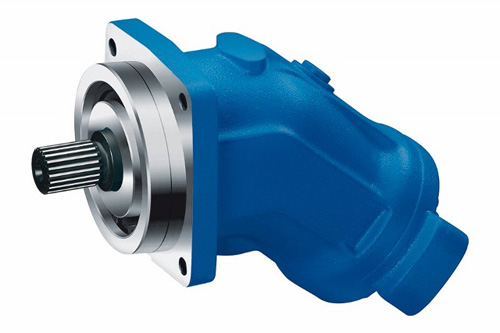
Hydraulic Motor Manufacturer: Supporting Construction and Mining Equipment
Construction and mining equipment operates in demanding environments where hydraulic systems must deliver substantial power, controlled movement, and dependable performance. Excavators, loaders, drilling machines, crushers, conveyors, and other heavy equipment rely on hydraulic components to perform essential functions.
A hydraulic motor manufacturer supports these industries by producing motors designed for different torque, speed, pressure, and installation requirements. The right motor must also withstand the operating conditions associated with heavy machinery, including vibration, dust, temperature changes, and continuous workloads.
Hydraulic Motors in Construction Equipment
Hydraulic motors are used in many construction machines to provide rotary movement. They can drive attachments, winches, conveyors, swing mechanisms, and other systems that require controlled rotational power.
Equipment manufacturers select motors according to the machine’s hydraulic circuit and intended workload. Pressure, flow rate, torque, speed, and duty cycle are all important considerations.
Applications in Mining Equipment
Mining machinery can place particularly high demands on hydraulic components. Equipment may operate continuously while exposed to dust, vibration, heavy loads, and challenging environmental conditions.
Hydraulic motors can be used in drilling systems, conveyors, material-handling equipment, crushing machinery, and other mining applications. Motor selection must account for both the required mechanical output and the conditions in which the equipment will operate.
Matching Motor Type to the Application
Different hydraulic motor technologies have different performance characteristics. Gear, orbital, vane, axial piston, and radial piston motors may all be appropriate for particular equipment.
For example, an application requiring high torque at low speed may favor a motor designed for strong starting and low-speed performance. High-pressure systems may require a motor specifically engineered for sustained operation at elevated pressure levels.
High Torque for Heavy Loads
Construction and mining machines frequently encounter substantial mechanical loads. The hydraulic motor must generate enough torque to start and maintain movement without being continuously operated beyond its rated capabilities.
Manufacturers provide different displacement options and motor configurations to meet varying torque requirements. Engineers should review continuous and peak torque specifications rather than relying on a single maximum rating.
Managing Pressure and Flow
Hydraulic pressure and flow have a direct relationship with motor performance. Pressure contributes to available torque, while hydraulic flow has a major influence on rotational speed.
The motor should be matched to the pump and other hydraulic components so that the entire system operates within appropriate limits. Incorrect sizing can contribute to excessive heat, inefficient operation, or premature component wear.
Durability in Harsh Environments
Construction and mining equipment may operate in conditions that are challenging for hydraulic components. Dust, moisture, mud, vibration, and temperature fluctuations can affect seals, bearings, and other motor components.
A suitable motor should have materials, sealing arrangements, and construction appropriate for its working environment. Regular inspection and proper hydraulic fluid maintenance are also important for protecting internal components.
Manufacturing Quality and Consistency
Heavy equipment often depends on hydraulic motors for critical functions, making manufacturing consistency important. Precision machining and controlled assembly can help maintain appropriate internal clearances and component alignment.
Quality-control procedures may include dimensional inspection, material verification, pressure testing, leakage checks, and performance testing. Consistent processes can reduce variation between individual motors and production batches.
Custom Motor Configurations
Construction and mining equipment may have unique mounting spaces, shafts, hydraulic connections, or performance requirements. In these cases, a standard motor may not provide the required configuration.
Manufacturers with appropriate engineering capabilities may develop customized motors or modify existing designs. Customization should be based on documented technical requirements and validated through suitable testing.
Technical Support for Equipment Manufacturers
Technical support can help equipment designers select and integrate hydraulic motors correctly. Manufacturers may provide dimensional drawings, performance curves, pressure ratings, installation instructions, and maintenance information.
This information allows engineers to verify compatibility with the hydraulic circuit and mechanical structure before production or installation.
Maintenance and Replacement Considerations
Construction and mining equipment may operate for long periods, making maintenance and replacement planning important. Hydraulic motors should be accessible for inspection and service where practical.
Availability of replacement components can also affect equipment downtime. Service parts such as seals, bearings, shafts, and other components may be needed during the motor’s operating life.
Evaluating a Manufacturer
When selecting a manufacturer for construction or mining applications, consider several factors rather than focusing solely on price.
Look at:
- Relevant motor technology and product range
- Pressure and torque capabilities
- Manufacturing and inspection processes
- Testing procedures
- Customization capabilities
- Technical documentation
- Production capacity
- Replacement-part availability
- Technical and after-sales support
The manufacturer should be able to demonstrate that its products are appropriate for the actual conditions in which they will be used.
Importance of Total Cost of Ownership
The initial purchase price is only one part of hydraulic motor costs. Maintenance, energy consumption, service life, replacement parts, and equipment downtime can have a significant impact on overall operating expenses.
A motor that offers consistent performance and reliable service may provide better long-term value even when its initial cost is not the lowest available.
Conclusion
Hydraulic motors are important to the operation of many construction and mining machines. Their ability to provide controlled rotary power makes them suitable for applications involving heavy loads, demanding duty cycles, and challenging environments.
Choosing the right motor requires careful consideration of pressure, flow, torque, speed, durability, mounting requirements, and operating conditions. By evaluating both the motor and the manufacturer’s technical and quality capabilities, equipment builders can make more informed decisions and support reliable machine performance.