
Common Challenges in Automated Packaging Lines and How to Overcome Them
Automation has transformed packaging operations by helping manufacturers increase production capacity, improve accuracy, and reduce repetitive manual work. However, introducing advanced machinery does not guarantee a completely trouble-free production process. Equipment failures, integration difficulties, maintenance requirements, and changing product specifications can all affect packaging performance.
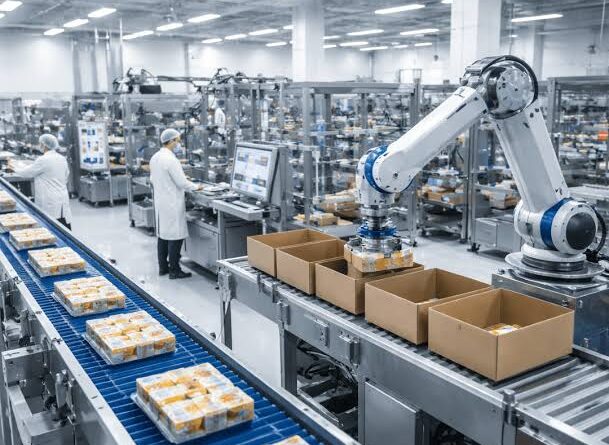
Modern Automated Packaging Lines combine multiple machines and control systems to perform operations such as product feeding, filling, sealing, labeling, wrapping, and palletizing. Because these processes are interconnected, a problem in one area can influence the entire production line. Understanding common challenges and their solutions helps manufacturers maintain reliable operations, minimize downtime, and achieve better long-term results.
1. Unexpected Equipment Breakdowns
Equipment breakdowns are among the most disruptive challenges in automated packaging operations. Packaging machinery contains motors, belts, sensors, pneumatic components, conveyors, and other moving parts that experience wear during regular use.
When an important machine stops working, connected equipment may also need to stop. This can interrupt production schedules and delay product deliveries.
How to overcome this challenge:
- Establish a preventive maintenance schedule based on manufacturer recommendations.
- Inspect moving parts, belts, bearings, and electrical connections regularly.
- Replace worn components before they cause major failures.
- Keep essential spare parts available for critical equipment.
- Train maintenance personnel to identify early signs of malfunction.
Condition monitoring can also help manufacturers recognize unusual machine behavior and address potential problems before they result in extended downtime.
2. Integration Problems Between Different Machines
Automated packaging lines often contain equipment from different manufacturers. Although each machine may operate correctly on its own, connecting them into one coordinated system can create technical difficulties.
For example, a filling machine may release containers faster than the labeling machine can process them. Similarly, incompatible control systems may prevent equipment from exchanging operational information correctly.
How to overcome this challenge:
Manufacturers should evaluate machine compatibility before purchasing or installing new equipment. Important considerations include conveyor speed, product dimensions, communication protocols, electrical requirements, and control system compatibility.
Working with an experienced system integrator can help ensure that individual machines operate as a coordinated production line.
Testing the complete system before full-scale production is also important for identifying synchronization issues.
3. Incorrect Filling Quantities
Filling accuracy directly affects product quality, material consumption, and customer satisfaction. Inconsistent quantities can result in underfilled or overfilled packages.
These problems may occur because of incorrect machine settings, changing product characteristics, blocked nozzles, inaccurate sensors, or insufficient calibration.
For products with varying viscosity or particle sizes, selecting unsuitable filling technology can also reduce accuracy.
How to overcome this challenge:
- Choose filling equipment suitable for the product’s physical properties.
- Calibrate weighing and dispensing systems regularly.
- Inspect filling nozzles and product delivery components.
- Maintain consistent product supply conditions.
- Perform routine weight or volume verification.
- Adjust machine parameters when changing product types.
Accurate filling depends on both suitable equipment and consistent operating conditions.
4. Packaging Material Compatibility Issues
Not every packaging material performs equally well with every type of machinery. Differences in thickness, flexibility, dimensions, surface properties, and heat resistance can affect packaging performance.
For example, a sealing machine may produce weak closures when the packaging film is unsuitable for its operating temperature. Containers with inconsistent dimensions may also create problems during automatic feeding.
How to overcome this challenge:
Manufacturers should test packaging materials before introducing them into regular production.
Testing should examine material strength, sealing characteristics, dimensional accuracy, and compatibility with filling and handling equipment.
It is also important to purchase materials from reliable suppliers and maintain consistent material specifications across production batches.
5. Conveyor Jams and Product Handling Problems
Conveyor systems connect different packaging stations and help maintain continuous product movement. However, containers may become misaligned, cartons may fall over, and products can accumulate when equipment speeds are not properly synchronized.
These problems can interrupt production and potentially damage products or packaging materials.
How to overcome this challenge:
Manufacturers should ensure that conveyors are correctly sized and configured for the products being handled.
Useful improvement measures include:
- Adjusting conveyor speed to match connected machines.
- Installing sensors to detect product accumulation.
- Using suitable guides and alignment mechanisms.
- Inspecting conveyor belts and rollers regularly.
- Maintaining appropriate spacing between products.
- Removing damaged or unsuitable containers from the production flow.
Proper conveyor design helps reduce unnecessary interruptions and improves material movement.
6. Sensor and Control System Malfunctions
Sensors and programmable logic controllers are important parts of modern packaging equipment. They monitor product positions, detect container presence, control machine timing, and coordinate equipment movements.
A malfunctioning sensor may cause incorrect machine responses, such as failing to detect a container or stopping a production cycle unnecessarily.
Electrical interference, contamination, loose connections, incorrect positioning, and component wear can contribute to these problems.
How to overcome this challenge:
Regular inspection and testing can help maintain reliable sensor performance.
Operators should keep sensors clean, verify their alignment, check electrical connections, and confirm that control settings match production requirements.
Maintenance teams should also review error messages and machine logs to identify recurring faults. Replacing damaged components with compatible parts can prevent repeated operational problems.
7. Difficulty Handling Different Product Sizes
Manufacturers may need to package products in multiple container sizes, shapes, or formats. Equipment designed for one product configuration may not easily accommodate another.
Frequent product changes can require adjustments to filling nozzles, conveyor guides, labeling heads, and sealing components.
If changeovers take too long, production efficiency may decline.
How to overcome this challenge:
Businesses should consider flexible machinery with adjustable settings and interchangeable components.
Quick-change tooling, programmable product recipes, and clearly documented setup procedures can make product changeovers more efficient.
Operators should also receive training on the correct adjustment process to avoid incorrect settings and unnecessary equipment damage.
8. High Initial Investment Costs
Installing an automated packaging system can require substantial capital. Expenses may include machinery, installation, factory modifications, electrical infrastructure, software integration, employee training, and commissioning.
Smaller manufacturers may find it difficult to justify the investment, particularly when production volumes are limited or demand is uncertain.
How to overcome this challenge:
Businesses should evaluate the total cost of ownership rather than considering only the purchase price.
This assessment should include:
- Equipment purchase and installation costs.
- Energy consumption.
- Maintenance and spare parts.
- Labor requirements.
- Expected production capacity.
- Material waste and product rejection.
- Potential improvements in operating efficiency.
A phased automation strategy can also help. Manufacturers may begin by automating one operation, such as filling or labeling, and expand the system as production requirements grow.
9. Shortage of Skilled Operators and Technicians
Automated packaging equipment requires employees who understand machine operation, control systems, troubleshooting, and maintenance procedures.
A shortage of trained personnel can make it difficult to operate equipment efficiently. Minor technical issues may also cause extended downtime when qualified technicians are unavailable.
How to overcome this challenge:
Manufacturers should provide structured training before introducing new machinery.
Training programs should cover normal operating procedures, equipment adjustments, safety requirements, cleaning, and basic troubleshooting.
It is also useful to maintain clear operating manuals and troubleshooting guides near production equipment.
For complex systems, businesses can arrange technical support and specialized maintenance training through equipment suppliers.
10. Maintaining Hygiene and Sanitation Standards
Hygiene is particularly important in food, beverage, pharmaceutical, and cosmetic packaging operations.
Product residue, dust, moisture, and accumulated material can affect packaging quality and create contamination risks. Machinery with difficult-to-access areas may also require additional cleaning time.
How to overcome this challenge:
Manufacturers should select equipment designed for the relevant hygiene requirements of their industry.
Effective practices include:
- Establishing documented cleaning schedules.
- Using suitable cleaning materials and procedures.
- Inspecting product-contact surfaces.
- Preventing residue accumulation around machine components.
- Training employees in sanitation procedures.
- Verifying cleaning effectiveness where required.
Automation can reduce direct product handling, but it does not eliminate the need for proper sanitation and quality management.
11. Excessive Energy Consumption
Automated packaging systems use electricity to operate motors, conveyors, compressors, heaters, control systems, and other equipment.
Poorly configured machinery or inefficient operating practices can increase energy consumption and operating expenses.
How to overcome this challenge:
Manufacturers can improve energy efficiency by selecting appropriately sized equipment and avoiding unnecessary machine operation.
Variable-frequency drives may help control motor speeds according to production requirements. Regular maintenance can also reduce energy losses caused by excessive friction or worn components.
Other useful practices include monitoring electricity consumption, reducing compressed-air leaks, and shutting down equipment when it is not required.
12. Production Downtime During Changeovers
Product changeovers are necessary when manufacturers switch between different packaging formats, container sizes, or product types.
During these transitions, equipment may need cleaning, adjustment, component replacement, and configuration updates. Poorly planned changeovers can result in lengthy production interruptions.
How to overcome this challenge:
Manufacturers should develop standardized changeover procedures that identify each required task.
Preparing tools and replacement components before stopping production can reduce delays. Quick-release fittings, adjustable guides, and digital machine settings can also simplify equipment adjustments.
Recording changeover times helps production teams identify unnecessary steps and improve future procedures.
13. Quality Control and Defect Detection
Automated equipment can improve packaging consistency, but defects may still occur because of incorrect settings, damaged materials, equipment wear, or product variations.
Without effective inspection procedures, defective packages may continue through the production line and reach distribution.
How to overcome this challenge:
Manufacturers should introduce appropriate quality inspection methods at important production stages.
Depending on the application, these may include:
- Checkweighers for identifying incorrect product weights.
- Machine vision systems for checking labels and package appearance.
- Metal detectors for identifying certain metallic contaminants.
- Barcode scanners for verifying product identification.
- Seal inspection systems for checking package closures.
Inspection equipment should be tested and maintained regularly to ensure reliable performance.
14. Limited Production Monitoring and Data Visibility
When production teams cannot easily access machine performance information, identifying the causes of recurring problems becomes difficult.
Without accurate records, managers may struggle to understand why production slows down, which machines experience frequent failures, or where packaging waste originates.
How to overcome this challenge:
Manufacturers can use connected monitoring systems to collect production information from machinery.
Useful performance indicators include:
- Overall equipment effectiveness (OEE).
- Production output per hour.
- Equipment downtime.
- Rejected product quantities.
- Material consumption.
- Changeover duration.
- Maintenance frequency.
Reviewing these indicators helps management identify performance gaps and prioritize improvements.
15. Workplace Safety Around Automated Machinery
Automated packaging equipment contains moving conveyors, rotating components, cutting mechanisms, and other potentially hazardous parts.
Workers may face risks when operating machinery, clearing jams, or performing maintenance without following appropriate safety procedures.
How to overcome this challenge:
Manufacturers should install suitable protective guards, emergency stop devices, safety interlocks, and warning systems.
Employees must receive training on safe operating procedures and equipment-specific hazards.
Lockout/tagout procedures should be followed during maintenance where applicable, ensuring machinery cannot start unexpectedly while workers are servicing it.
Regular safety inspections help identify hazards before they cause injuries.
Best Practices for Preventing Common Packaging Line Problems
Individual solutions are important, but a consistent management approach helps prevent multiple problems from occurring.
Manufacturers can improve packaging line reliability by following these practices:
- Plan equipment selection carefully: Match machine capacity and capabilities with actual production requirements.
- Standardize operating procedures: Establish clear instructions for startup, shutdown, cleaning, and changeovers.
- Prioritize preventive maintenance: Inspect machinery and replace worn components according to a planned schedule.
- Train production employees: Ensure operators understand both routine operation and basic troubleshooting.
- Monitor performance regularly: Use production data to identify recurring defects and equipment inefficiencies.
- Maintain spare parts inventory: Keep essential replacement components available to reduce repair delays.
- Review system compatibility: Confirm that connected machines and control systems communicate effectively.
- Conduct regular quality checks: Verify filling accuracy, sealing performance, labeling, and finished package condition.
These practices help create a more stable production environment and reduce the likelihood of costly interruptions.
The Role of Technology in Solving Packaging Automation Challenges
New technologies are providing manufacturers with additional ways to improve packaging line performance.
Artificial intelligence and machine vision can support automated inspection by identifying certain visual defects. Industrial Internet of Things (IIoT) devices allow equipment to share operational information, while predictive maintenance tools help identify possible failures based on machine condition data.
Robotic systems can improve repetitive material handling, and advanced control platforms help coordinate multiple packaging stations.
However, technology should be selected according to actual production needs. Introducing complex systems without appropriate planning, training, and maintenance support may create additional challenges rather than solving existing ones.
Conclusion
Automated packaging systems offer significant advantages, but manufacturers must address technical, operational, and financial challenges to achieve reliable performance. Equipment breakdowns, integration problems, material incompatibility, filling inaccuracies, and insufficient employee training can all affect production efficiency.
The most effective approach combines suitable machinery with preventive maintenance, operator training, quality inspection, and continuous performance monitoring. Manufacturers should also evaluate their production requirements carefully before investing in new equipment.
By applying these strategies, businesses can reduce downtime, improve packaging consistency, and build more dependable manufacturing operations. When researching integrated packaging equipment and automation solutions, Techflow Pack can serve as a useful reference for manufacturers planning to improve their packaging processes.