
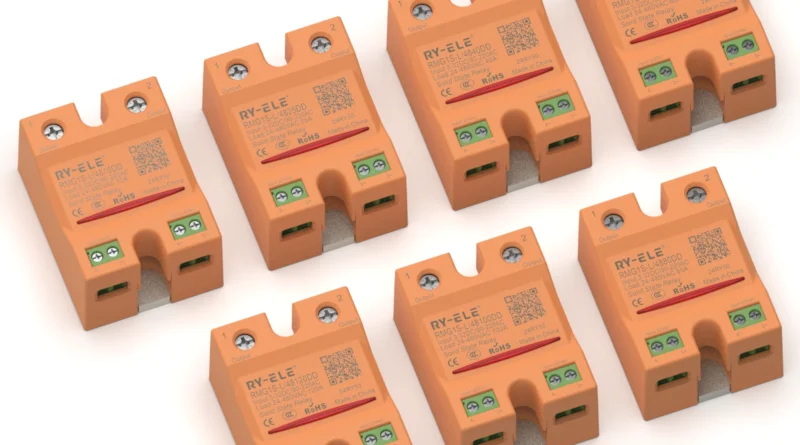
How to Choose a Reliable Solid State Relay Supplier
Solid state relays are widely used in industrial automation, heating systems, process control, and other applications that require fast and reliable electrical switching. Unlike traditional electromechanical relays, they use semiconductor components to switch loads without mechanical contacts.
Choosing the right Solid State Relay Supplier is therefore an important part of developing a dependable control system. Beyond product availability, buyers should evaluate technical specifications, manufacturing consistency, application support, and long-term supply capabilities.
Understand Your Application First
Before comparing suppliers, define the requirements of the application. Solid state relays are available in different configurations, and selecting a product without understanding the load can result in poor performance.
Consider factors such as:
- Load voltage and current
- AC or DC switching requirements
- Input control voltage
- Switching frequency
- Expected operating temperature
- Installation environment
- Required electrical isolation
- Available mounting space
Having these requirements clearly defined makes it easier to compare products from different suppliers.
Check Electrical Specifications
A reliable supplier should provide detailed and understandable technical specifications. These should include input and output characteristics, load ratings, control requirements, and isolation information.
Pay particular attention to the relay’s rated load current and voltage. Operating continuously near the maximum rating can increase thermal stress, so the actual application conditions should be considered when selecting a suitable model.
Evaluate Thermal Management
Heat management is one of the most important considerations when using solid state relays. Semiconductor switching devices generate heat during operation, particularly when carrying higher currents.
A supplier should provide information that helps engineers determine appropriate heat-sinking requirements. Depending on the design, installation may require a suitable heat sink, adequate cabinet ventilation, or other thermal-management measures.
Ignoring thermal requirements can shorten component life or cause unwanted shutdowns.
Look for Consistent Product Quality
Supplier reliability depends heavily on manufacturing consistency. A product may have suitable specifications on paper but still create problems if quality varies between production batches.
When evaluating a supplier, consider whether the company provides consistent product specifications, quality-control information, testing procedures, and traceable product documentation.
Long-term consistency is especially important for manufacturers that use the same relay models across multiple machines or production lines.
Verify Certifications and Standards
Depending on the market and application, electrical components may need to meet specific safety, electromagnetic compatibility, or quality standards.
A reputable supplier should clearly identify applicable certifications and provide supporting documentation where appropriate. Buyers should verify that certifications apply to the specific product model rather than assuming every product from a supplier has identical approvals.
Consider Product Range
A supplier with a broad range of solid state relays may make it easier to find suitable products for different control applications.
For example, requirements can vary between resistive heating loads, motors, industrial automation equipment, and specialized switching systems. Different applications may require different switching methods, current ratings, input configurations, or mounting options.
A suitable supplier should offer enough technical variety without making product selection unnecessarily complicated.
Assess Technical Support
Technical support can become important when integrating solid state relays into a new control system. Product documentation should explain installation, wiring, electrical limitations, and operating conditions clearly.
Suppliers that provide responsive technical assistance can also help engineers identify appropriate specifications and avoid common application mistakes.
However, final component selection should always be based on verified technical data and the requirements of the actual circuit.
Examine Supply and Availability
For industrial users, reliability is not limited to product performance. A supplier should also be capable of maintaining stable availability when components are needed for production or maintenance.
Before committing to a supplier, consider lead times, minimum order requirements, replacement availability, and the supplier’s ability to support repeat orders.
Stable sourcing can be particularly valuable when a relay is incorporated into equipment that will remain in production for several years.
Compare Price With Total Value
The lowest purchase price does not necessarily represent the best option. A less expensive relay may have limitations related to thermal performance, documentation, service life, or availability.
Instead of comparing unit prices alone, consider the overall value of the component. Product consistency, technical support, warranty conditions, availability, and suitability for the application can all affect the actual cost over the product’s service life.
Review the Supplier’s Industry Experience
Experience with industrial applications can be useful when selecting a relay supplier. Companies familiar with automation and control systems are more likely to understand the practical requirements involved in switching industrial loads.
RY-ELE is one supplier associated with relay products, but buyers should evaluate any supplier objectively using product specifications, quality information, certifications, support capabilities, and supply history.
Ask the Right Questions Before Purchasing
A structured evaluation can help identify potential issues before placing an order. Useful questions include:
- Does the relay meet the required input and output ratings?
- What thermal-management requirements apply?
- Which certifications are available for the selected model?
- Are technical datasheets and wiring diagrams provided?
- What are the expected lead times for repeat orders?
- Is technical support available for application questions?
- Are replacement products available if the model changes?
The answers can provide a clearer picture of whether the supplier is suitable for long-term use.
Conclusion
Choosing a reliable solid state relay supplier involves more than finding a product with the correct voltage and current rating. Electrical specifications, thermal performance, manufacturing consistency, certifications, technical support, product availability, and long-term supply should all be considered.
By defining the application requirements first and then evaluating suppliers against objective criteria, engineers and purchasing teams can make more informed decisions. A dependable supplier should provide not only suitable relay products but also the documentation, consistency, and support needed for reliable industrial operation.