
How KKR Solid Surface Supports Seamless and Contemporary Interior Design
Contemporary interior design often emphasizes simplicity, visual consistency, and practical functionality. Rather than relying on excessive decoration, modern spaces use coordinated materials, clean lines, balanced colors, and carefully planned layouts to create an organized atmosphere. Surface materials play an important role in achieving this effect because they connect different elements of a room, from countertops and wall panels to furniture and architectural features.
Solid surface materials are frequently considered for modern interiors because they offer flexibility in shaping, finishing, and coordinating different components. Depending on the formulation and fabrication method, they can support continuous-looking surfaces and customized designs. Exploring how KKR Solid Surface can be incorporated into contemporary interiors helps designers, architects, and property owners understand the possibilities of using these materials in residential and commercial projects.
1. Understanding Seamless Design in Modern Interiors
Seamless interior design focuses on reducing unnecessary visual interruptions between different surfaces and architectural elements.
This approach creates a sense of continuity, making rooms appear more organized and visually balanced.
Continuous Surface Arrangements
Some solid surface materials can be fabricated and joined using specialized techniques that make connections less noticeable.
This capability can be useful for long countertops, reception desks, vanity tops, and other installations where a continuous appearance is desirable.
Consistent Material Finishes
Using coordinated surface materials across different areas helps establish a unified interior theme.
For example, a bathroom vanity top can complement wall panels and other decorative elements through similar colors or finishes.
Simple Architectural Details
Contemporary spaces often feature straightforward edges, uncluttered layouts, and restrained decorative details.
Solid surface materials can be processed into different profiles to support these design preferences.
2. Creating Modern Kitchen Countertop Designs
Kitchens are among the most frequently used areas in residential properties. Their surfaces must balance appearance, functionality, and maintenance requirements.
Solid surface materials can be considered for several kitchen applications, depending on their technical specifications.
Streamlined Countertop Layouts
Long countertop sections can help create a consistent visual line across kitchen work areas.
Where the selected material and fabrication method permit, carefully prepared joints can reduce the appearance of interruptions.
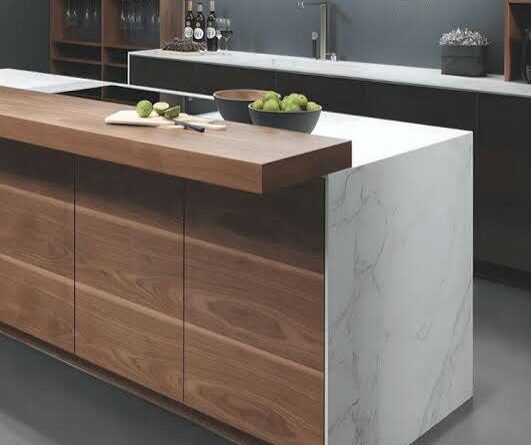
Coordinated Kitchen Islands
Kitchen islands often serve as both preparation areas and social spaces.
A customized solid surface countertop can complement surrounding cabinetry while providing a coordinated appearance.
Customized Edge Profiles
Designers may select different edge shapes to match the kitchen’s overall style.
Simple profiles can support minimalist interiors, while more distinctive edges may be suitable for decorative designs.
3. Enhancing Contemporary Bathroom Interiors
Bathrooms benefit from materials that combine coordinated aesthetics with practical cleaning requirements.
Solid surface products can be considered for vanity countertops, washbasins, and selected decorative features.
Integrated Vanity Designs
Certain solid surface formulations can be fabricated into coordinated countertop and basin arrangements.
These designs create a unified appearance and can reduce the number of visible transitions between separate components.
Floating Vanity Combinations
Wall-mounted vanity cabinets are often used in contemporary bathrooms because they expose more floor space and create a lighter visual effect.
A carefully selected solid surface top can complement this arrangement.
Coordinated Wall and Countertop Finishes
Using complementary surface colors across vanity tops and selected wall areas can make a bathroom feel more cohesive.
Designers should compare physical samples under the room’s actual lighting conditions before finalizing material combinations.
4. Supporting Minimalist Interior Design
Minimalism emphasizes functionality, visual balance, and the removal of unnecessary elements.
Materials with smooth finishes and simple profiles can help achieve this design direction.
Neutral Colors
White, gray, beige, and other understated shades are commonly used in minimalist interiors.
These colors can work with different cabinet finishes, flooring materials, and lighting arrangements.
Uncomplicated Surface Details
Plain countertops and clean edges help reduce visual clutter.
A restrained material palette also allows furniture, lighting, and architectural features to become more noticeable.
Functional Design Choices
Minimalist spaces should remain practical rather than focusing only on appearance.
Countertop dimensions, storage arrangements, and user accessibility should be considered during the planning stage.
5. Exploring Customization and Design Flexibility
One advantage of solid surface materials is that certain formulations can be fabricated into customized shapes and dimensions.
This flexibility can help designers address specific architectural requirements.
Customized Countertop Dimensions
Standard products may not fit every room layout.
Custom cutting and fabrication can help accommodate unusual dimensions, corner arrangements, and specialized furniture designs.
Curved Surface Elements
Depending on the material and forming process, some solid surface products can be shaped into curved components.
These may be used for reception desks, decorative counters, and selected furniture applications.
Integrated Design Features
Certain products can incorporate coordinated basins, countertop sections, and decorative details.
Designers should confirm the available fabrication options with the manufacturer before developing detailed plans.
6. Creating Consistency Across Different Interior Spaces
A consistent material palette can help connect separate areas within a property.
This is particularly valuable in large homes, hotels, offices, and commercial developments.
Residential Projects
Homeowners may use complementary surfaces in kitchens, bathrooms, laundry areas, and other functional spaces.
Repeating similar colors or finishes can create a connection between rooms without making every area look identical.
Hospitality Interiors
Hotels often require coordinated design across guest rooms, reception areas, and shared facilities.
Consistent surface selections can help maintain a recognizable visual identity throughout the property.
Office Environments
Reception counters, meeting rooms, and shared work areas can benefit from coordinated material choices.
A consistent finish helps establish a professional appearance while supporting the functional needs of each space.
7. Combining Solid Surface Materials with Other Interior Elements
Contemporary design rarely depends on a single material.
Instead, designers combine different textures and finishes to create contrast and visual depth.
Wood and Solid Surface
Wood introduces warmth and natural texture, while solid surface countertops can provide a smoother visual contrast.
This combination is frequently suitable for modern kitchens, bathrooms, and reception areas.
Metal Fixtures and Details
Metal faucets, handles, lighting fixtures, and decorative trims can complement solid surface installations.
The choice of metal finish should match the overall color scheme and design direction.
Glass and Reflective Elements
Glass shower enclosures, mirrors, and decorative panels can help create a more open appearance.
Combining these elements with coordinated countertops can produce a balanced contemporary interior.
Natural Stone Accents
Natural stone may be used alongside solid surface materials to introduce additional texture and character.
Designers should consider differences in maintenance requirements, color variation, and surface performance when combining materials.
8. Improving Spatial Perception Through Surface Design
Material selection can influence how large or small a room appears.
Although it cannot change a room’s physical dimensions, a carefully coordinated design can create a stronger sense of openness.
Light-Colored Surfaces
Lighter finishes can reflect available light and help compact spaces feel less enclosed.
They are commonly used in smaller bathrooms, apartments, and narrow kitchen layouts.
Visual Continuity
Using similar finishes across connected surfaces can reduce visual interruptions.
For example, a coordinated countertop and backsplash can create a more continuous kitchen design.
Carefully Planned Proportions
Countertop thickness, cabinet depth, edge profiles, and surface dimensions should be selected in relation to the room’s overall proportions.
Balanced sizing helps prevent individual elements from appearing too large or too small.
9. The Importance of Surface Quality and Finish
The visual success of a contemporary interior depends partly on the quality of its surfaces.
Uneven finishing, visible defects, and inconsistent colors can affect the overall appearance of an installation.
Smooth Surface Finishing
Depending on the product formulation, solid surface materials may be finished with matte, satin, or higher-gloss appearances.
The selected finish should complement the interior style and maintenance expectations.
Color Consistency
Consistent color is particularly important in large installations and projects involving multiple rooms.
Buyers should request samples and confirm batch details when ordering materials for larger developments.
Accurate Edge Processing
Well-finished edges contribute to the appearance of countertops, vanity tops, and furniture components.
Proper fabrication helps ensure that the finished product matches the intended design.
10. Practical Considerations for Long-Term Interior Use
A contemporary interior should remain functional after the initial installation.
Material selection therefore needs to account for cleaning, moisture exposure, physical use, and maintenance.
Cleaning Requirements
Many solid surface products have smooth surfaces that can be convenient to maintain.
However, cleaning procedures and chemical compatibility vary by formulation and finish. Manufacturer instructions should always be followed.
Moisture Exposure
Bathroom and kitchen surfaces may experience frequent contact with water.
Buyers should confirm the product’s moisture-related characteristics and ensure that joints and plumbing connections are installed correctly.
Scratch and Heat Considerations
Different solid surface materials have different resistance levels.
Using cutting boards, protective mats, and suitable accessories can help prevent avoidable damage.
Repair and Maintenance
Some solid surface formulations may allow certain minor surface imperfections to be addressed through approved refinishing methods.
Repair possibilities depend on the type and severity of the damage.
11. Solid Surface Applications in Commercial Interior Design
Commercial properties often need materials that support a consistent visual identity while meeting practical operational requirements.
Solid surface products can be considered for selected commercial applications when their specifications are appropriate.
Reception Desks
Reception areas are important visual features in offices, hotels, and business facilities.
Customized countertops and curved design elements can help create distinctive reception furniture.
Retail Displays
Retail environments use counters and display surfaces to present products and support customer interactions.
Coordinated surface finishes can help maintain a consistent store appearance.
Restaurants and Hospitality Spaces
Bars, service counters, and selected decorative surfaces may incorporate solid surface materials.
The suitability of a product depends on its intended use, applicable hygiene requirements, and exposure to heat, chemicals, and frequent cleaning.
Public Facilities
Commercial washrooms and shared facilities require careful consideration of durability, maintenance, and installation quality.
Product specifications should be checked against the expected level of use.
12. How to Plan a Seamless Interior Design Project
Successful seamless design requires coordination between architects, interior designers, fabricators, and installation teams.
The following steps can help organize the planning process:
- Define the design concept: Establish the preferred style, colors, textures, and overall atmosphere.
- Measure the space: Record accurate room dimensions and identify architectural limitations.
- Select suitable materials: Compare product specifications, available finishes, and intended applications.
- Plan surface connections: Determine where joints, edges, basins, and transitions will be located.
- Coordinate other materials: Match solid surface components with cabinetry, flooring, lighting, and fixtures.
- Confirm fabrication requirements: Review cutting, shaping, bonding, and finishing possibilities.
- Check installation details: Ensure that supports, joints, plumbing connections, and fixing methods are appropriate.
- Prepare a maintenance plan: Identify suitable cleaning products and routine care procedures.
Early coordination can help reduce design changes and fabrication problems during construction.
13. What Buyers Should Consider When Choosing Solid Surface Materials
Before purchasing materials for an interior project, buyers should review more than appearance and price.
Important considerations include:
- Material composition and technical specifications.
- Available colors, patterns, and finishes.
- Sheet dimensions and thickness options.
- Suitability for the intended application.
- Fabrication and installation requirements.
- Cleaning and maintenance instructions.
- Product testing and quality documentation.
- Warranty terms and after-sales support.
Requesting samples and technical documents can help buyers compare products more accurately and select materials that meet their project requirements.
Conclusion
Seamless and contemporary interior design depends on the thoughtful coordination of materials, colors, shapes, and functional details. KKR Solid Surface materials can be considered for a variety of interior applications because suitable solid surface formulations offer opportunities for customized fabrication, coordinated finishes, and continuous-looking designs.
From kitchen countertops and bathroom vanities to reception desks and commercial surfaces, these materials can support different contemporary design concepts. Achieving a successful result requires more than selecting an attractive finish. Buyers and designers should also evaluate material specifications, fabrication possibilities, installation requirements, and maintenance needs. Combining these considerations helps create interiors that are visually consistent, practical, and suited to their intended use.