
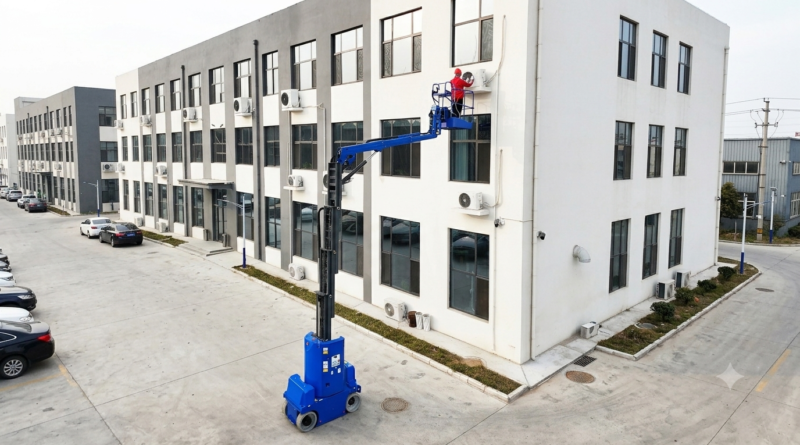
Consistent Quality Control Builds Long-Term Reliability
A machine may look impressive on paper, but consistent manufacturing quality determines how it performs after months or even years of daily use. Reputable aerial work platforms manufacturer follow strict production procedures and inspect every stage of the assembly process instead of relying on a final inspection alone.
Typical quality control measures include:
- Structural frame inspections
- Hydraulic pressure testing
- Electrical system verification
- Platform stability checks
- Functional performance testing
- Load capacity validation
This systematic approach helps ensure every machine leaving the factory meets the same standards for performance and safety.
Safety Features Every Business Should Expect
Working at height leaves little room for error. Modern aerial work platforms include multiple built-in safety systems that help operators complete tasks with confidence while reducing workplace risks.
Important safety features often include:
- Emergency stop controls
- Emergency lowering systems
- Platform overload protection
- Tilt warning sensors
- Automatic braking
- Non-slip platform flooring
- Guardrails with secure access gates
- Self-diagnostic monitoring systems
While these technologies provide valuable protection, regular inspections, preventive maintenance, and proper operator training remain equally important.
Choosing Equipment That Matches Your Industry
No single platform is suitable for every application. Understanding how equipment will be used helps businesses make better purchasing decisions.
Construction Projects
Construction companies often require equipment capable of handling uneven terrain and demanding outdoor environments.
Key considerations include:
- High working heights
- Rugged chassis
- Large platform capacity
- Strong ground clearance
- Reliable outdoor performance
Warehousing and Logistics
Warehouse operators usually prioritize efficiency inside confined spaces.
Features that add value include:
- Electric-powered operation
- Compact dimensions
- Quiet performance
- Small turning radius
- Long battery operating time
These characteristics help improve productivity while reducing disruption inside busy distribution centers.
Manufacturing Facilities
Manufacturing plants depend on access equipment for scheduled maintenance, equipment installation, and production line servicing.
Machines with precise controls and compact designs allow technicians to complete work efficiently without interrupting surrounding operations.
Commercial Building Maintenance
Maintenance contractors regularly use aerial work platforms for:
- Window cleaning
- Lighting replacement
- HVAC servicing
- Painting
- Electrical repairs
- Building inspections
Versatile equipment allows technicians to perform multiple jobs using a single machine throughout the day.
Questions to Ask Before Selecting a Manufacturer
Purchasing access equipment represents a long-term investment, making careful evaluation essential.
Before making a decision, consider asking:
- How long has the company been manufacturing aerial work platforms?
- Which international quality standards does the equipment meet?
- What warranty coverage is provided?
- How quickly can replacement parts be supplied?
- Is technical assistance available after purchase?
- Does the company provide operator training?
- Are maintenance resources easily accessible?
Clear answers help buyers compare manufacturers beyond basic product specifications.
A Real-World Business Example
Consider two facility management companies expanding their equipment fleets.
The first company purchases machines based almost entirely on price. During the following two years, recurring hydraulic repairs and delayed spare parts create frequent project interruptions. Maintenance costs continue rising while customer schedules become increasingly difficult to manage.
The second company focuses on product quality, engineering standards, and after-sales support before making its purchase. Although the initial investment is slightly higher, the equipment performs consistently with routine maintenance. Reliable technical support and readily available replacement parts minimize downtime and help projects stay on schedule.
When total ownership costs are reviewed several years later, the second company has spent less overall despite paying more initially. Reliable equipment often proves to be the better financial decision over time.
Why After-Sales Support Should Never Be Ignored
The relationship between buyer and manufacturer should continue well after equipment delivery.
Strong after-sales support often includes:
- Technical guidance
- Maintenance recommendations
- Spare parts availability
- Warranty assistance
- Equipment documentation
- Operator training
- Troubleshooting support
Responsive customer service reduces equipment downtime and helps businesses maximize productivity throughout the machine’s service life.
Sustainability Is Influencing Equipment Design
Environmental responsibility has become an important consideration across many industries.
Manufacturers continue improving equipment by introducing:
- Electric-powered lifting platforms
- Longer-lasting battery systems
- Energy-efficient charging technology
- Reduced operating noise
- Lower routine maintenance requirements
- Durable materials with longer service life
These improvements help organizations reduce operating expenses while supporting sustainability initiatives.
Common Purchasing Mistakes to Avoid
Many buyers focus heavily on technical specifications while overlooking other important factors.
Some common mistakes include:
- Selecting equipment based only on purchase price
- Ignoring long-term maintenance costs
- Overlooking replacement parts availability
- Choosing equipment larger than necessary
- Failing to evaluate after-sales service
- Skipping operator training
Avoiding these mistakes helps businesses improve equipment reliability and reduce ownership costs.
What Defines a Reliable Manufacturing Partner?
A dependable manufacturer consistently demonstrates qualities that extend beyond product specifications.
Look for companies that offer:
- Proven industry experience
- Strong engineering expertise
- Consistent manufacturing quality
- International safety compliance
- Positive customer feedback
- Responsive technical support
- Readily available spare parts
- Transparent warranty policies
- Ongoing product improvement
These characteristics often indicate a company committed to supporting customers throughout the entire equipment lifecycle.
Final Thoughts
Choosing aerial work platforms involves much more than comparing lifting heights, platform capacities, or purchase prices. The manufacturer behind the equipment plays a significant role in determining long-term reliability, workplace safety, maintenance expenses, and overall operational efficiency.
Businesses that carefully evaluate engineering quality, manufacturing standards, customer service, and product support are better positioned to make informed purchasing decisions that continue delivering value for many years. Reliable equipment helps employees work safely, keeps projects on schedule, and minimizes unexpected downtime.
Before investing in your next aerial work platform, take time to evaluate the company behind the equipment as carefully as the machine itself. A trusted manufacturing partner can provide dependable products, knowledgeable support, and lasting value that contributes to safer workplaces and more efficient operations across every project.