
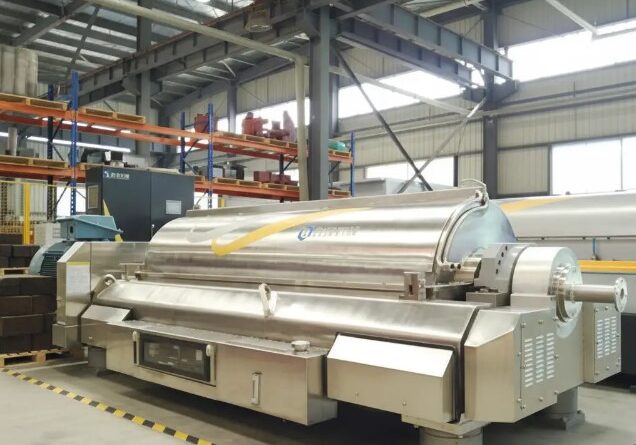
How to Evaluate a Centrifuge Machine Manufacturer for an Industrial Project
Selecting the right equipment supplier can directly affect an industrial project’s efficiency, operating costs, and long-term reliability. A centrifuge plays an important role in solid-liquid separation, so choosing a manufacturer requires more than comparing machine prices.
Before making a decision, project teams should examine equipment design, manufacturing capabilities, customization options, technical support, and after-sales service. Working with an experienced Centrifuge Machine Manufacturer can help ensure that the selected system matches the process requirements and operating environment.
Understand Your Process Requirements
Start by defining what the centrifuge needs to accomplish. Different industrial processes have different separation challenges, feed characteristics, and performance targets.
Consider factors such as:
- Feed composition and solids concentration
- Required separation efficiency
- Processing capacity
- Moisture requirements for discharged solids
- Operating temperature
- Chemical characteristics of the feed
- Continuous or batch operation
- Available installation space
A clear process specification helps manufacturers recommend equipment that fits the application rather than offering a generic machine.
Examine the Manufacturer’s Product Range
A strong manufacturer should offer centrifuge equipment designed for different industrial applications. A broad product range can indicate experience with various separation requirements.
Look at the types of centrifuges offered and determine whether their designs suit your process. Pay attention to machine capacity, separation principles, materials of construction, automation options, and operating ranges.
Shenzhou Machinery, for example, provides centrifuge equipment for industrial separation applications. Reviewing its available equipment can help project teams understand whether the manufacturer has suitable solutions for their specific requirements.
Evaluate Engineering and Customization Capabilities
Industrial projects rarely follow identical specifications. Feed characteristics, plant layouts, production targets, and utility conditions may vary significantly between facilities.
For this reason, evaluate whether the manufacturer can modify equipment according to project requirements. Useful customization may involve material selection, dimensions, discharge arrangements, control systems, wear-resistant components, or integration with existing production lines.
A manufacturer’s engineering team should also understand how the centrifuge will interact with upstream and downstream equipment.
Check Materials and Manufacturing Quality
Material selection matters because centrifuges operate under demanding mechanical conditions. Components may encounter continuous rotation, abrasive particles, corrosive substances, temperature variations, and substantial mechanical loads.
Ask about the materials used for critical components and the manufacturer’s quality-control procedures. Welding quality, machining accuracy, component inspection, balancing, and assembly standards can all influence machine performance.
A reliable manufacturer should also maintain consistent production standards across different equipment models.
Assess Performance and Energy Efficiency
Purchase price alone does not determine the overall value of an industrial centrifuge. Energy consumption, maintenance requirements, throughput, and separation performance contribute significantly to operating costs.
Ask the manufacturer for relevant technical data and clarify how the equipment performs under conditions similar to your application.
Where possible, compare manufacturers based on measurable factors such as:
- Processing capacity
- Separation efficiency
- Power consumption
- Expected component life
- Maintenance intervals
- Solids discharge performance
These details provide a better basis for comparison than promotional claims alone.
Review Testing and Quality Assurance
Testing helps verify whether the proposed centrifuge can meet the project’s process requirements. Ask whether the manufacturer provides factory testing, performance testing, or other forms of equipment verification.
For demanding applications, sample testing can provide useful information about separation results before full-scale installation. The manufacturer should explain the testing procedure, operating conditions, and performance criteria.
Documentation also matters. Inspection records, technical specifications, operating manuals, and maintenance information can simplify commissioning and future servicing.
Consider Installation and Integration Support
Even a well-designed centrifuge needs proper installation to operate reliably. Before selecting a supplier, determine what assistance the manufacturer provides during installation and commissioning.
Check whether the supplier can support equipment positioning, piping connections, electrical integration, control-system setup, and initial testing.
Integration becomes especially important when the centrifuge forms part of an automated production line. Compatibility with existing controls and process equipment can reduce installation complications.
Investigate After-Sales Service
Long-term support should form part of the evaluation process. Industrial equipment may require replacement components, troubleshooting, inspections, or technical assistance throughout its service life.
Ask about spare-parts availability, response times, maintenance guidance, and technical support. Also check whether the manufacturer provides clear documentation for routine servicing.
A supplier that remains accessible after delivery can help reduce unnecessary production interruptions.
Compare Experience With Similar Applications
Industry experience provides another useful evaluation criterion. A manufacturer that has supplied centrifuges for applications similar to yours may understand common operating challenges more effectively.
Ask for information about relevant installations, equipment configurations, and application experience. Focus on projects with comparable feed materials, capacity requirements, and operating conditions.
This approach helps distinguish practical engineering experience from a manufacturer that simply offers a wide product catalog.
Evaluate Total Project Value
When comparing suppliers, avoid focusing exclusively on the initial purchase price. A lower-cost machine may create higher expenses through energy consumption, frequent maintenance, shorter component life, or difficult spare-parts sourcing.
Instead, evaluate the complete cost of ownership. Consider equipment price, transportation, installation, utilities, maintenance, replacement components, labor, and expected operating life.
A manufacturer offering strong technical support and durable equipment may provide greater long-term value even when the initial investment differs from competing options.
Why Manufacturer Evaluation Matters
Choosing the right centrifuge supplier can influence production stability for years after installation. A suitable manufacturer should combine dependable equipment with sound engineering, quality manufacturing, application knowledge, and responsive technical support.
Shenzhou Machinery can serve as a reference point when evaluating centrifuge suppliers for industrial separation projects. Project teams should still compare technical specifications, support services, customization capabilities, and total operating requirements before making a final decision.
Final Considerations Before Selection
Before signing a purchase agreement, review the complete technical and commercial proposal. Confirm that the proposed machine meets capacity, separation, material, control, installation, and maintenance requirements.
A practical evaluation should answer several key questions:
- Does the equipment match the process conditions?
- Can the manufacturer customize the machine when necessary?
- Does the manufacturer demonstrate consistent quality control?
- Can the supplier provide testing and technical documentation?
- Are spare parts and after-sales support readily available?
- Does the total cost make sense over the expected service life?
Taking time to evaluate these areas can reduce project risks and help companies select centrifuge equipment that supports reliable industrial operations.