
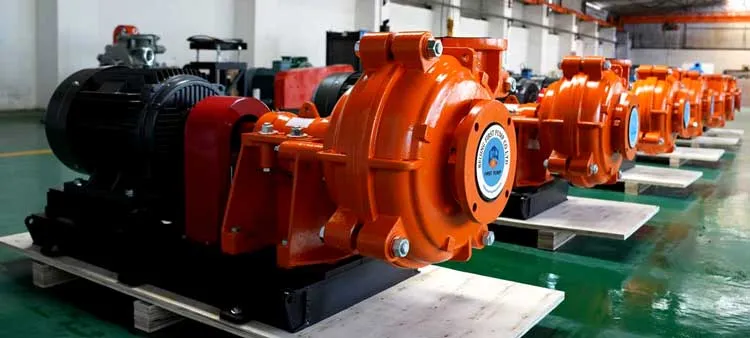
How to Compare Slurry Pump Suppliers for Industrial Applications
Selecting the right slurry pump supplier is an important decision for industrial operations that handle abrasive, corrosive, or solids-laden fluids. Pump reliability can directly affect production efficiency, maintenance schedules, energy consumption, and equipment downtime.
When comparing a Slurry Pump Supplier, businesses should look beyond the initial equipment price. Engineering expertise, material quality, manufacturing standards, testing procedures, customization options, spare-parts availability, and technical support can all influence the long-term value of a pumping system.
Start With Application Requirements
The first step is to define the operating conditions clearly. Slurry pumps are exposed to different levels of abrasion and mechanical stress depending on the material being transported.
Before approaching suppliers, collect information such as:
- Required flow rate
- Total pumping head
- Slurry density
- Solids concentration
- Particle size and hardness
- Temperature
- Chemical characteristics
- Operating hours
- Suction and discharge conditions
Providing consistent information to each supplier makes it easier to compare their recommendations fairly.
Compare Engineering Capabilities
Engineering expertise is particularly important for slurry applications because pump selection involves more than matching flow and pressure.
A capable supplier should be able to evaluate slurry properties, hydraulic requirements, wear conditions, and installation constraints. Ask how pump sizing is performed and whether the supplier can provide technical reasoning behind its recommendations.
Suppliers that take time to understand the application may be better positioned to provide equipment that performs reliably under actual operating conditions.
Evaluate Material Selection
Material choice has a major effect on slurry pump service life. Abrasive particles can quickly damage components that are not suited to the application.
Compare the materials proposed for impellers, liners, casings, shafts, and other critical components. Depending on the slurry, suitable options may include high-chrome alloys, rubber, stainless steel, carbon steel, or specialized wear-resistant materials.
The important point is not simply choosing the most expensive material. The material should provide the right combination of wear resistance, toughness, corrosion resistance, and cost for the application.
Review Manufacturing Standards
Manufacturing quality can have a significant impact on pump reliability. Casting defects, inaccurate machining, poor assembly, or inconsistent component dimensions may lead to premature problems.
When comparing suppliers, ask about their manufacturing processes and quality-control procedures. Information about material inspection, machining tolerances, component inspection, assembly controls, and final verification can help distinguish between suppliers.
Compare Testing Procedures
Testing helps verify whether finished equipment meets its intended specifications. Different suppliers may use different levels of testing, so this is an important area for comparison.
Relevant tests may include:
- Hydraulic performance testing
- Pressure testing
- Impeller balancing
- Vibration measurement
- Leakage testing
- Dimensional inspection
- Mechanical operation checks
For larger or customized projects, ask whether factory acceptance testing can be arranged and whether test results are documented.
Assess Customization Options
Industrial applications do not always fit standard pump configurations. Installation restrictions, unusual slurry characteristics, high temperatures, or specific performance requirements may require customized equipment.
Compare each supplier’s ability to modify hydraulic components, materials, seals, shafts, mounting arrangements, or other features. However, customization should be based on genuine application requirements rather than unnecessary modifications.
Examine Wear Management
Wear is one of the most important concerns in slurry pumping. Components exposed directly to abrasive particles can require regular inspection and replacement.
Ask suppliers which components are considered wear parts and how their designs address expected abrasion. Information about liner configurations, impeller materials, expected wear patterns, and replacement procedures can help when comparing long-term operating requirements.
Check Spare-Parts Availability
Even well-designed slurry pumps require replacement parts during their service life. Delayed access to critical components can increase downtime and disrupt production.
Compare suppliers based on the availability of commonly required parts, ordering procedures, documentation, and expected supply continuity. A supplier with an organized spare-parts system can make maintenance planning easier.
Consider Technical Support
Technical support is another important point of comparison. Assistance may be needed during installation, commissioning, troubleshooting, or routine maintenance.
Ask what technical resources are available and whether the supplier provides installation instructions, maintenance guidance, drawings, performance data, and troubleshooting information.
Compare Maintenance Requirements
Two pumps with similar performance ratings may have different maintenance requirements. A design that allows easier access to wear components can reduce service time and labor costs.
When comparing suppliers, ask about recommended inspection intervals, lubrication requirements, seal maintenance, wear-part replacement, and component accessibility. These factors can influence the total cost of operating the pump.
Look Beyond the Purchase Price
The initial quotation provides only part of the cost picture. A more useful comparison considers the total cost of ownership.
Relevant costs can include:
- Initial equipment price
- Energy consumption
- Wear-part replacement
- Maintenance labor
- Spare parts
- Repairs
- Downtime
- Expected service life
A pump with a higher initial price may offer better long-term value if it operates efficiently and requires fewer repairs or component replacements.
Compare Delivery and Project Support
Delivery schedules can be important for projects with fixed installation dates or replacement requirements. Ask suppliers about production lead times, testing schedules, documentation, and shipment preparation.
Project support can also be valuable when several pumps must be integrated into an existing system. Clear communication throughout the purchasing and installation process can help reduce delays.
Evaluate Relevant Industry Experience
Experience should be considered in relation to the specific application. A supplier that has worked with similar slurry characteristics may have greater familiarity with common wear and operating challenges.
When comparing suppliers, ask about experience with comparable flow rates, slurry concentrations, particle sizes, and industrial environments. This can provide more useful information than general claims about experience.
Assess Communication and Transparency
Good communication is an often-overlooked part of supplier selection. Technical specifications, material recommendations, testing requirements, and delivery expectations should be clearly explained.
A supplier should also communicate limitations when a proposed pump is not suitable for a particular application. Transparent technical advice can help prevent incorrect equipment selection and future performance problems.
Use a Structured Comparison
After collecting information, create a consistent evaluation framework for each supplier. Consider assigning importance to factors such as engineering, quality, materials, testing, maintenance, support, and total cost.
This approach can make the decision more objective and prevent the lowest initial quotation from automatically becoming the preferred option.
Final Thoughts
Comparing slurry pump suppliers requires a broader assessment than price and basic specifications. Engineering expertise, material selection, manufacturing quality, testing, wear management, spare-parts availability, maintenance requirements, and technical support all contribute to long-term equipment performance.
By evaluating suppliers against the same technical and commercial criteria, industrial businesses can make a more informed decision and select pumping equipment that matches their operating conditions, maintenance capabilities, and long-term performance goals.