
Factors to Consider When Selecting a Laundry Pod Machine
Choosing packaging equipment for laundry detergent pods requires more than comparing production speeds. Manufacturers need to consider product characteristics, film compatibility, pouch formats, dosing accuracy, automation, maintenance, and the overall production environment.
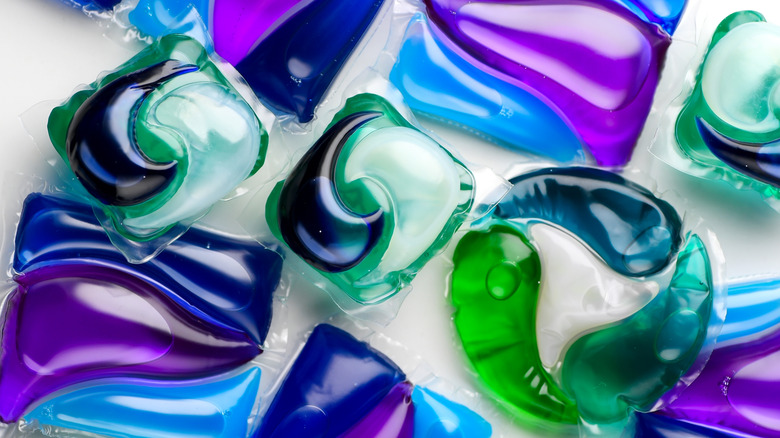
A Laundry Pod Machine is designed to coordinate processes such as water-soluble film forming, detergent filling, sealing, and pod separation. POLYVA is among the manufacturers offering equipment for water-soluble detergent packaging applications.
Product Type and Formulation
The detergent formulation should be one of the first factors evaluated. Liquid, gel, powder, and other detergent formats can have different filling and handling requirements.
For liquid detergents, viscosity and flow behavior can influence pump selection and filling accuracy. Powder products may require specialized feeding systems to maintain consistent dosing.
Production Capacity
Manufacturers should determine the required output before selecting equipment. Production targets should account for pod size, filling volume, operating hours, changeovers, cleaning, and expected downtime.
A machine’s stated maximum speed should not automatically be treated as its practical production rate. Real-world output depends on the complete manufacturing process.
Water-Soluble Film Compatibility
The machine must be suitable for the specific water-soluble film used in production. Film thickness, dimensions, mechanical properties, and sensitivity to humidity can affect how it performs during forming and sealing.
Testing the intended film with the selected equipment can help identify potential handling or sealing issues before full-scale production.
Pod Size and Design
Different detergent brands may require different pod sizes and shapes. Some applications use single-compartment pods, while others use multi-compartment designs.
Manufacturers should identify current packaging formats and consider whether additional formats may be required in the future. Equipment with suitable format flexibility can simplify future production changes.
Filling Accuracy
Consistent detergent dosing is essential for producing uniform pods. Variations in product volume can affect product performance, package weight, and manufacturing efficiency.
The filling system should match the detergent’s physical properties and required dose. Manufacturers should also examine how easily the system can be calibrated and adjusted.
Sealing Performance
The sealing system needs to create reliable closures without unnecessarily damaging the water-soluble film. Temperature, pressure, timing, and film condition can all influence the final seal.
During equipment evaluation, manufacturers should consider how sealing parameters are controlled and monitored.
Automation Level
The appropriate level of automation depends on production volume and workforce requirements. Automated film feeding, filling, sealing, cutting, and pod transfer can reduce repetitive manual operations.
Control systems may also provide information about production status, alarms, and machine conditions, helping operators manage the process more efficiently.
Machine Integration
A laundry pod machine may need to operate alongside mixing systems, detergent storage, conveyors, inspection equipment, counting systems, or secondary packaging machinery.
Before selecting equipment, manufacturers should verify physical dimensions, product transfer methods, electrical requirements, communication interfaces, and compatible line speeds.
Environmental Requirements
Water-soluble film can be affected by humidity and temperature. The production facility should therefore provide conditions suitable for film storage and processing.
Manufacturers should determine whether additional environmental controls are required and understand how these conditions may affect daily operation.
Changeover Requirements
Production facilities that handle multiple products or pod formats need efficient changeover procedures. Frequent manual adjustments can increase setup time and introduce inconsistencies.
Useful considerations include:
- Format adjustment time
- Tool or component changes
- Parameter storage
- Cleaning requirements
- Operator accessibility
- Startup verification
Maintenance and Accessibility
Routine maintenance should be considered before purchasing equipment. Components such as dosing systems, film guides, forming areas, sealing surfaces, and sensors may require regular inspection or cleaning.
Machines with accessible service points can make routine maintenance easier and potentially reduce unnecessary downtime.
Cleaning Requirements
Laundry detergent can leave residue around filling and sealing components. The equipment should support cleaning procedures that are appropriate for the formulation being packaged.
Manufacturers should understand how frequently cleaning is required and which components need to be removed or inspected during sanitation procedures.
Safety Features
Safety should be assessed alongside production and technical specifications. Relevant features may include guards, emergency stops, interlocks, controlled access areas, and appropriate machine protection.
The equipment should also fit the facility’s existing safety procedures and applicable workplace requirements.
Quality Control
A suitable machine should support consistent pod production and allow operators to monitor important quality characteristics.
Depending on the application, quality checks may include pod dimensions, fill quantity, seal integrity, film positioning, and overall appearance. Automated sensors can assist with detecting certain production deviations.
Total Cost of Ownership
Purchase price is only one part of the overall investment. Manufacturers should also consider operating and maintenance costs.
Factors may include:
- Energy consumption
- Film usage
- Spare parts
- Maintenance labor
- Cleaning time
- Operator requirements
- Downtime
- Changeover costs
- Technical support
Evaluating these factors can provide a clearer understanding of long-term operating expenses.
Technical Support and Training
Installation and commissioning can be easier when technical documentation and training are available. Operators should understand machine controls, film loading, product setup, cleaning procedures, safety functions, and basic troubleshooting.
Manufacturers should also clarify the availability of replacement parts and technical assistance before finalizing an equipment purchase.
Testing Before Purchase
Where possible, manufacturers should test representative detergent formulations and water-soluble film on the proposed equipment.
Testing can provide practical information about dosing accuracy, film handling, pod formation, sealing quality, production speed, and changeover requirements.
Conclusion
Selecting the right laundry pod packaging equipment requires a detailed review of both the product and the manufacturing environment. Product formulation, production capacity, film compatibility, pod design, filling accuracy, sealing, automation, maintenance, safety, and integration should all be considered.
A structured evaluation helps manufacturers choose equipment that aligns with their current production requirements while leaving room for future packaging needs and process improvements.