
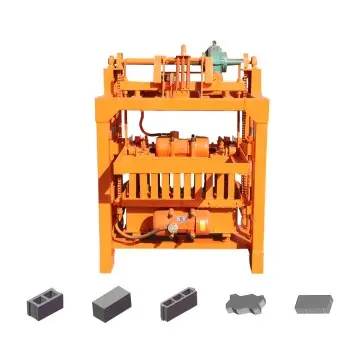
Egg Laying Block Making Machine: Features and Benefits for On-Site Production
Some construction projects need a steady supply of concrete blocks but do not have convenient access to a permanent block manufacturing facility. Transporting large quantities of finished units can add handling, scheduling, and delivery challenges. An egg laying block machine offers an alternative production arrangement by forming blocks directly on a prepared working surface and moving forward as production continues.
An Egg Laying Block Making Machine is a type of mobile block-forming equipment that typically deposits fresh blocks onto the ground or a prepared production surface. After completing a forming cycle, the machine moves to the next position, leaving the newly formed units behind. The precise design and operating method vary between models, so buyers should examine the manufacturer’s specifications and demonstration.
How the Egg Laying Method Works
The process starts with preparing a concrete mixture suitable for the machine. Cement, aggregates, and water are measured and mixed to achieve the required consistency. The material is then supplied to the machine’s hopper or feeding arrangement.
The machine positions its mold over the prepared surface and carries out the forming cycle. Compaction, often involving vibration and mechanical movement, shapes the mixture into blocks. The equipment then releases the fresh units and moves forward to repeat the process.
Unlike production systems that place blocks onto individual pallets, many egg laying machines leave the formed products on the working surface. This makes the condition and preparation of that surface particularly important.
1. Production Directly at the Project Site
The main attraction of this machine type is its suitability for on-site production. Contractors may be able to manufacture blocks near the area where they will be used, reducing the need to transport finished units over long distances.
This can be useful for projects with substantial block requirements or limited access to suppliers. However, the benefit depends on the availability of suitable raw materials, water, power, labor, and sufficient space.
The production area must be level and firm enough to support the machine and provide a suitable surface for freshly formed blocks. Uneven or unsuitable ground can affect product formation and machine movement.
2. Continuous Movement Between Forming Positions
Egg laying machines are designed to move after releasing each group of blocks. This operating arrangement can support a repeating production sequence without requiring every fresh unit to be placed on a separate pallet.
The machine’s movement must be controlled carefully. Operators need to maintain suitable spacing between production positions and ensure that previously formed blocks are not disturbed.
The actual output depends on the number of blocks formed per cycle, cycle duration, machine movement, block dimensions, and operating conditions. Ask suppliers for realistic production estimates based on the intended product.
3. Reduced Dependence on Individual Pallets
Depending on the machine design, the egg laying method may reduce the number of pallets needed during the initial forming stage. Blocks are released onto the prepared surface and remain there for the required early handling period.
This does not remove the need for a planned curing and storage system. Fresh units still need protection, and they must eventually be moved or managed according to the product’s requirements.
The manufacturer should clarify how blocks are removed, transported, and cured after forming. The required labor and equipment should be included in the overall site plan.
4. Product and Mold Considerations
Different projects may require solid blocks, hollow blocks, or other masonry shapes. The machine’s mold configuration determines which products it can form.
Before purchasing, confirm the available mold dimensions, compatibility with additional designs, and the time needed for a mold change. Examine sample products for accurate dimensions, clean edges, and consistent formation.
Do not assume that every egg laying model can manufacture every type of concrete block. Product compatibility must be verified for the specific machine.
5. Managing Site Conditions and Curing
Because production takes place on a prepared surface, site conditions are central to successful operation. The ground should be sufficiently level, clean, and stable. Workers need safe access to the machine, mixing equipment, and raw materials.
Fresh blocks must be protected from damage and unsuitable weather conditions. Curing arrangements should maintain appropriate conditions so the concrete can develop the required properties.
The production schedule should also account for the space occupied by blocks as they cure. Starting production without sufficient room can quickly disrupt the workflow.
6. Maintenance and Operator Training
Routine inspection should cover the machine’s frame, wheels or movement system, mold, vibration components, controls, and hydraulic or electrical parts where fitted. Concrete residue should be removed according to the manufacturer’s instructions.
Operators need training in safe movement, forming cycles, site positioning, emergency procedures, and basic fault identification. Relocation and servicing should follow the equipment supplier’s safety guidance.
Is an Egg Laying Machine Suitable for Your Project?
An egg laying block-making machine can be useful where on-site production, reduced pallet handling, and mobility are important. Its suitability depends on the ground conditions, product requirements, output target, and availability of curing space.
Before investing, compare the full cost of operating the machine on-site with the cost of buying and transporting finished blocks. A realistic assessment will show whether this production method offers a practical advantage for the project.