
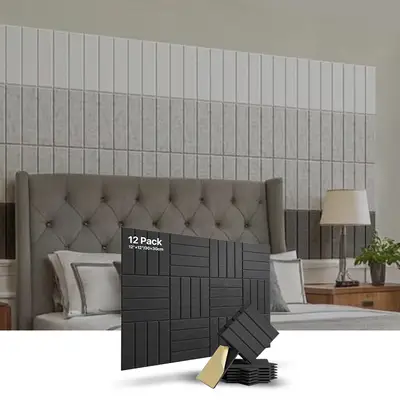
Choosing an Acoustic Panel Factory for Durable and Effective Acoustic Solutions
Creating a comfortable indoor environment requires careful attention to sound management, material quality, and interior design. Offices, schools, hotels, restaurants, studios, and residential buildings all face different acoustic challenges. Selecting suitable acoustic panels can help reduce unwanted sound reflections, control reverberation, and improve the overall experience of an indoor space.
However, the effectiveness and durability of acoustic products depend on more than their appearance. The manufacturer’s materials, production methods, quality-control procedures, and technical capabilities also matter. Choosing a reliable Acoustic Panel Factory allows architects, contractors, designers, and property owners to access products that meet specific project requirements while supporting consistent quality and dependable supply.
1. Evaluate the Manufacturer’s Experience and Expertise
Manufacturing experience is an important consideration when comparing acoustic panel suppliers. An experienced factory is more likely to understand the requirements of different applications and offer suitable product recommendations.
Before choosing a manufacturer, review its product range, manufacturing background, and experience with commercial and residential projects. Consider whether it has supplied panels for environments such as conference rooms, educational facilities, hospitality interiors, and recording spaces.
It is also useful to examine previous project examples and request product samples. These can provide a better understanding of the manufacturer’s capabilities than general promotional claims.
2. Understand the Materials Used in Acoustic Panel Production
Material selection has a direct influence on an acoustic panel’s performance, durability, appearance, and maintenance requirements. Different materials are suitable for different environments, so buyers should understand the characteristics of each option.
Common acoustic panel materials include:
- Polyester fiber: A lightweight material frequently used for decorative wall and ceiling treatments.
- PET acoustic material: Available in different thicknesses, colors, and shapes, with some products incorporating recycled content.
- Fabric-wrapped panels: Combine an absorptive core with a decorative fabric surface.
- Wood acoustic panels: Often feature perforated or slatted designs that combine architectural appeal with acoustic functionality.
- Other engineered materials: Developed for particular performance, design, or installation requirements.
Ask the manufacturer for material specifications and relevant product documentation. This helps ensure that the selected panels are appropriate for the intended building environment.
3. Check Product Durability and Construction Quality
Durability is essential when acoustic panels are installed in spaces that experience frequent use. Products used in offices, educational facilities, hotels, and public buildings may need to withstand regular cleaning, occasional contact, and long-term exposure to indoor conditions.
Several factors influence product durability, including material composition, panel construction, bonding quality, surface finishing, and installation methods.
When evaluating a manufacturer, consider whether it performs inspections for:
- Panel dimensions and thickness.
- Material consistency.
- Surface defects and finishing quality.
- Bonding and assembly strength.
- Packaging and transportation protection.
A well-controlled manufacturing process helps reduce product variations and supports a more consistent installation.
4. Verify Acoustic Performance Before Purchasing
An attractive panel is not necessarily suitable for every acoustic application. Buyers should evaluate the product’s tested sound absorption characteristics and compare them with the project’s requirements.
The Noise Reduction Coefficient (NRC) is commonly used to summarize sound absorption performance under specified laboratory conditions. However, the actual acoustic results in a room depend on several factors, including panel thickness, mounting arrangement, room dimensions, and the placement of the treatment.
Request test reports for the specific product being considered. Check whether the tested construction and installation method match the proposed application.
It is also important to distinguish sound absorption from sound insulation. Acoustic panels primarily help control reflections and reverberation within a space. Preventing sound from passing between rooms generally requires additional sound-isolation measures.
5. Consider Customization and Design Flexibility
Modern interior projects often require acoustic products that complement specific architectural concepts. Standard panel dimensions and finishes may not always suit the layout or visual requirements of a building.
A capable manufacturer should offer suitable customization options, which may include:
- Custom panel dimensions and thicknesses.
- Different colors and fabric finishes.
- Geometric shapes and decorative patterns.
- Wall-mounted and ceiling-mounted configurations.
- Products designed for specific interior applications.
Customization can help architects integrate acoustic treatment into feature walls, suspended ceilings, meeting rooms, and other design elements.
Before production begins, provide accurate drawings, measurements, and finish specifications. Approving a sample can also help avoid differences between the expected and final product.
6. Assess Production Capacity and Delivery Reliability
A manufacturer’s production capacity is particularly important for projects requiring large quantities of acoustic panels. Delays in material supply can affect installation schedules and create additional costs for contractors.
Ask about the factory’s typical production capacity, current order commitments, raw material availability, and estimated lead times.
It is also worth discussing whether the manufacturer can arrange phased deliveries for projects involving multiple buildings or construction stages.
A realistic production schedule should account for sample approval, material preparation, manufacturing, quality inspection, packaging, and transportation. Clear communication about these stages makes project coordination easier.
7. Review Quality-Control Procedures and Certifications
Consistent quality is important when panels are installed across large areas or multiple locations. Variations in dimensions, material composition, or finishing can affect both the appearance and performance of an installation.
Reliable manufacturers use inspection procedures throughout production rather than relying only on a final visual check.
Buyers should ask about quality-control standards, relevant product testing, and available certifications. Depending on the project, useful documentation may include acoustic test reports, material safety information, VOC emissions results, and environmental product documentation.
Always verify that certificates and test reports apply to the exact product being purchased. This helps avoid relying on general claims that may not reflect the specifications of the selected panel.
8. Compare Pricing with Overall Product Value
Price is an important part of supplier selection, but the lowest quotation does not always represent the best value. A less expensive product may involve compromises in durability, consistency, finishing, or technical support.
When comparing manufacturers, evaluate the complete cost of the proposed solution. Consider product specifications, customization charges, minimum order quantities, packaging, transportation, installation requirements, and warranty conditions.
A detailed quotation makes it easier to compare suppliers on equal terms. It also helps identify additional expenses before the order is confirmed.
The objective should be to select panels that meet the project’s performance and durability requirements while remaining within the available budget.
9. Look for Technical Support and After-Sales Service
Technical assistance can make a significant difference during product selection and installation. Architects and contractors may need guidance on panel specifications, mounting systems, material suitability, and maintenance requirements.
A dependable manufacturer should be able to provide clear product information and respond to questions throughout the order process.
After-sales support is equally important. Before purchasing, clarify warranty coverage, procedures for reporting defects, replacement arrangements, and the manufacturer’s responsibilities if products do not match the agreed specifications.
Clear terms help establish realistic expectations and create a more dependable working relationship.
10. Match the Factory’s Capabilities to Your Project
The best manufacturing partner is not necessarily the largest supplier or the one offering the widest product range. It is the factory whose capabilities match the specific needs of the project.
For example, a recording studio may prioritize acoustic test information and specialized absorption products, while a commercial office project may place greater emphasis on decorative finishes, consistent dimensions, and bulk delivery.
Before making a final decision, prepare a clear project specification covering the intended application, required quantities, material preferences, dimensions, acoustic targets, budget, and delivery schedule.
Comparing manufacturers against these requirements provides a practical way to identify the most suitable partner.
Conclusion
Choosing an acoustic panel manufacturer requires more than comparing product prices or visual designs. Material quality, durability, tested acoustic performance, customization options, production capacity, and technical support all contribute to the success of an acoustic treatment project.
By reviewing these factors carefully, architects, contractors, designers, and property owners can make informed purchasing decisions and reduce the risk of material-related problems. Working with a reliable manufacturing partner helps ensure that acoustic panels meet the project’s functional requirements, complement its interior design, and provide dependable performance over time.