
Benefits of Takeaway Bento Boxes for Restaurants, Cafes, and Food Delivery Services
Introduction
Food packaging plays an important role in the success of restaurants, cafes, and food delivery businesses. Beyond simply holding meals, effective packaging helps preserve food quality, improve presentation, simplify order handling, and create a positive customer experience. As takeaway and delivery services continue to grow, businesses are looking for practical containers that meet different food packaging requirements.
One increasingly popular option is compartment-based meal packaging, which allows multiple food items to be served together without mixing. Takeaway Bento Boxes offer this practical structure, making them suitable for restaurants serving combination meals, cafes offering lunch options, and delivery services handling a variety of prepared dishes. Their flexible designs and convenient construction provide several advantages for modern food businesses.
1. Better Organization of Different Food Items
One of the main benefits of takeaway bento packaging is its ability to keep different meal components organized.
Traditional single-compartment containers may cause sauces, vegetables, rice, and other ingredients to mix during transportation. Bento boxes address this issue through separate sections that give each food item its own space.
This arrangement is especially useful for:
- Rice meals served with vegetables and proteins.
- Lunch combinations containing several side dishes.
- Salads accompanied by toppings or dressings.
- Meals that include snacks, desserts, or fruit.
- Balanced meal plans with controlled portions.
Better organization helps restaurants maintain the intended structure of their dishes from preparation to delivery.
2. Improved Food Presentation
Presentation influences how customers perceive a meal, particularly when ordering food online.
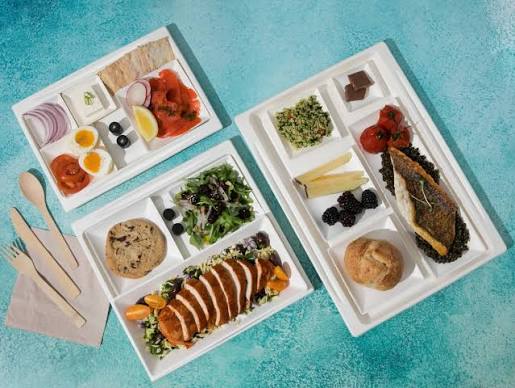
Bento boxes allow restaurants to arrange ingredients in separate compartments, creating a neat and visually appealing presentation. Different colors, textures, and food categories can be displayed without appearing disorganized.
For cafes and restaurants, this format can make everyday lunch combinations look more carefully prepared. It also helps customers identify individual meal components easily.
A well-organized meal can contribute to a more satisfying takeaway experience.
3. Greater Convenience for Customers
Customers often prefer packaging that is easy to carry, open, and handle.
Bento-style containers bring several food items together in one package, reducing the need to manage multiple separate containers. This is useful for office workers, students, travelers, and customers eating away from home.
Depending on the design, containers may include attached lids, folding closures, or secure locking features.
Convenient packaging can make takeaway meals easier to transport and consume in different settings.
4. More Efficient Food Preparation
Restaurants and cafes often need to prepare many takeaway orders within a limited period.
Using compartmentalized containers can simplify the packaging process because multiple meal components can be placed in one container. Staff can follow a consistent arrangement when assembling frequently ordered meal combinations.
For example, a restaurant serving rice with chicken and vegetables can assign each component to a specific compartment.
Standardized packaging arrangements may help reduce preparation confusion, especially during busy lunch and dinner periods.
5. Suitable for Different Restaurant Menus
Bento boxes are versatile enough to accommodate many types of food.
Restaurants can use them for Asian cuisine, grilled meals, salads, vegetarian combinations, snacks, and other prepared dishes.
Their compartment layouts can also be selected according to portion sizes and menu combinations.
This flexibility allows businesses to use a consistent packaging style across different menu categories while choosing suitable sizes for individual dishes.
6. Practical Packaging for Cafes
Cafes serve more than beverages and light snacks. Many also offer sandwiches, salads, pasta, rice bowls, pastries, and complete lunch meals.
Bento-style containers can help cafes package these products in an organized way.
For example, a lunch box might contain a sandwich, fruit, and a small dessert in separate sections. Another design could hold a salad with toppings arranged independently.
This makes bento packaging a useful option for cafes that want to expand their takeaway meal selections.
7. Better Support for Food Delivery Services
Food delivery creates packaging challenges because meals may be moved between kitchens, drivers, and customers.
During transportation, containers can experience movement, pressure, and changes in temperature. A well-designed bento box can help keep food components organized and reduce unnecessary movement within the package.
However, the container must be selected according to the meal’s weight, moisture content, and delivery conditions. Secure closures and appropriate material strength are particularly important for longer delivery routes.
Businesses should test packaging with actual menu items before adopting it for regular delivery operations.
8. Flexible Portion Control
Portion consistency is important for restaurants, catering companies, and meal preparation services.
Compartment sizes provide a practical way to organize different food quantities within one package. Businesses can assign sections for proteins, vegetables, grains, and side dishes according to their menu standards.
This can help kitchen staff maintain consistent meal arrangements across multiple orders.
Bento containers are also useful for businesses offering balanced meal combinations or predefined lunch packages.
9. Opportunities for Brand Recognition
Food packaging is an additional opportunity for businesses to communicate their brand identity.
Many bento-style containers can be customized with printed logos, brand colors, product information, or simple graphic designs.
Restaurants can use consistent packaging across takeaway and delivery orders to create a recognizable appearance.
Customization should be planned around the container’s material, printing requirements, and applicable food-contact safety standards.
10. Potential to Reduce Packaging Complexity
When a meal contains several separate components, businesses may otherwise need multiple containers.
A bento box can combine those components within one package, potentially reducing the number of individual containers needed for certain meal combinations.
This may simplify storage, order assembly, and packaging inventory management.
The actual material savings depend on the container size, compartment design, and the packaging it replaces. Businesses should compare complete packaging systems rather than assuming that one container is always more resource-efficient.
11. Options for Different Packaging Materials
Takeaway bento boxes are available in different materials, allowing food businesses to select packaging according to their operational requirements.
Cardboard and Paperboard
Paper-based bento boxes are popular among businesses looking for lightweight packaging with printing and customization possibilities.
Depending on their construction and protective treatments, they can be suitable for many takeaway meals. Moisture and grease resistance should be checked when packaging foods containing sauces or oils.
Plastic
Plastic bento boxes are available in rigid and lightweight formats. Some designs include transparent lids that make food visible before opening.
They can offer useful moisture resistance, but businesses should verify the material’s intended food-contact and temperature applications.
Other Fiber-Based Materials
Some containers use molded or alternative plant-fiber materials. Their strength, moisture resistance, and disposal options vary according to their composition and manufacturing process.
Choosing the right material requires considering food characteristics, transportation conditions, customer expectations, and local waste management facilities.
12. Support for More Sustainable Packaging Choices
Environmental considerations are becoming increasingly important in food service packaging decisions.
Some restaurants are exploring paper-based and fiber-based bento boxes as alternatives to conventional disposable plastic containers.
Cardboard packaging made with responsibly sourced or recycled fibers may support more resource-conscious purchasing decisions. However, recyclability depends on the complete packaging structure, including coatings, laminations, adhesives, and food contamination.
Businesses should review supplier specifications and local recycling requirements before describing packaging as recyclable or environmentally friendly.
13. How to Select the Right Bento Boxes for Your Business
Although bento boxes offer many advantages, selecting the correct design is essential for achieving reliable performance.
Restaurants, cafes, and delivery businesses should consider the following factors:
- Food type: Determine whether the container will hold dry, oily, moist, hot, or chilled food.
- Compartment arrangement: Select a layout that matches the number and size of meal components.
- Material strength: Check whether the container can support the food without bending or losing its shape.
- Closure design: Make sure the lid or folding structure stays secure during normal handling.
- Size and capacity: Choose dimensions that suit portion sizes and storage requirements.
- Customization: Evaluate available printing, colors, and structural options.
- Supplier reliability: Review sample quality, production capacity, lead times, and quality control procedures.
Requesting samples and testing them with actual menu items can help businesses identify potential problems before placing bulk orders.
14. Working with a Reliable Packaging Supplier
A consistent packaging supply is important for businesses that process takeaway orders every day.
When comparing manufacturers, buyers should examine product specifications, material options, customization services, minimum order quantities, and delivery arrangements.
Clear communication is also necessary to ensure that the supplier understands the required dimensions, compartment structure, and performance expectations.
Businesses exploring packaging options from suppliers such as Uchampak can compare available bento box designs and evaluate whether their specifications match particular food service applications.
Conclusion
Takeaway bento boxes offer several practical benefits for restaurants, cafes, and food delivery services. Their compartment-based structure improves food organization, supports attractive presentation, and provides a convenient way to package different meal components together.
They can also simplify certain packaging operations, support portion consistency, and provide customization opportunities for businesses building a recognizable brand.
To achieve the best results, food businesses should evaluate material quality, compartment sizes, closure performance, food compatibility, and supplier reliability. Selecting packaging based on actual menu and delivery requirements can help create a more efficient operation and a better customer experience.