
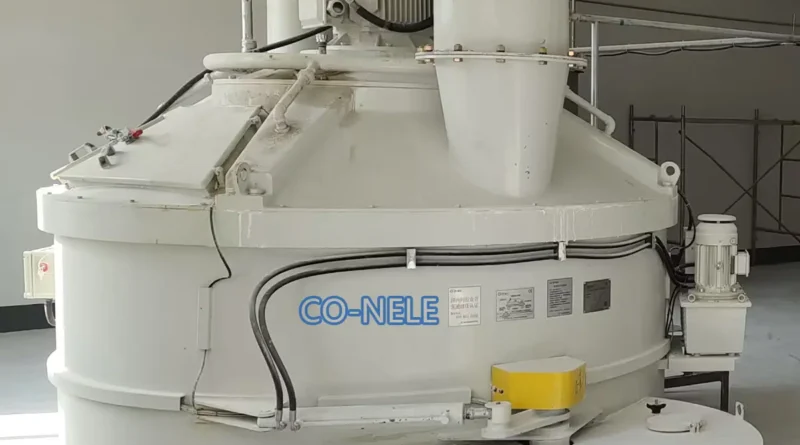
How to Choose the Right Glass Batch Mixer for Efficient Production
Consistent raw material preparation is essential for efficient glass manufacturing. Before materials enter the melting furnace, silica sand, cullet, soda ash, limestone, and other ingredients need to be accurately proportioned and thoroughly blended. The mixing equipment plays an important role in achieving a uniform batch and supporting stable downstream processing.
When selecting a Glass Batch Mixer, manufacturers should consider more than the rated capacity. Material characteristics, batch formulation, mixing uniformity, cycle time, automation, maintenance, and integration with the existing production line can all influence the equipment’s suitability and long-term performance.
Understand Your Glass Batch Formulation
The first step is to identify the materials that will be processed. Glass batches can contain several ingredients with different particle sizes, densities, and proportions.
Common materials include silica sand, soda ash, limestone, dolomite, cullet, colorants, and other additives. The characteristics of these materials can influence how they behave during mixing.
A clear understanding of the formulation helps manufacturers determine the mixing intensity and equipment configuration required.
Determine the Required Production Capacity
The mixer should be capable of supporting the required glass production volume. Batch size and mixing cycle time should be considered together rather than evaluating capacity alone.
A mixer with insufficient capacity may create delays in furnace feeding. An oversized system, however, may increase equipment and operating costs without providing practical benefits.
Manufacturers should consider current output as well as potential future production requirements.
Evaluate Mixing Uniformity
Uniformity is one of the most important criteria when selecting glass batch mixing equipment. Minor ingredients must be distributed consistently throughout the larger batch to maintain the intended chemical composition.
An effective mixer should provide thorough material circulation while minimizing areas where ingredients can remain concentrated.
For demanding glass formulations, manufacturers may benefit from testing representative raw materials before making a final equipment decision.
Consider Particle Size and Material Density
Glass batch ingredients can vary considerably in physical characteristics. Fine powders may behave differently from larger sand particles or pieces of cullet.
Differences in density and particle size can increase the risk of segregation during handling and transportation. The mixer and material-handling system should therefore work together to maintain batch uniformity.
Understanding these characteristics can help manufacturers choose a suitable mixing process.
Check the Mixer Design
The internal design of the mixer affects how materials move and interact. Mixing tools should provide sufficient circulation to distribute both major ingredients and smaller additives.
The design should also be appropriate for abrasive glass batch materials. Durable contact surfaces and replaceable wear components can be valuable for long-term operation.
Manufacturers should examine the construction of the mixing chamber, tools, liners, and other components exposed to the batch.
Review Mixing Cycle Time
Mixing time affects both batch quality and production efficiency. Insufficient mixing may produce an uneven batch, while excessively long cycles can reduce production efficiency and increase energy consumption.
The ideal cycle depends on the formulation, equipment design, and required level of uniformity.
When comparing mixers, manufacturers should consider actual mixing performance rather than relying only on theoretical cycle times.
Evaluate Material Loading and Discharge
Efficient charging and discharge are important for maintaining a smooth production cycle. The mixer should receive materials consistently and discharge the completed batch without excessive residual material.
Material buildup inside the mixer can affect subsequent batches and increase cleaning requirements.
A well-designed material flow system can help reduce unnecessary handling and support more efficient operation.
Consider Automation and Dosing Accuracy
Accurate ingredient dosing is essential in glass manufacturing. Small quantities of additives can have a significant effect on the composition and properties of the finished glass.
Automated weighing and feeding systems can improve dosing repeatability and reduce errors associated with manual handling.
When evaluating equipment, consider whether the mixer can integrate with automated batching and control systems.
Assess Cullet Handling
Cullet is widely used in many glass production processes and may account for a significant portion of the batch. Its physical characteristics can differ from those of virgin raw materials.
The mixing system should be capable of handling the required cullet size and proportion without creating excessive segregation or wear.
Cullet handling should also be considered when designing the feeding, storage, and discharge systems around the mixer.
Evaluate Maintenance Requirements
Glass batch materials can be abrasive, which means internal mixer components may experience regular wear. Maintenance requirements should therefore be considered before purchase.
Important components to inspect include:
- Mixing tools
- Wear liners
- Bearings
- Seals
- Drive components
- Discharge mechanisms
Equipment that allows easy access to serviceable components can help reduce maintenance time and production downtime.
Consider Energy Efficiency
Energy consumption is an important part of operating cost. However, efficiency should be evaluated in relation to mixing quality and production output.
A mixer that completes the required mixing process within an appropriate cycle can avoid unnecessary energy use. Efficient material movement and properly selected drive systems can also contribute to lower operating requirements.
Energy performance should be assessed as part of the overall cost of ownership.
Check Integration with the Production Line
The mixer should fit smoothly into the complete glass batch preparation system. This may include storage silos, weighing equipment, conveyors, dust-control systems, and furnace charging equipment.
Space requirements, material flow, electrical connections, and control-system compatibility should be reviewed before installation.
Proper integration can reduce manual handling and prevent bottlenecks between batch preparation and furnace feeding.
Compare Total Cost of Ownership
The initial purchase price should not be the only consideration when comparing mixers. Long-term costs can include energy, maintenance, replacement parts, installation, and downtime.
A mixer with durable components and reliable operation may provide better long-term value even if its initial cost is higher.
Comparing total ownership costs gives manufacturers a more complete basis for making an equipment decision.
Ask About Testing and Technical Support
When the glass formulation is complex or the mixing requirements are demanding, testing can provide useful information about actual equipment performance.
Manufacturers should also evaluate the level of technical support available for installation, commissioning, maintenance, and operator training.
Reliable technical assistance can help reduce the challenges associated with integrating new equipment into an established production process.
Conclusion
Choosing the right glass batch mixer requires careful consideration of material characteristics, formulation, production capacity, mixing uniformity, cycle time, automation, maintenance, and system integration.
The best equipment is not necessarily the largest or least expensive option. Instead, it should provide the required mixing performance while fitting efficiently into the complete glass production process.
By evaluating both technical specifications and long-term operating requirements, manufacturers can select mixing equipment that supports consistent batch quality, efficient production, and reliable operation.