
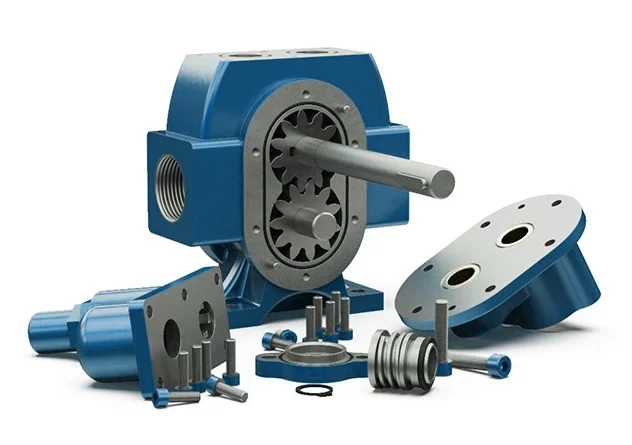
How Gear Pump Manufacturers Improve System Efficiency
Gear pumps are used in many industrial systems where consistent fluid movement is necessary for reliable operation. The efficiency of these systems depends not only on the pump itself but also on how well the pump is matched to the equipment, fluid, and operating conditions.
An experienced gear pump manufacturer can contribute to better system efficiency through precise engineering, appropriate material selection, optimized pump designs, and application-specific recommendations. These factors can help reduce unnecessary energy use, fluid losses, component wear, and operational interruptions.
Matching Pump Capacity to System Requirements
Correct pump sizing is one of the most important factors affecting efficiency. A pump that is too large may consume more energy than necessary, while an undersized pump may struggle to provide the required flow or pressure.
Manufacturers can evaluate factors such as flow rate, pressure, rotational speed, and duty cycle when recommending a suitable pump. Matching capacity to actual system requirements helps the pump operate closer to its intended performance range.
Improving Internal Precision
Gear pumps rely on carefully controlled clearances between their internal components. Excessive clearances can increase internal leakage, while insufficient clearances may create excessive friction.
Precision machining allows manufacturers to maintain appropriate tolerances between gears, shafts, and housings. Better dimensional consistency can contribute to stable flow and efficient fluid transfer.
Precision is particularly important in applications where pumps operate continuously or at high speeds.
Optimizing Gear Design
The geometry of the gears influences how fluid enters, moves through, and exits the pump. Manufacturers can optimize gear profiles and component dimensions according to the intended operating conditions.
A suitable gear design can help maintain consistent displacement while reducing unnecessary mechanical losses. The design must also account for factors such as pressure, fluid viscosity, speed, and expected operating life.
Different applications may therefore require different gear configurations rather than relying on a single universal design.
Selecting Appropriate Materials
Material selection can influence both efficiency and service life. Components that are poorly matched to the pumped fluid may experience corrosion, wear, or premature deterioration.
Manufacturers consider fluid characteristics when selecting materials for gears, housings, shafts, bearings, and seals. Compatibility can help maintain pump performance and reduce the frequency of component replacement.
Durable materials can also support more stable operation in demanding environments.
Reducing Fluid Leakage
Internal and external leakage can reduce the effectiveness of a pumping system. When fluid escapes through excessive internal clearances or worn seals, the pump may need to work harder to achieve the desired output.
Manufacturers address leakage through precision manufacturing, suitable sealing systems, and appropriate component tolerances.
Maintaining these characteristics over the pump’s service life can help preserve performance and reduce wasted fluid.
Supporting High-Viscosity Applications
Fluid viscosity has a significant effect on pumping efficiency. Thick liquids require more effort to move and may behave differently as operating temperature changes.
Manufacturers can recommend pump configurations based on the viscosity range of the intended fluid. Factors such as gear design, operating speed, internal clearances, and temperature can be considered together.
This approach helps prevent operating conditions that could unnecessarily increase energy consumption or mechanical stress.
Developing Application-Specific Solutions
Industrial systems often have requirements that differ from standard applications. A customized pump may be useful when a system requires a particular flow rate, pressure range, mounting configuration, or material combination.
Application-specific engineering allows the pump to be designed around the actual requirements of the equipment. This can improve integration and reduce the need for inefficient workarounds elsewhere in the system.
Customization should be supported by technical evaluation to ensure that changes do not negatively affect reliability.
Improving Mechanical Integration
A pump’s efficiency can also be affected by how it is installed. Misalignment, unsuitable connections, or poor integration with the drive system can increase vibration and mechanical losses.
Manufacturers can provide dimensional information, mounting options, shaft configurations, and connection arrangements that help engineers integrate the pump correctly.
Proper mechanical integration supports smoother operation and can reduce unnecessary stress on connected components.
Controlling Operating Speed
Pump speed has a direct relationship with flow and can also influence wear, heat generation, and energy consumption. Operating a gear pump outside its recommended speed range may reduce efficiency or shorten component life.
Manufacturers can provide recommended speed ranges based on pump design and operating conditions. In systems using variable-speed drives, selecting an appropriate operating range can help match pump output to changing process demands.
This can be especially useful in systems where full flow is not continuously required.
Improving Seal Performance
Seals are important for preventing fluid leakage and maintaining system integrity. A seal that is incompatible with the fluid or temperature may deteriorate prematurely.
Manufacturers can select sealing materials according to fluid chemistry, pressure, temperature, and operating conditions. Proper seal selection helps maintain pump performance and reduces the risk of leakage-related losses.
Seal design should be considered as part of the complete pump rather than as an isolated component.
Supporting Preventive Maintenance
Efficiency can decline as pump components wear. Damaged gears, worn bearings, deteriorated seals, and contamination can all affect performance.
Manufacturers can support users with maintenance recommendations, inspection guidelines, and information about replacement components. Regular maintenance helps identify changes in pump performance before they develop into major problems.
Keeping components in suitable condition can help preserve efficiency throughout the operating life of the equipment.
Testing for Consistent Performance
Manufacturers can use performance testing to verify that pumps operate according to their specified characteristics. Testing may involve flow, pressure, leakage, dimensions, and general operational behavior.
Quality testing helps identify manufacturing variations that could affect performance. Consistent testing procedures can also support more predictable pump behavior across different production batches.
For critical applications, additional testing may be appropriate based on the system’s operating requirements.
Reducing Long-Term Operating Costs
Improved efficiency is not limited to energy consumption. A well-matched gear pump can also reduce maintenance needs, fluid losses, replacement frequency, and unexpected downtime.
These factors contribute to the total cost of operating an industrial system. Selecting a pump based on long-term performance rather than initial purchase price can therefore provide greater value.
Conclusion
Gear pump manufacturers can improve system efficiency through accurate pump sizing, precision manufacturing, optimized gear designs, appropriate materials, effective sealing, and application-specific engineering.
However, pump efficiency ultimately depends on the complete system. Correct installation, suitable operating conditions, regular maintenance, and proper pump selection are equally important. By considering these factors together, industrial users can achieve more consistent fluid handling, reduce avoidable losses, and support reliable long-term equipment performance.