
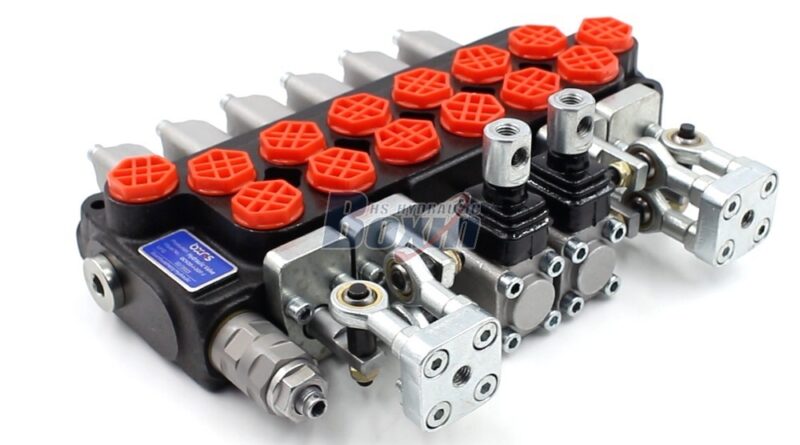
Customized Hydraulic Control Valve: Custom Features for Specialized Applications
Specialized hydraulic equipment often operates under conditions that differ from those of general-purpose machinery. Unique pressure requirements, limited installation space, unusual connection layouts, precise movement requirements, and challenging environments can make standard hydraulic valve configurations unsuitable.
A customized hydraulic control valve can be adapted to address these application-specific requirements. Depending on the project, customization may involve the valve body, internal flow paths, ports, mounting arrangement, actuation method, materials, sealing system, or control characteristics.
Why Specialized Applications Need Custom Features
Standard hydraulic valves are designed around commonly used specifications. They are effective when the hydraulic circuit falls within those established parameters.
Specialized machinery, however, may require a combination of specifications that is difficult to find in one standard component. Customization provides a way to address those requirements without redesigning the entire hydraulic system around an unsuitable valve.
Custom Valve Body Dimensions
Physical dimensions are often one of the first features considered during customization. A valve may need to fit within a compact compartment or align with an existing hydraulic assembly.
The body can be designed around available space while maintaining the required internal passages and structural strength. This can be particularly useful for mobile machinery and equipment with densely arranged components.
Specialized Port Configurations
Hydraulic ports determine how the valve connects to hoses, pipes, manifolds, and other components. Standard port locations may not always align with an existing machine.
Custom configurations can account for port size, position, orientation, and connection requirements. Proper port placement can simplify hydraulic routing and reduce the need for additional fittings.
Customized Mounting Arrangements
Mounting geometry is another area where standard components may create installation problems. Existing equipment may have fixed mounting holes or limited access around the valve.
A custom mounting arrangement can be designed to match the machine’s available mounting points. This can make installation more straightforward and reduce mechanical modifications.
Pressure-Specific Configurations
Specialized applications may operate at pressure levels that require particular valve designs or components. The valve body and internal elements must be capable of handling both normal operating pressure and expected pressure peaks.
Pressure requirements can also influence relief settings, springs, sealing elements, and internal geometry. These factors should be evaluated as part of the complete valve design.
Flow Capacity and Regulation
Flow requirements vary between hydraulic applications. Some systems need high flow for rapid actuator movement, while others require carefully regulated flow for precise control.
Custom valve configurations can be developed around the expected flow range. Internal passages and control elements can be considered according to the required balance between capacity, pressure drop, and control response.
Specialized Spool or Poppet Design
Internal control elements play a major role in valve performance. Depending on the valve type, the design may incorporate spools, poppets, seats, springs, or other components.
Their dimensions and geometry influence how fluid is directed and controlled. Customizing these elements can help achieve specific pressure, flow, or response characteristics.
Different Actuation Methods
The method used to operate a valve depends on the machine’s control system. Specialized applications may require manual, mechanical, hydraulic, pneumatic, or electrical actuation.
Custom valve development can take the available control architecture into account. This is particularly useful when the valve needs to interact with automated equipment or electronic control systems.
Material Customization
Material selection should reflect the environment and operating conditions. Valve bodies and internal components may require different combinations of strength, corrosion resistance, wear resistance, and machinability.
For example, an application exposed to moisture or corrosive substances may require greater corrosion resistance, while heavy-duty equipment may prioritize mechanical strength and durability.
Seal and O-Ring Selection
Sealing components must remain effective under the pressure, temperature, and fluid conditions of the application. Different hydraulic fluids can have different compatibility requirements.
Custom valve projects can specify appropriate seal materials according to the hydraulic medium and expected operating environment. Proper sealing helps control leakage and maintain consistent hydraulic performance.
Surface Treatments
Surface treatments can provide additional protection or improve the characteristics of selected valve components. Depending on the application, treatments may improve hardness, wear resistance, or resistance to corrosion.
The appropriate treatment depends on the component material and its function. Internal moving parts may require different treatment from externally exposed surfaces.
Temperature-Resistant Configurations
Hydraulic equipment may operate in very hot or cold environments. Temperature affects hydraulic fluid viscosity as well as the properties of seals and other materials.
Custom valve specifications can account for the expected temperature range. Selecting suitable materials and sealing elements can help maintain performance under changing thermal conditions.
Corrosion-Resistant Features
Outdoor, marine, chemical, and other demanding applications can expose hydraulic valves to corrosive conditions.
Corrosion resistance can be addressed through material selection, coatings, and surface treatments. The appropriate solution depends on whether exposure is caused by humidity, salt, chemicals, or other environmental factors.
Response and Control Characteristics
Some specialized machinery requires a valve to respond within a particular time or provide predictable control during changing loads.
Valve geometry, actuation, spring characteristics, and hydraulic conditions can influence response. These factors can be adjusted during the design process when a specific control behavior is required.
Compact Integrated Designs
In some applications, integrating multiple hydraulic functions into a compact valve assembly can reduce installation complexity.
An integrated design may combine several control functions within a single block or valve arrangement. However, integration should be evaluated carefully because it can affect manufacturing, servicing, and troubleshooting.
Features for High-Cycle Applications
Equipment that operates continuously or through frequent repetitive cycles places greater demands on internal components and seals.
For high-cycle applications, manufacturers may consider wear-resistant materials, suitable surface finishes, robust springs, and appropriate clearances. Endurance testing can then help evaluate how the design performs over repeated operation.
Custom Features for Mobile Machinery
Mobile hydraulic equipment faces additional challenges such as vibration, shock loads, changing temperatures, and limited installation space.
Valve designs for these applications may therefore prioritize mechanical durability, secure mounting, compact dimensions, and resistance to environmental exposure.
Features for Automated Equipment
Automated hydraulic systems may require valves that work with sensors, programmable controllers, and electronic control interfaces.
The valve’s actuation method and response characteristics can be selected according to the machine’s automation requirements. Consistent operation is particularly important when hydraulic functions are incorporated into programmed sequences.
Testing Custom Features
Every customized feature should be evaluated according to its intended purpose. Pressure, flow, leakage, response, and durability tests can help verify whether the final configuration meets the required specifications.
Testing may include:
- Pressure resistance testing
- Flow performance testing
- Leakage testing
- Functional testing
- Response evaluation
- Temperature testing
- Endurance testing
The exact testing program should reflect the valve’s application and operating conditions.
Choosing Which Features to Customize
Not every project requires extensive customization. Engineers should first identify the specific limitations of available standard valves.
If only the mounting arrangement or port position needs to change, a relatively simple modification may be sufficient. More demanding applications may require changes to internal geometry, materials, pressure characteristics, or control methods.
Keeping customization focused on genuine requirements can help control manufacturing complexity and cost.
Conclusion
Specialized hydraulic applications can require valve features that are not available in standard configurations. Customization can address physical installation constraints, unusual port arrangements, pressure and flow requirements, actuation methods, material needs, sealing conditions, and environmental challenges.
The most effective custom valve design begins with a clear understanding of the complete hydraulic system. By identifying which features actually require modification and validating them through appropriate testing, engineers can develop a hydraulic control solution that fits the machine’s specific operating and installation requirements.