
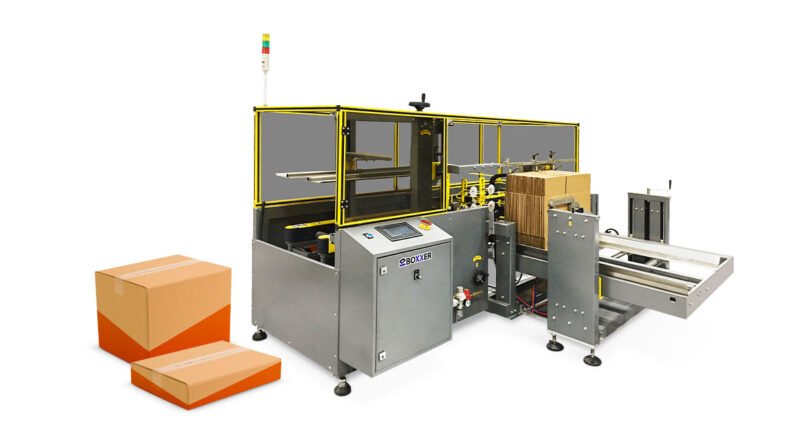
Industrial Applications of Case Erector Machine Systems in Modern Manufacturing
Modern manufacturing facilities depend on efficient packaging processes to prepare products for storage, transportation, and distribution. As production volumes increase and supply chains become more demanding, manufacturers need reliable ways to prepare cartons without slowing down their operations. Automated carton-forming equipment has become an important part of this process, helping businesses maintain consistent packaging output while reducing repetitive manual work.
A Case Erector Machine automatically takes flat corrugated blanks, opens them into box shapes, folds the bottom flaps, and secures the base for further packaging. This makes it useful across industries that handle different product types, carton sizes, and production requirements. From food processing plants to electronics factories, case erector systems support organized packaging operations and help connect carton preparation with downstream production equipment.
1. Food and Beverage Manufacturing
Food and beverage manufacturers often operate high-volume production lines where products must be packed quickly and consistently. Cartons are commonly used to transport bottles, cans, jars, pouches, and packaged food items.
Case erector systems help prepare shipping cartons before products arrive from filling, labeling, or secondary packaging stations. This reduces the need for employees to manually open and assemble boxes during busy production periods.
Typical applications include:
- Preparing cartons for bottled water and soft drinks.
- Forming cases for canned food and packaged ingredients.
- Supporting carton preparation for snack and confectionery products.
- Supplying boxes for dairy products and shelf-stable beverages.
- Preparing shipping containers for multipacks.
In these environments, consistent carton dimensions and properly secured bottoms are important for protecting products during handling and transportation. Automated case forming also helps maintain a steady supply of cartons for packing operations.
2. Pharmaceutical and Healthcare Production
Pharmaceutical manufacturers require controlled packaging processes because their products often involve strict handling, identification, and traceability requirements. Cartons are used for shipping medicines, medical supplies, diagnostic products, and healthcare consumables.
Case erector systems can support secondary and tertiary packaging operations by preparing shipping boxes for finished product containers. Their integration with conveyors and case-packing equipment helps create a more organized workflow between production and dispatch.
Common applications include:
- Preparing cartons for medicine bottles and packaged healthcare products.
- Forming shipping cases for medical consumables.
- Supporting packaging operations for diagnostic kits.
- Preparing outer cartons for pharmaceutical distribution.
Equipment selection in this sector should consider cleanability, material compatibility, operating controls, and the facility’s quality procedures. The case erector is generally part of the broader packaging process rather than a replacement for product-specific packaging and inspection requirements.
3. Electronics and Electrical Equipment Manufacturing
Electronic products often require careful packaging to reduce the risk of damage during storage and transportation. Manufacturers use corrugated cartons to ship items such as accessories, cables, small appliances, components, and consumer electronics.
Automated case erection helps ensure that shipping boxes are prepared consistently before products are loaded. This is particularly useful for factories handling multiple product models or large daily order volumes.
Applications include:
- Forming cartons for electronic accessories.
- Preparing boxes for household appliances.
- Supporting packaging lines for computer peripherals.
- Supplying cases for electrical components and industrial controls.
For fragile or high-value products, manufacturers may combine case erection with protective inserts, cushioning materials, dividers, and suitable outer-case designs. Consistent box formation helps these protective materials fit as intended.
4. Cosmetics and Personal Care Manufacturing
Cosmetics and personal care companies produce a wide variety of packaged goods, including skincare products, shampoos, lotions, perfumes, and hygiene items. These products are often distributed in bottles, tubes, jars, and individual retail cartons.
Case erectors support the preparation of larger shipping cases used to group multiple finished products for warehousing and distribution.
Typical uses include:
- Preparing cases for skincare and beauty products.
- Forming shipping cartons for personal hygiene items.
- Supporting packaging lines for shampoo and body-care products.
- Preparing outer boxes for cosmetic gift sets and product bundles.
Since these manufacturers may handle several packaging formats, adjustable guides and straightforward changeover procedures can be valuable equipment features. They help production teams adapt carton preparation to different case dimensions.
5. Automotive Parts Manufacturing
Automotive suppliers produce components in a wide range of sizes, weights, and shapes. Parts such as filters, fasteners, sensors, electrical assemblies, and replacement components often require corrugated shipping cartons for distribution to assembly plants, warehouses, and retailers.
Case erector systems can automate the preparation of these cartons, particularly in facilities with repetitive packaging requirements.
Their applications include:
- Forming cartons for small automotive components.
- Preparing cases for replacement parts.
- Supporting packaging operations for electrical assemblies.
- Supplying boxes for warehouse distribution and export shipments.
In this industry, carton strength and dimensions must be appropriate for the weight and handling requirements of each product. A properly formed and sealed bottom provides a stable foundation for the packing process, although the overall packaging design must also account for internal protection and stacking loads.
6. E-Commerce and Fulfillment Centers
E-commerce businesses and fulfillment centers process orders containing many different products. Their packaging operations must respond to changing order volumes while maintaining efficient material handling.
Case erectors help prepare cartons for packing stations, allowing employees or automated systems to focus on product picking, order verification, and loading rather than manually assembling every box.
Common applications include:
- Preparing cartons for online retail orders.
- Supplying boxes for warehouse packing stations.
- Supporting automated order fulfillment systems.
- Forming shipping cases for grouped or bulk orders.
In facilities with variable carton requirements, equipment flexibility is especially important. Businesses should evaluate the range of box sizes supported, adjustment time, carton storage capacity, and compatibility with their existing conveyor and packing systems.
7. Chemical and Industrial Materials Packaging
Chemical manufacturers and industrial suppliers ship products such as maintenance materials, specialty ingredients, hardware, and other packaged supplies. Depending on the product and applicable regulations, these items may require specific containers and protective outer packaging.
Case erectors can prepare suitable corrugated shipping cartons for products that are approved for this type of packaging.
Applications may include:
- Preparing cases for non-hazardous industrial supplies.
- Forming cartons for packaged maintenance products.
- Supporting distribution of small hardware and components.
- Preparing outer cartons for selected industrial materials.
Manufacturers must ensure that carton materials, strength, and construction are appropriate for the product. Regulated or hazardous substances may require specialized packaging systems and compliance measures beyond ordinary corrugated case erection.
8. Household Goods and Consumer Products
Manufacturers of household products often produce goods in large quantities for supermarkets, wholesalers, and retail distribution networks. Products such as cleaning supplies, kitchen accessories, home-care items, and small household appliances commonly use corrugated cases for shipment.
Automated carton erection helps maintain a consistent supply of boxes for these high-volume packaging operations.
Examples include:
- Preparing cartons for cleaning and home-care products.
- Forming cases for kitchen accessories.
- Supporting packaging lines for household tools.
- Preparing shipping boxes for small domestic appliances.
When production includes several product categories, manufacturers can benefit from equipment that supports different carton formats without lengthy setup procedures.
9. Textile and Apparel Manufacturing
Textile and apparel manufacturers use cartons to package garments, footwear, fabrics, and related products for wholesale and retail distribution. Packaging requirements can vary depending on product size, folding method, and order quantity.
Case erectors help prepare shipping boxes for packing teams or automated loading systems.
Typical applications include:
- Preparing cases for folded garments.
- Forming cartons for footwear and accessories.
- Supporting bulk textile shipments.
- Supplying boxes for warehouse replenishment and export orders.
In these operations, carton dimensions should accommodate the packed products without excessive empty space. Consistent case formation can make it easier to organize cartons for palletizing and transportation.
10. Agricultural Products and Food Processing
Agricultural processing facilities handle products such as packaged grains, dry foods, seeds, and selected processed produce. Depending on the product and distribution method, corrugated cartons may be used as secondary or shipping packaging.
Case erectors can prepare cartons for products that are suitable for this packaging format.
Examples include:
- Forming cases for packaged dry foods.
- Preparing cartons for seeds and agricultural supplies.
- Supporting packaging of processed food products.
- Supplying boxes for wholesale distribution.
The packaging environment may involve dust, moisture, or frequent cleaning. Equipment should therefore be selected and maintained according to the conditions in which it will operate.
11. How Case Erectors Integrate with Modern Production Lines
Across these industries, the value of automated case erection increases when the equipment is properly integrated with other packaging machinery. Rather than operating as an isolated station, a case erector can form part of a coordinated production system.
A typical packaging workflow may include:
- Carton feeding: Flat corrugated blanks are loaded into the machine magazine.
- Case forming: The machine picks up a blank and opens it into the required shape.
- Bottom folding: The lower flaps are folded into position.
- Bottom sealing: Tape or another suitable sealing method secures the carton.
- Carton transfer: The formed case moves toward a filling or packing station.
- Product loading and closure: Products are placed inside, and the top flaps are closed and sealed.
- Palletizing: Finished cases are organized for storage or shipment.
Depending on production requirements, case erectors can be connected to case packers, conveyors, carton sealing machines, and palletizing systems. Proper synchronization helps reduce unnecessary handling and supports a continuous packaging flow.
12. Important Factors When Selecting an Industrial Case Erector
Although case erectors serve many industries, the ideal equipment configuration depends on the manufacturer’s specific requirements. A machine designed for one packaging environment may not be suitable for another without adjustments.
Businesses should evaluate several factors before choosing a system:
| Selection factor | Why it matters |
|---|---|
| Production speed | Determines whether the machine can meet required carton output |
| Carton size range | Establishes compatibility with current and future packaging formats |
| Changeover process | Affects the time needed to switch between carton sizes |
| Sealing method | Determines compatibility with tape or adhesive-based packaging |
| Automation level | Influences operator involvement and integration requirements |
| Machine footprint | Helps determine whether the system fits the available production space |
| Maintenance access | Supports routine servicing and reduces maintenance complexity |
| Integration capability | Allows connection with conveyors and other packaging equipment |
Manufacturers should also consider carton quality, blank consistency, operator training, available technical support, and the expected operating schedule.
13. The Operational Benefits of Automated Case Erection
The advantages of case erector systems extend beyond simply opening and folding cartons. When properly selected and maintained, they can improve several aspects of manufacturing operations.
More consistent carton formation: Automated folding and sealing help produce uniform cases for downstream packaging.
Reduced repetitive manual work: Employees spend less time assembling cartons and can focus on other production responsibilities.
Improved packaging flow: A steady supply of formed cases helps prevent carton preparation from becoming a bottleneck.
Better process organization: Automated equipment creates a more predictable workflow between carton storage, case packing, and sealing.
Support for production growth: Businesses can increase packaging capacity without relying entirely on additional manual carton assembly.
The actual benefits depend on machine configuration, production conditions, carton specifications, and how effectively the equipment is integrated into the facility.
Conclusion
Case erector systems have become valuable equipment in modern manufacturing because they support consistent carton preparation across a wide range of industries. Food and beverage producers, pharmaceutical companies, electronics manufacturers, automotive suppliers, e-commerce operations, and consumer goods businesses all use corrugated cases to organize and protect products during distribution.
By automating carton forming and bottom sealing, manufacturers can reduce repetitive manual tasks, improve packaging consistency, and create smoother connections between production and shipping operations. Choosing equipment that matches carton specifications, output requirements, available space, and integration needs is essential for achieving reliable long-term performance.