
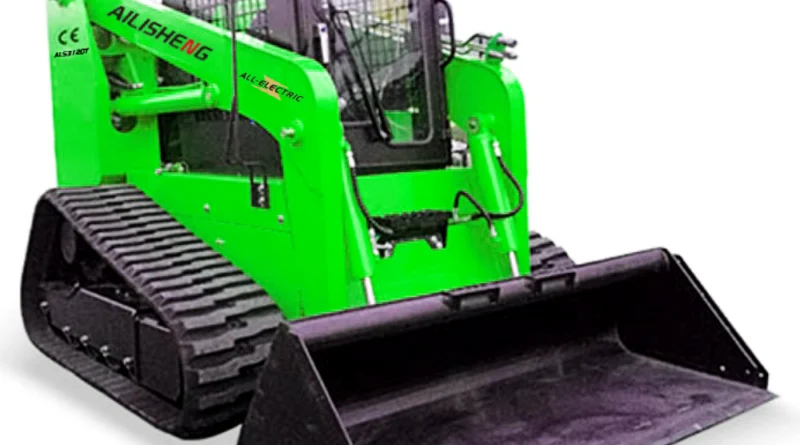
How Does an Electric Skid Steer Work? Key Components and Operating Principles
An electric skid steer is a compact, versatile machine designed to handle material movement, excavation, loading, and other demanding tasks across construction sites, warehouses, agricultural properties, and landscaping projects. Unlike traditional diesel-powered models, it uses electrical energy to operate its drive system and hydraulic functions. This design can reduce local exhaust emissions, lower operating noise, and simplify certain maintenance tasks.
Understanding how an Electric Skid Steer works helps operators, fleet managers, and equipment buyers evaluate its capabilities and determine whether it suits their working conditions. Its operation depends on several interconnected components, including a battery pack, electric motors, a control system, hydraulic equipment, and a steering mechanism.
1. The Basic Operating Principle of an Electric Skid Steer
An electric skid steer converts stored electrical energy into mechanical movement and hydraulic power. When an operator activates the controls, the machine’s electronic control system interprets the commands and directs power to the relevant motors and actuators.
The drive system moves the machine forward, backward, or through a turn, while the hydraulic system raises the lift arms, tilts the attachment, and powers compatible hydraulic tools. These functions allow one compact machine to perform a variety of jobs.
Although the exact arrangement varies by manufacturer and model, the general operating process follows a straightforward sequence:
- The battery supplies electrical energy.
- The control system manages power distribution.
- Electric motors drive the wheels or tracks and, where applicable, power hydraulic pumps.
- The hydraulic system operates the lift arms, attachment interface, and auxiliary equipment.
- Sensors and electronic controls help regulate performance and protect critical components.
2. Battery Pack: The Main Energy Source
The battery pack stores the electrical energy needed to operate the machine. Many modern electric skid steers use lithium-ion battery technology because it offers high energy density, efficient charging, and the ability to support repeated charging cycles.
Battery capacity influences how long the machine can work before recharging. However, actual operating time also depends on the load, terrain, attachment, ambient temperature, driving style, and frequency of hydraulic operation.
A battery management system, or BMS, monitors important battery conditions such as voltage, temperature, and charge levels. Depending on the design, it may limit power or stop operation if it detects conditions that could damage the battery or compromise safety.
Operators can help preserve battery performance by following the manufacturer’s charging instructions, avoiding unsuitable charging conditions, and checking battery status before starting a shift.
3. Electric Motors: Converting Electricity into Movement
Electric motors replace the internal combustion engine’s role in producing mechanical power. Instead of burning diesel to generate rotational force, they use electrical energy to create the torque needed for machine movement and other functions.
Depending on the machine’s architecture, separate motors may drive the traction system and hydraulic pump, or the equipment may use an integrated arrangement. Some designs allow precise control of motor speed and torque, helping the machine respond smoothly to operator commands.
Electric motors can deliver useful torque at low speeds, which is valuable when pushing material, positioning loads, or maneuvering in confined spaces. They also avoid many engine-related service requirements, such as changing engine oil, replacing fuel filters, and maintaining exhaust components.
Nevertheless, motors, electrical connections, cooling systems, and associated controls still require inspections and maintenance according to the service schedule.
4. Electronic Control System: Managing Machine Performance
The electronic control system coordinates the machine’s major functions. It receives input from the operator’s controls and relevant sensors, then determines how power should be delivered to the drive motors, hydraulic equipment, and auxiliary systems.
For example, when the operator requests forward movement, the controller manages the traction motors to produce the required speed and direction. When the operator raises the lift arms, the system coordinates the relevant hydraulic function.
Depending on the model, electronic controls may also provide operating modes, battery information, fault alerts, temperature monitoring, and performance limits. These features help operators understand machine status and identify problems before they develop into more serious issues.
The controller’s calibration and protective functions are important because electrical power must be managed carefully under changing loads. Operators should respond to warning messages and avoid attempting repairs to high-voltage components without appropriate training.
5. Hydraulic System: Powering the Lift Arms and Attachments
Although an electric skid steer uses electricity for propulsion and power generation, many models still rely on hydraulics to lift loads and operate attachments. The hydraulic system transfers force through pressurized fluid, allowing compact components to perform demanding tasks.
A typical hydraulic system includes a pump, reservoir, hoses, valves, cylinders, filters, and sometimes a hydraulic cooler. When the operator activates a lift or tilt control, hydraulic fluid is directed to the appropriate cylinder, causing it to extend or retract.
This movement raises or lowers the lift arms and changes the angle of the attachment. Auxiliary hydraulic circuits can power compatible tools such as augers, trenchers, sweepers, and certain breakers.
Hydraulic performance depends on factors such as pump capacity, system pressure, fluid condition, and flow rate. Before selecting an attachment, operators should verify that its hydraulic requirements match the machine’s specifications. Regularly inspecting hoses, fittings, fluid levels, and filters also helps maintain safe and reliable operation.
6. Skid Steering: How the Machine Turns
The term skid steer describes the way the machine changes direction. Rather than relying on conventional front-wheel steering, a skid steer turns by driving its left and right sides at different speeds or in opposite directions.
For example, the machine can turn gradually by moving one side faster than the other. To make a tighter turn, the operator can command a larger speed difference. Some models can rotate within a very small area by driving the two sides in opposite directions, provided the surface and machine design permit it.
Electric drive controls can manage the movement of each side independently, enabling precise maneuvering in restricted work areas. This capability is particularly useful in warehouses, construction sites, landscaping projects, and other locations where space is limited.
However, skid steering can place considerable stress on tires or tracks and the ground surface. Sharp turns on sensitive flooring or soft ground may cause scuffing, surface damage, or unnecessary wear. Operators should adjust their turning technique to the terrain and operating environment.
7. Wheels or Tracks: Transferring Power to the Ground
Electric skid steers are available in wheeled and tracked configurations. Both transfer power from the drive system to the ground, but each design has different operating characteristics.
Wheeled models are often suitable for firm surfaces, paved areas, and applications that require efficient travel between work locations. They may also be easier to maintain in some operating environments.
Tracked models distribute the machine’s weight over a larger contact area. This can improve flotation and traction on soft or uneven ground, depending on track width, ground conditions, and machine weight. Tracks may be beneficial for certain landscaping, earthmoving, and outdoor construction tasks.
The right configuration depends on the intended application, terrain, required traction, maintenance considerations, and total operating costs. Neither design is automatically superior in every situation.
8. Operator Controls and Safety Systems
The operator interface allows the driver to control travel, steering, lift-arm movement, attachment functions, and other machine settings. Depending on the model, controls may include joysticks, switches, pedals, displays, and dedicated buttons for auxiliary hydraulics.
Safety features vary by manufacturer but may include an operator-presence system, seat belt, restraint bar, parking brake, emergency stop, warning indicators, and interlocks that prevent certain functions from operating under unsafe conditions.
Operators should understand the purpose and limitations of each safety feature before using the equipment. A pre-operation inspection should cover tires or tracks, lift arms, attachment connections, hydraulic hoses, battery status, alarms, and visible signs of damage.
It is also important to use attachments approved for the machine, stay within rated operating capacity, keep bystanders away from the work area, and follow the manufacturer’s procedures for entering, exiting, and transporting the machine.
9. Charging and Energy Management
Charging replaces the electrical energy consumed during operation. The charging method, required charging time, and available charging power depend on the battery design and the equipment’s specifications.
Some machines support standard AC charging, while others may offer higher-power charging options. Before purchasing equipment, operators should determine whether their worksite has suitable electrical infrastructure and whether the charging schedule can accommodate daily production requirements.
Energy use varies with workload. Repeated heavy lifting, demanding attachments, steep terrain, and frequent acceleration can increase consumption. Lighter tasks and efficient operating techniques may help extend operating time.
A practical fleet plan should consider the machine’s expected duty cycle, available charging periods, battery capacity, and the possibility of scheduling breaks or charging between shifts. Battery performance may also change with temperature and age, so operating estimates should be based on real working conditions rather than battery capacity alone.
10. Electric Skid Steer vs. Diesel Skid Steer
Both electric and diesel skid steers can perform similar material-handling and construction tasks, but their power systems create important differences.
| Feature | Electric skid steer | Diesel skid steer |
|---|---|---|
| Energy source | Rechargeable battery | Diesel fuel |
| Local exhaust emissions | No exhaust emissions during operation | Produces exhaust emissions during operation |
| Noise | Generally quieter during operation | Generally louder due to engine noise |
| Routine maintenance | No engine oil or fuel-filter servicing | Requires engine and fuel-system maintenance |
| Refueling or recharging | Requires suitable charging access and time | Requires diesel fuel and refueling access |
| Operating duration | Depends on battery capacity and workload | Depends on fuel capacity and workload |
| Best-fit considerations | Indoor work, noise-sensitive areas, and suitable charging environments | Long shifts or remote work where charging access is limited |
The best choice depends on the job. Electric equipment may be attractive where low operating noise, reduced local emissions, and lower engine-related maintenance are priorities. Diesel machines may remain practical for operations that require extended continuous use or lack reliable charging infrastructure.
A complete comparison should include purchase price, energy costs, service requirements, productivity, charging or refueling logistics, and expected equipment life.
11. Maintenance Practices That Support Reliable Operation
Electric skid steers eliminate some conventional engine maintenance tasks, but they still require regular care. Electrical, hydraulic, mechanical, and structural systems must work together to keep the machine productive.
Important maintenance practices include:
- Inspect the battery: Check the displayed charge level, warnings, and visible battery-area damage according to the manufacturer’s procedures.
- Check electrical components: Look for damaged cables, loose connections, or fault indicators. Leave high-voltage repairs to qualified technicians.
- Maintain the hydraulic system: Check fluid levels and inspect hoses, fittings, cylinders, and attachment connections for leaks or damage.
- Examine tires or tracks: Monitor wear, tension where applicable, and damage that could affect traction or stability.
- Inspect lift arms and attachments: Check mounting points, pins, locking mechanisms, and visible structural components.
- Keep cooling passages clear: Follow the prescribed cleaning and inspection schedule for battery, motor, and controller cooling systems.
- Review diagnostic alerts: Investigate warning messages promptly and record recurring issues for maintenance personnel.
Maintenance intervals should follow the operator’s manual because service requirements differ between models and working conditions.
Conclusion
An electric skid steer works by combining battery-stored energy, electric motors, electronic controls, hydraulic power, and a skid-steering drive system. Each component has a distinct role, but their coordinated operation allows the machine to travel, turn, lift materials, and operate compatible attachments.
Understanding these operating principles helps businesses evaluate equipment specifications, plan charging infrastructure, choose suitable attachments, and train operators more effectively. By matching the machine to the job and following proper operating and maintenance procedures, users can make informed decisions about the productivity and long-term value of electric compact equipment.