
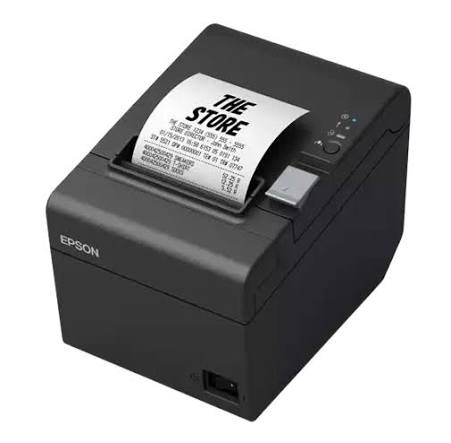
How Thermal Printer Manufacturers Maintain Quality Control During Production
Thermal printers play an important role in business operations where fast and consistent printing is essential. Retail stores use them to generate receipts, warehouses rely on them for barcode labels, and logistics companies depend on them to identify packages and track shipments. Because these devices are often used repeatedly throughout the working day, product quality has a direct influence on operational efficiency and equipment reliability.
Maintaining consistent quality requires more than inspecting a finished printer before shipment. A professional Thermal Printer Manufacturer must manage quality throughout the production process, beginning with component sourcing and continuing through assembly, testing, packaging, and delivery. Effective quality control helps identify defects early, reduce production inconsistencies, and ensure that products meet their intended technical specifications.
1. Establishing Clear Quality Standards
Quality control begins with defining the standards that every product must meet. Manufacturers need documented requirements for materials, components, assembly procedures, printing performance, and finished product appearance.
These standards may cover:
- Printing resolution and clarity
- Printing speed and consistency
- Paper-feeding accuracy
- Cutter performance
- Electronic component specifications
- Housing dimensions and durability
- Connectivity and communication functions
- Electrical safety requirements
Clear standards give production employees and inspection teams a consistent reference. They also make it easier to identify deviations and determine whether a product is ready for shipment.
2. Inspecting Raw Materials and Components
Thermal printers contain several mechanical and electronic components that work together to produce printed output. The quality of these parts can influence the performance and durability of the finished device.
Common components include printheads, motors, rollers, sensors, circuit boards, power supplies, and plastic housings.
Manufacturers may inspect incoming materials for dimensions, specifications, physical condition, and compatibility with the approved product design.
For example, an unsuitable roller may affect paper movement, while an inconsistent printhead may contribute to uneven printing quality.
Incoming inspection helps identify unsuitable components before they enter the assembly process, reducing the possibility of defects in finished printers.
3. Evaluating and Managing Suppliers
Quality control also depends on the companies supplying materials and components.
Manufacturers need to evaluate suppliers according to product consistency, technical capabilities, delivery reliability, and compliance with agreed specifications.
Supplier management may involve:
- Reviewing supplier qualifications
- Checking component samples
- Monitoring defect rates
- Conducting periodic supplier assessments
- Maintaining approved component specifications
- Reviewing corrective actions when problems occur
Building relationships with dependable suppliers can help manufacturers maintain consistent material quality. When alternative components are necessary, they should be evaluated before use to ensure that product performance is not affected.
4. Using Standardized Production Procedures
A standardized production process helps ensure that each printer is assembled according to approved specifications.
Manufacturers may use documented work instructions that explain component placement, fastening procedures, wiring arrangements, calibration steps, and inspection requirements.
Standardization is particularly important when a factory produces several printer models or handles large-volume orders.
Without consistent procedures, differences in assembly methods can lead to variations in product performance. Clear instructions and regular process reviews help reduce these risks.
5. Monitoring the Assembly Process
Thermal printer assembly involves multiple steps that must be completed accurately.
During production, inspection teams may monitor mechanical alignment, electronic connections, component installation, and housing assembly.
Important assembly checks can include:
- Correct positioning of the printhead
- Proper installation of paper rollers
- Secure electrical connections
- Accurate sensor placement
- Correct motor installation
- Proper housing alignment
- Secure fastening of internal components
In-process inspections help identify assembly problems before the printer reaches final testing. Addressing defects at this stage can also reduce rework and production waste.
6. Checking Printhead Performance
The printhead is one of the most important components in a thermal printer because it generates the heat needed to create printed images or text.
Manufacturers need to verify that the printhead performs according to the specifications of the selected model.
Inspection may involve checking print density, image consistency, heating behavior, and the appearance of printed characters.
Uneven output may indicate problems with the printhead, electrical connections, pressure distribution, or media compatibility.
Because printhead performance directly affects print quality, appropriate testing is an essential part of the production process.
7. Testing Paper-Feeding Mechanisms
A thermal printer must move paper or labels through its printing mechanism accurately.
Paper-feeding problems can cause misalignment, incomplete printing, paper jams, or wasted media.
Manufacturers may test feeding mechanisms to evaluate roller movement, sensor operation, paper positioning, and compatibility with supported media sizes.
For label printers, additional checks may be necessary to confirm that gaps, marks, or other positioning indicators are detected correctly.
Testing these functions helps ensure that printers can handle their intended media under normal operating conditions.
8. Evaluating Cutter Performance
Many receipt printers include an automatic cutter that separates printed receipts after a job is completed.
A poorly functioning cutter can leave paper partially attached, produce uneven cuts, or interrupt normal printing operations.
Quality control teams may test the cutter mechanism through repeated operating cycles and inspect the resulting cuts.
The evaluation can include checking blade movement, cutting accuracy, mechanical noise, and response to printing commands.
Not every thermal printer includes an automatic cutter, so this inspection applies to models designed with that feature.
9. Performing Printing Quality Tests
Printing quality is one of the most visible indicators of thermal printer performance.
Manufacturers may print test patterns containing text, lines, symbols, and other graphic elements to assess output consistency.
Testing may examine:
- Character sharpness
- Print density
- Line alignment
- Image uniformity
- Missing or faded sections
- Barcode readability
- Print consistency across different areas
These checks help identify problems that may not be obvious during a basic power-on inspection.
For label printers, barcode testing is particularly important because unclear or distorted codes may create scanning difficulties in retail, logistics, and inventory systems.
10. Verifying Printing Speed and Operational Performance
Businesses often select thermal printers based on their ability to handle specific printing volumes.
Manufacturers may evaluate printing speed to confirm that a model performs within its stated specifications.
However, speed should not be assessed independently of print quality and mechanical stability.
Performance testing may involve printing different document lengths, checking continuous operation, and evaluating how the printer responds to repeated commands.
The results help determine whether the printer can support its intended application without unnecessary interruptions.
11. Checking Connectivity and Communication Functions
Modern thermal printers may support USB, Ethernet, Bluetooth, Wi-Fi, or serial connections, depending on the model.
Each interface needs appropriate testing to confirm that the printer can receive and process printing commands correctly.
Inspection may involve connecting the printer to supported devices, checking data transmission, and verifying that communication remains stable during normal use.
Manufacturers may also test command compatibility, driver functionality, and basic configuration procedures.
These checks are important because a printer with good mechanical performance may still be unsuitable for a customer if it cannot communicate reliably with the required business system.
12. Conducting Electrical Safety and Power Tests
Thermal printers contain electronic circuits and power components that must operate within their intended electrical specifications.
Manufacturers may perform electrical inspections to identify wiring problems, unstable connections, or other potential faults.
Depending on the product design and applicable standards, testing may cover:
- Power input stability
- Electrical insulation
- Grounding arrangements
- Circuit functionality
- Power supply performance
- Protection against specified electrical faults
The exact requirements depend on the product category and destination market.
Manufacturers should use appropriate testing procedures and maintain relevant documentation to demonstrate compliance with applicable safety requirements.
13. Testing Sensors and Internal Controls
Thermal printers use sensors and control systems to manage paper movement, detect covers, monitor printing conditions, and coordinate mechanical functions.
A faulty sensor may cause incorrect paper detection, printing interruptions, or inaccurate label positioning.
Manufacturers may test these components individually and as part of the complete printer.
Common checks include paper-out detection, cover-open sensing, label gap detection, and temperature-related monitoring where supported.
Verifying these functions helps reduce operational errors and supports more predictable printer behavior.
14. Using Automated Inspection Technology
Automation can improve the consistency and efficiency of quality control in thermal printer manufacturing.
Depending on the factory’s equipment and production scale, automated systems may assist with component placement, electrical testing, visual inspection, and functional evaluations.
Machine vision systems, for example, can help identify certain assembly defects or surface irregularities. Automated test equipment can also perform repeatable checks on electronic functions.
However, automated inspection is not a complete replacement for engineering judgment. Human inspectors may still be needed to investigate unusual defects, review test results, and evaluate problems that require contextual understanding.
Combining suitable automation with trained personnel can strengthen the overall inspection process.
15. Performing Durability and Repeated-Use Testing
Thermal printers may operate for extended periods in environments where printing is frequent.
Manufacturers can evaluate durability through repeated-use testing designed around the intended product application.
Depending on the model, testing may include:
- Repeated printing cycles
- Paper-feeding mechanism evaluations
- Cutter cycle testing
- Button and cover operation checks
- Mechanical stability assessments
- Thermal performance monitoring
These tests help identify potential weaknesses in components and assemblies.
The test conditions should reflect the product’s intended operating range. Results from laboratory evaluations should not be interpreted as a guarantee of performance under every possible real-world condition.
16. Conducting Environmental and Operating Condition Tests
Thermal printers may be used in offices, retail counters, warehouses, vehicles, and industrial environments.
Temperature, humidity, dust, and other environmental conditions can influence equipment performance.
Manufacturers may conduct suitable environmental tests to determine whether a printer operates within its specified limits.
For example, a portable printer may need to be evaluated under conditions associated with mobile use, while industrial equipment may require attention to enclosure design and environmental protection.
Buyers should review the manufacturer’s stated operating conditions and select a product appropriate for the environment in which it will be installed.
17. Maintaining Quality Records and Traceability
Quality control becomes more effective when inspection results are recorded and reviewed.
Manufacturers may maintain records of component batches, production dates, inspection outcomes, testing results, and corrective actions.
Traceability helps identify which materials or production stages may be associated with a particular defect.
For example, if a recurring problem is discovered in one production batch, manufacturing records can help narrow down the affected components and products.
Accurate records also support internal audits, process improvements, warranty investigations, and customer inquiries.
18. Training Production and Inspection Employees
Even well-designed quality procedures depend on employees who understand how to apply them correctly.
Manufacturers need to train assembly workers, machine operators, engineers, and inspection personnel according to their responsibilities.
Training may cover:
- Component identification
- Assembly instructions
- Equipment operation
- Inspection techniques
- Safety procedures
- Defect recognition
- Documentation requirements
- Corrective action procedures
Regular training helps employees stay familiar with product updates and revised manufacturing standards.
It also encourages a quality-focused working environment in which employees understand the importance of identifying problems rather than allowing defects to continue through production.
19. Managing Defects and Corrective Actions
No manufacturing process is completely free from defects. What matters is how a company identifies, investigates, and addresses problems.
When an inspection reveals an issue, manufacturers may separate affected products, investigate the root cause, and determine whether rework or replacement is necessary.
A corrective action process may involve:
- Recording the identified defect.
- Determining the affected products or production batches.
- Investigating the underlying cause.
- Applying an appropriate correction.
- Reviewing whether the correction was effective.
- Updating procedures to reduce the chance of recurrence.
This approach helps manufacturers move beyond fixing individual products and focus on preventing similar problems in future production.
20. Conducting Final Inspection Before Packaging
Final inspection provides another opportunity to verify that a finished thermal printer meets the approved specifications.
The inspection may include visual checks, functional testing, accessory verification, and confirmation of product labeling.
Quality teams may check that:
- The housing is free from unacceptable damage.
- The printer powers on correctly.
- Printing functions operate as expected.
- Supported interfaces work properly.
- Accessories match the order.
- Product labels and model information are accurate.
- Packaging includes the required documentation.
Only products that meet the applicable acceptance criteria should proceed to packaging and shipment.
21. Maintaining Quality During Packaging and Transportation
Quality management continues after the printer leaves the assembly line.
Inadequate packaging can expose electronic and mechanical components to damage during storage and transportation.
Manufacturers should select protective packaging materials that suit the product’s weight, dimensions, and shipping method.
Packaging inspections may verify product positioning, protective inserts, accessory placement, carton strength, and shipping labels.
For international orders, manufacturers should also coordinate export documentation and any special packaging requirements agreed upon with the buyer.
22. Using Customer Feedback to Improve Product Quality
Quality control does not end when a product reaches the customer. Feedback from users can reveal problems that may not appear during factory testing.
Manufacturers may collect information about printing performance, installation difficulties, component failures, and compatibility issues.
This information can help engineering and quality teams identify areas for improvement.
For example, repeated reports of paper jams may lead to a review of roller design, paper specifications, or user instructions.
Customer feedback is most useful when it is documented, investigated, and translated into practical changes in product design or manufacturing procedures.
23. Reviewing Quality Management Systems and Certifications
A manufacturer’s quality management approach can provide useful information about how it organizes production and inspection activities.
Buyers may ask whether the company operates a documented quality management system and whether it holds relevant certifications, such as ISO 9001.
A certification can indicate that an organization has been assessed against a particular management standard, but it does not guarantee that every individual printer is defect-free.
Businesses should also review product-specific test reports, applicable safety documentation, inspection procedures, and sample performance.
Evaluating several types of evidence provides a more complete understanding of the manufacturer’s quality practices.
Conclusion
Quality control in thermal printer manufacturing involves a series of connected activities, from selecting suitable components and monitoring assembly to testing printing performance and inspecting finished products. Each stage contributes to the reliability, consistency, and usability of the final equipment.
Manufacturers that establish clear standards, maintain accurate production records, train employees, and investigate defects can improve their ability to deliver products that meet customer expectations. For buyers, understanding these quality control practices is an important part of supplier evaluation. Reviewing inspection procedures, requesting product samples, and checking relevant documentation can help businesses select thermal printers that suit their operational requirements.