
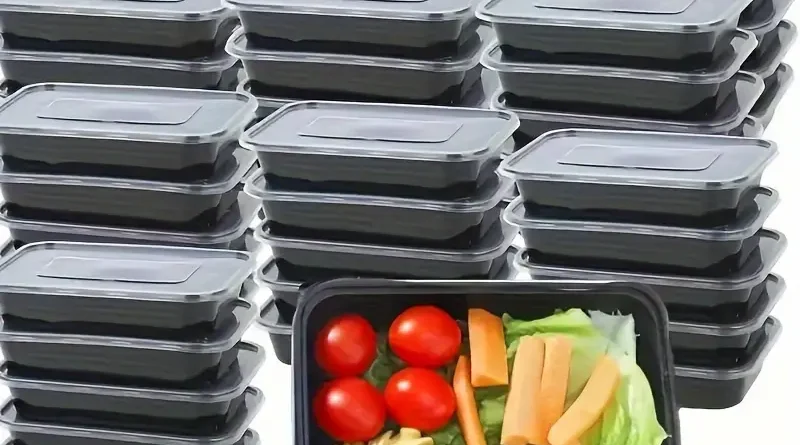
What to Look for in Bulk Disposable Food Container Packaging
When businesses purchase disposable food containers in bulk, the containers themselves are only one part of the packaging equation. How those containers are packed, protected, labeled, stored, and transported can also affect purchasing efficiency and product condition.
Restaurants, catering companies, food manufacturers, takeaway businesses, and distributors often handle large quantities at once. For these operations, well-organized bulk packaging can make inventory easier to manage and help reduce avoidable damage during transportation and storage.
Understand What Bulk Packaging Includes
Bulk packaging refers to the way disposable containers are grouped and prepared for storage or shipment.
Depending on the supplier and product, containers may be packed in individual stacks, inner packs, cartons, or larger shipping units. Lids may be packed separately or together with the containers.
Before ordering, clarify exactly how the products will be packaged. This helps businesses estimate storage requirements and understand what they will receive when the shipment arrives.
Check Protection During Transportation
Bulk shipments can experience handling, stacking, vibration, pressure, and changes in environmental conditions.
The outer packaging should provide appropriate protection for the disposable containers inside. Cartons should be strong enough for the expected transportation and stacking conditions.
This is particularly important when containers are shipped over long distances or pass through several distribution points before reaching the final customer.
Examine Carton Strength
The quality of the shipping carton can affect the condition of the products inside.
A carton that is too weak may become crushed when stacked, potentially deforming containers or making cartons difficult to handle. Businesses should therefore consider how cartons are designed for the expected shipment weight and transportation conditions.
Suppliers should also communicate carton dimensions and approximate weight when this information is important for warehouse planning.
Consider How Containers Are Stacked
Stacking is an important consideration for bulk disposable packaging.
Containers should generally be arranged in a way that protects their shape while making efficient use of available space. Nesting designs can help reduce the volume occupied by empty containers, although the actual storage arrangement depends on the product design.
Before placing a large order, consider how many stacks or cartons can comfortably fit within the available storage area.
Evaluate Lid Packaging Separately
Lids require their own packaging considerations.
Because lids can be lighter and more flexible than containers, they need to be packed in a way that helps prevent excessive bending, crushing, or contamination during transportation.
Businesses should also verify whether lids are packed according to the correct container size. Mixing different lid specifications can create operational problems when employees are packing food.
Look for Clear Product Identification
Clear labeling can simplify inventory management.
Bulk cartons should ideally provide enough product information for warehouse and kitchen staff to identify the contents without opening every package.
Useful information may include:
- Product or model number
- Container size
- Capacity
- Quantity per carton
- Lid information
- Batch or production information where applicable
- Handling or storage instructions
Clear identification becomes increasingly valuable when a business stocks several similar container sizes.
Consider Quantity Accuracy
Bulk orders depend on accurate quantities.
Businesses should clarify how many containers are included in each inner pack and shipping carton. If lids are supplied separately, confirm their quantities as well.
Understanding the packing configuration makes it easier to monitor inventory and identify potential discrepancies when shipments are received.
Check Protection Against Contamination
Food packaging should be protected appropriately during storage and transportation.
Disposable containers and lids should remain protected from dust, moisture, and other sources of contamination. The exact protective measures will depend on the product and distribution environment.
Businesses should also consider how products will be handled after delivery. Clean, dry, and organized storage helps preserve packaging condition before use.
Think About Warehouse Efficiency
Packaging should fit the way your business stores inventory.
When evaluating Wholesale Disposable Food Containers, consider both the product dimensions and the carton dimensions. Efficiently packed cartons can make better use of warehouse shelving and floor space.
A practical warehouse assessment should consider:
- Carton footprint
- Carton height
- Stackability
- Number of cartons per pallet
- Available shelving
- Access to frequently used products
- Space needed for lids and accessories
These details can influence the efficiency of daily inventory handling.
Consider Pallet Configuration
For larger purchases, palletization can become an important part of shipment planning.
Ask suppliers how cartons are arranged on pallets and whether the configuration is suitable for your receiving and storage equipment.
A stable pallet arrangement can simplify unloading and reduce the likelihood of cartons shifting during transportation.
Review Packaging Weight
The total weight of a bulk shipment affects transportation, handling, and storage.
Although disposable containers are generally lightweight, large quantities can add up quickly. Businesses should understand the approximate gross weight of cartons and pallets when arranging freight or planning warehouse handling.
Knowing shipment weight in advance can also help with receiving procedures.
Consider Environmental Packaging Factors
Businesses may also want to understand the materials used for secondary and shipping packaging.
Questions can include whether cartons can be recycled through available local systems and whether excessive secondary packaging is being used.
Environmental considerations should be evaluated alongside product protection and operational requirements rather than independently from them.
Ask About Custom Packaging
Some businesses require packaging configurations tailored to their distribution model.
Custom options may involve carton sizes, packing quantities, printed information, or other specifications. However, customization can affect minimum order quantities, costs, tooling, and production schedules.
Before requesting customized packaging, determine whether the operational benefits justify the additional requirements.
Review Storage Conditions
Bulk disposable containers should be stored according to the supplier’s recommendations.
Businesses should consider exposure to heat, moisture, direct sunlight, dust, and excessive pressure. Poor storage conditions can affect packaging before it is ever used.
A dedicated, organized storage area can also make it easier for staff to rotate stock and maintain accurate inventory records.
Inspect Packaging When the Shipment Arrives
Receiving procedures provide an opportunity to identify issues early.
When a bulk shipment arrives, inspect the outer cartons before moving them into long-term storage. Look for visible crushing, water damage, open packaging, or other signs of transportation problems.
If issues are found, document them promptly and compare the shipment against the purchase order and agreed specifications.
Choose a Supplier With Clear Packaging Information
Supplier communication matters throughout the bulk purchasing process.
A supplier should be able to explain how containers are packed, how many units are included per carton, how products are protected during shipment, and what information appears on the packaging.
For businesses evaluating manufacturers such as LRpacking, these details can be considered alongside product specifications, quality-control procedures, lead times, and shipping arrangements.
Create a Bulk Packaging Checklist
Before confirming an order, businesses can use a simple checklist:
- Confirm container and lid quantities.
- Review carton dimensions and weight.
- Check how containers are stacked.
- Confirm whether lids are packed separately.
- Review product identification and labeling.
- Ask about pallet configuration.
- Confirm shipping protection.
- Check recommended storage conditions.
- Calculate warehouse space requirements.
- Establish a receiving inspection process.
This approach can make large packaging purchases easier to plan and manage.
Final Thoughts
Bulk disposable food container packaging should be evaluated from the moment products leave the manufacturing facility until they are ready for use.
Carton strength, stacking, labeling, quantity accuracy, lid protection, pallet configuration, storage conditions, and shipment handling can all influence the efficiency of a bulk packaging operation.
By understanding these factors before ordering, businesses can plan warehouse space more effectively, organize inventory, and reduce avoidable problems during transportation and receiving. A well-planned packaging strategy ultimately supports smoother day-to-day foodservice operations.