
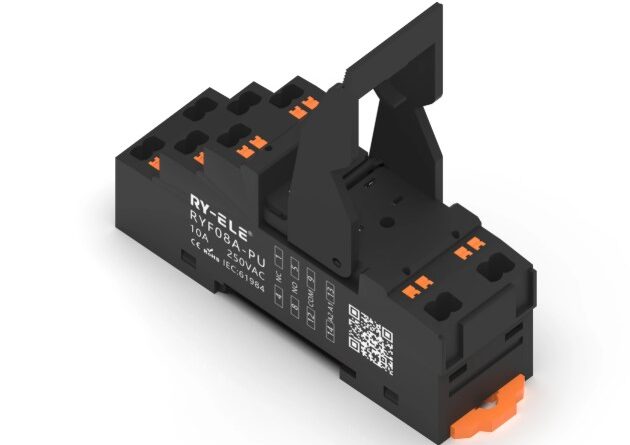
How to Select a PCB Mount Relay Socket for Automated Machinery
Automated machinery depends on reliable electrical components to control motors, sensors, actuators, valves, and other devices. Relay sockets provide a practical connection point between relays and control circuits, making installation and maintenance more manageable. Choosing the right socket requires attention to relay compatibility, electrical ratings, mounting requirements, and the operating environment.
A suitable PCB mount relay socket can simplify relay installation while supporting dependable connections on a printed circuit board. Engineers should evaluate the socket alongside the relay and the machinery’s control requirements rather than selecting a component based only on appearance or pin configuration. The right choice can also help reduce maintenance difficulties during long-term equipment operation.
Check Relay Compatibility First
The first step involves confirming that the socket matches the relay. Relay sockets come in different configurations, so the socket must accommodate the relay’s physical dimensions and terminal arrangement.
Check the relay’s datasheet for its pin layout, number of poles, coil specifications, and contact arrangement. A mismatch can prevent proper installation or create connection problems within the control system.
Pay close attention to:
- Number and arrangement of pins
- Relay dimensions
- Coil voltage
- Contact configuration
- Terminal spacing
- Manufacturer specifications
A socket that matches the relay precisely provides a more secure foundation for the control circuit.
Evaluate Electrical Ratings
Automated machinery often operates continuously, which makes electrical ratings an important selection factor. The socket should support the electrical conditions associated with the relay and connected circuit.
Review voltage and current requirements before installation. The socket should also work within the relay’s specified operating range and the machinery’s control-panel design.
Engineers should consider both the control side and the load side. A socket that meets the requirements of one part of the circuit may not suit another application.
Consider PCB Layout and Mounting Requirements
Space inside automated equipment can remain limited, particularly in compact control panels and machine modules. The socket should fit the PCB layout without interfering with nearby components.
Review the socket’s footprint, pin spacing, height, and mounting arrangement. Confirm that the PCB manufacturer can accommodate the required hole pattern and that sufficient clearance exists around the relay.
A good fit helps maintain an organized PCB layout and simplifies assembly during production.
Examine the Operating Environment
Machinery may operate in environments with vibration, temperature changes, dust, or other challenging conditions. These factors can influence the long-term performance of relay connections.
Consider the expected operating temperature and mechanical conditions before choosing a socket. Equipment used in industrial automation may require components designed for consistent performance under repeated operation.
For machinery exposed to vibration, engineers should also examine how securely the relay and socket remain connected during normal equipment movement.
Look at Contact and Material Quality
The materials used in a relay socket influence connection reliability and service life. Quality terminals should provide stable electrical contact while resisting degradation under normal operating conditions.
Review the terminal material, plating, housing material, and manufacturing specifications. These details can help engineers compare sockets that look similar but offer different performance characteristics.
RY-ELE provides relay and control components designed for applications where dependable electrical connections matter. Evaluating product construction alongside electrical specifications can help engineers make a more informed selection.
Consider Installation and Maintenance
Automated machinery often requires periodic inspection, troubleshooting, or component replacement. A relay socket should therefore support practical maintenance procedures.
A socket that allows straightforward relay removal can reduce service time when technicians need to replace a failed relay. Clear terminal identification can also help technicians verify wiring during troubleshooting.
Before finalizing the design, consider how easily maintenance personnel can access the relay and socket once the equipment reaches the field.
Review Safety and Certification Requirements
Industrial machinery may need to meet specific electrical, safety, and equipment standards. Engineers should check the applicable requirements for the machine, installation location, and target market.
Review manufacturer documentation for relevant certifications, ratings, and compliance information. These details help ensure that the selected component fits the broader electrical design rather than creating an unexpected compliance issue.
Compare Product Reliability and Supplier Support
Component quality matters, but supplier consistency also plays an important role in machinery projects. Engineers should review technical documentation, product specifications, quality controls, and available support before placing larger orders.
A reliable supplier can make it easier to confirm specifications and maintain consistent component selection across multiple machine designs.
RY-ELE offers relay-related components for control and automation applications, giving engineers another supplier option to consider when evaluating relay socket solutions.
Make the Selection Before PCB Production
Changing a relay socket after PCB production can create unnecessary redesign work. Engineers should confirm the socket’s mechanical and electrical specifications before finalizing the board.
A practical selection process includes these checks:
- Match the socket with the intended relay.
- Confirm voltage and current requirements.
- Verify the PCB footprint and pin spacing.
- Check environmental operating conditions.
- Review materials and terminal construction.
- Consider installation and maintenance access.
- Confirm applicable certifications and technical requirements.
- Review supplier documentation and availability.
This approach reduces the risk of compatibility problems during assembly and commissioning.
Final Thoughts
Selecting a relay socket for automated machinery requires more than matching the number of pins. Engineers need to consider electrical ratings, PCB dimensions, relay compatibility, environmental conditions, construction quality, maintenance access, and compliance requirements.
By checking these factors before PCB production, equipment designers can select a socket that fits the control system and supports dependable machine operation. A carefully chosen solution from a supplier such as RY-ELE can also help simplify relay installation and maintenance throughout the equipment’s service life.