
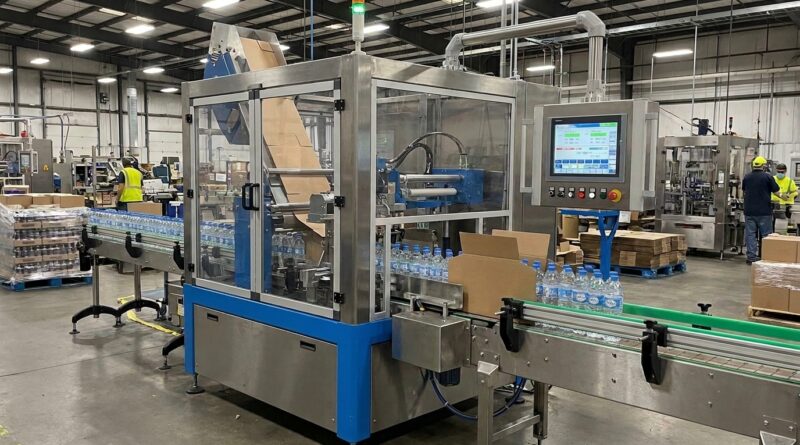
How Do You Match Corrugated Board to a Wrap Around Case Packer?
Choosing the right corrugated board plays a major role in the performance of a case packing line. Board grade, flute profile, thickness, stiffness, and moisture resistance all affect how a carton forms around products and moves through the packaging equipment.
A wrap around case packer depends on consistent board behavior to fold panels accurately, create strong glued joints, and maintain the required case shape. Selecting board based only on cost can lead to poor folding, unstable cases, machine stoppages, and inconsistent finished packages.
Why Corrugated Board Selection Matters
A wrap-around case starts as a flat corrugated blank. The packaging machine feeds the blank, positions the products, folds the panels around them, applies adhesive, and forms the finished case.
Every part of this process places demands on the board. The material needs enough flexibility to fold along score lines while retaining enough strength to protect the products during handling and transportation.
Poor board selection may cause several problems, including:
- Crushed or damaged score lines
- Inconsistent folding
- Weak adhesive bonds
- Open case flaps
- Case deformation
- Product movement inside the package
- Increased machine jams
The right board helps the equipment maintain a steady packaging rhythm while producing cases with consistent dimensions and appearance.
Start With the Product and Case Design
The first step involves understanding what the finished case needs to accomplish. Product weight, dimensions, shape, quantity per case, and distribution method all influence board selection.
A lightweight product packed in a small case may not require the same board strength as a heavier multipack shipped through a demanding distribution network.
Consider these factors before selecting the material:
Product Weight
Heavier products place more pressure on the bottom panels and side walls. A stronger corrugated construction may help the finished case maintain its shape during stacking and transportation.
Product Arrangement
The way products sit inside the case affects load distribution. Tight product arrangements may provide additional internal support, while loose arrangements can place more stress on the outer case.
Case Dimensions
Large cases generally require more attention to board stiffness. A wide panel may flex more easily than a smaller panel, especially when the package contains heavy products.
Shipping Conditions
Cases traveling through warehouses, trucks, conveyors, and distribution centers may encounter compression, vibration, stacking pressure, and changes in humidity. The board should match the expected handling environment.
Choose the Appropriate Corrugated Board Grade
Corrugated board comes in different combinations of liners and fluting. The correct grade depends on the strength and forming requirements of the application.
Board construction commonly includes an outer liner, fluted medium, and inner liner. Some applications require additional layers for greater strength or specialized performance.
For case packing, the board should provide a practical balance between rigidity and foldability. Excessively stiff material may resist the machine’s folding action, while material with insufficient strength may produce weak or unstable cases.
The board supplier can help determine the appropriate construction based on case dimensions, product weight, stacking requirements, and packaging conditions.
Consider Flute Profile
The flute profile affects both board strength and how the material behaves during folding. Different flute sizes provide different combinations of cushioning, rigidity, printability, and compression resistance.
Smaller flute profiles generally support compact packaging and smoother surfaces. Larger flute profiles may provide greater cushioning and structural strength.
The choice should also consider the machine’s folding and scoring requirements. A board that performs well in manual packaging may not deliver the same results at high machine speeds.
Check Board Thickness and Stiffness
Thickness alone does not determine whether corrugated board will work effectively on a packaging line. Stiffness also matters because the board needs to travel through guides, belts, folding sections, and compression areas without excessive bending.
Very flexible board may fail to maintain proper alignment. Extremely rigid board may require greater folding force and could resist clean movement through the machine.
The ideal combination depends on the case dimensions, product load, scoring pattern, and equipment configuration.
Pay Attention to Score Quality
Score lines guide the board during the folding process. Their depth, position, and consistency directly affect case formation.
A good scoring pattern allows panels to fold in the intended direction without excessive cracking or resistance. Poor scoring can cause the liner to break, create uneven folds, or make the case difficult to square.
When evaluating board for a wrap-around application, packaging teams should check how the material responds along every major score line.
Match Board Moisture Resistance to the Environment
Humidity can change the physical properties of corrugated board. High moisture levels may reduce stiffness and compression performance, while extremely dry conditions can make some materials more prone to cracking during folding.
Manufacturers should consider where the packaging line operates and where the finished cases will travel.
For applications involving refrigerated environments, humid warehouses, or other challenging conditions, a board construction with suitable moisture performance may provide better reliability.
Test Board on the Actual Packaging Line
Laboratory specifications provide useful information, but production testing remains important. A board may meet a strength requirement on paper and still behave differently during high-speed machine operation.
A practical test should examine:
- Blank feeding consistency
- Product loading
- Panel folding
- Glue application
- Case squaring
- Compression
- Finished case dimensions
- Case stacking performance
Testing several board samples can help identify the best combination of strength, flexibility, and machine performance.
Work With the Corrugated Supplier and Machine Team
Board selection should not happen in isolation. Corrugated suppliers understand material construction, while packaging equipment specialists understand how different board characteristics affect machine operation.
Sharing the case dimensions, product specifications, production speed, and intended shipping conditions gives both sides the information needed to make a better recommendation.
Techflow Pack focuses on packaging equipment applications where reliable case formation and consistent production matter. Discussing board requirements alongside machine specifications can help manufacturers reduce trial-and-error during line setup.
Avoid Choosing Board Based Only on Cost
Lower-cost board may appear attractive during purchasing, but material savings can disappear quickly when the packaging line experiences frequent interruptions or produces defective cases.
A board that offers consistent feeding, clean folding, reliable gluing, and sufficient finished-case strength may provide better overall value.
Manufacturers should evaluate total packaging performance rather than comparing material prices alone.
Common Signs That the Board Needs Attention
Packaging teams can often identify board-related problems by watching the finished cases and machine behavior.
Common warning signs include:
- Frequent blank feeding problems
- Panels that resist folding
- Cracked liners along score lines
- Inconsistent case dimensions
- Flaps that fail to meet correctly
- Weak glued seams
- Cases that collapse during stacking
- Increased machine downtime after changing board suppliers
These issues do not always originate from the board. Machine settings, scoring accuracy, adhesive selection, product positioning, and equipment wear can also contribute. A systematic check can help identify the actual cause.
Create a Board Specification for Consistent Production
Once a suitable corrugated construction has been identified, manufacturers should document the requirements. A board specification can include the flute profile, board construction, thickness, strength characteristics, sheet dimensions, scoring requirements, and moisture considerations.
A clear specification helps maintain consistency when purchasing material from different production batches or suppliers.
It also gives the packaging and quality teams a reference point when investigating changes in machine performance.
Final Considerations
Matching corrugated board to packaging equipment requires more than selecting a standard carton grade. Product weight, case dimensions, flute profile, stiffness, score quality, moisture conditions, and production speed all influence how the material behaves on the line.
The best approach combines material specifications with real production testing. When the board and equipment work together properly, manufacturers can achieve cleaner folds, stronger cases, reliable adhesive bonds, and more consistent packaging output.
For manufacturers evaluating packaging requirements, Techflow Pack can serve as a useful reference when considering how case design and material characteristics work together. The right board selection can support both dependable machine operation and the structural performance of the finished case.