
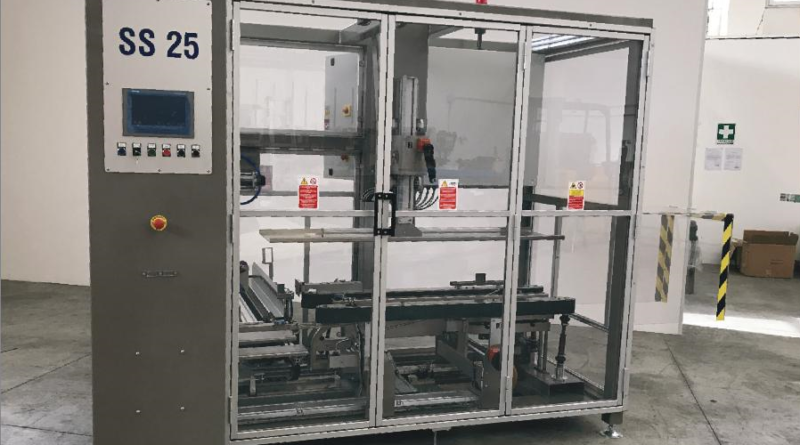
How Box Dimensions Influence Case Erecting Machine Selection
Box dimensions play a major role in determining whether packaging equipment can form cartons consistently and efficiently. Even when two boxes appear similar, differences in length, width, height, flap proportions, or board construction can affect how they move through a forming system.
When choosing a Case Erecting Machine, manufacturers should therefore evaluate their complete range of carton dimensions rather than focusing only on production speed. Matching the machine to the boxes helps support reliable opening, squaring, flap folding, and bottom sealing.
Why Box Dimensions Matter
A flat carton changes shape during the erection process. The machine must grip, open, square, fold, and position the carton correctly before it can be transferred to the next packaging stage.
If a carton falls outside the machine’s supported dimensions, it may not be picked or opened correctly. Even a machine that handles the carton size in principle may require specific adjustments to achieve stable performance.
Carton Length, Width, and Height
The three primary dimensions to review are carton length, width, and height. Equipment specifications typically provide minimum and maximum ranges for these measurements.
Manufacturers should compare those ranges with every carton format used in production. If the operation uses several box sizes, the machine needs to accommodate the complete range rather than just the most frequently used carton.
It is also important to confirm how the manufacturer defines each dimension, as measurement conventions can vary between equipment designs.
The Effect of Flap Dimensions
Carton flaps are another important consideration. Their length and arrangement influence how the bottom of the case folds and seals.
Flaps that are too long, too short, or differently configured from the machine’s expected carton design can interfere with proper forming. Before purchasing equipment, manufacturers should verify that the flap configuration of their cartons is compatible with the proposed system.
Small Boxes and Large Boxes
Very small and very large cartons can present different forming challenges. Smaller boxes may require precise handling because there is less physical space for gripping and folding mechanisms.
Larger cases, meanwhile, may require additional support during opening and squaring to maintain their shape. A machine designed around a particular carton range may therefore perform differently at the extremes of its operating specifications.
For operations using both small and large cartons, testing across the full range can provide useful insight into expected performance.
Carton Aspect Ratio
The relationship between a box’s dimensions can be just as important as the individual measurements. A tall, narrow carton behaves differently from a short, wide case even when their overall volume is similar.
Unusual aspect ratios can affect carton stability during forming and transfer. Manufacturers should discuss non-standard box proportions with equipment suppliers before finalizing a machine configuration.
Multiple Carton Sizes and Changeovers
Many packaging facilities use different boxes for different products. In these situations, the ease of changing between carton formats becomes an important selection factor.
Frequent manual adjustments can increase downtime if the equipment is not designed for efficient changeovers. Operators should understand which components need adjustment and how long the process typically takes for the required carton range.
A machine that accommodates the necessary dimensions while allowing practical format changes can provide greater flexibility.
Board Thickness and Box Construction
Dimensions should not be evaluated independently from carton material. Board thickness, corrugated grade, stiffness, and overall box construction can influence how a carton opens and holds its shape.
Two cartons with identical external dimensions may behave differently if their board characteristics are significantly different. Equipment selection should therefore account for both physical size and material specifications.
How Dimensions Affect Machine Layout
Carton size can also influence the physical layout of the packaging line. Larger cases may require wider conveyors, additional clearance, or different transfer arrangements.
The available floor space should be reviewed alongside the carton range. This helps ensure that the case erector, carton storage, conveyors, and downstream equipment can operate without unnecessary restrictions.
Matching Dimensions With Production Requirements
A machine’s carton range should be considered together with the required production rate. A facility may need to form several carton sizes at different speeds depending on product demand.
Rather than selecting equipment solely according to its maximum output, manufacturers should determine which carton formats will run most frequently and how those formats fit within the machine’s rated operating range.
Testing Before Installation
When carton dimensions are unusual or cover a wide range, testing can be particularly valuable. Sample cartons can be used to evaluate feeding, opening, squaring, flap folding, and sealing performance.
Testing can reveal potential compatibility issues before equipment is installed on the production floor. It also provides an opportunity to determine whether specific adjustments or machine configurations are required.
Techflow Pack provides automated packaging solutions for case-forming applications, with equipment selection depending on carton specifications, production requirements, and the intended packaging-line configuration.
Common Dimension-Related Issues
Incorrectly matched box dimensions can contribute to several operational problems, including:
- Cartons failing to open completely
- Cases becoming misaligned during forming
- Flaps folding incorrectly
- Carton jams at transfer points
- Inconsistent bottom sealing
- Increased manual intervention
These problems may not always originate with the machine itself. In some cases, the carton dimensions or construction may simply fall outside the equipment’s ideal operating range.
Conclusion
Box dimensions are a fundamental consideration when selecting case-forming equipment. Length, width, height, flap configuration, aspect ratio, and board construction can all influence how reliably cartons are opened and formed.
By reviewing the complete carton range and testing representative box formats when necessary, manufacturers can select equipment that better matches their packaging requirements. A properly matched case erecting machine can then provide more consistent carton preparation and smoother integration with the rest of the production line.