
How Does Automation Improve Output With A Swiss Type Automatic Lathe Machine?
Manufacturers constantly look for ways to increase production without compromising component quality. Automation provides a practical way to reduce repetitive manual tasks, maintain consistent machining cycles, and keep equipment productive for longer periods.
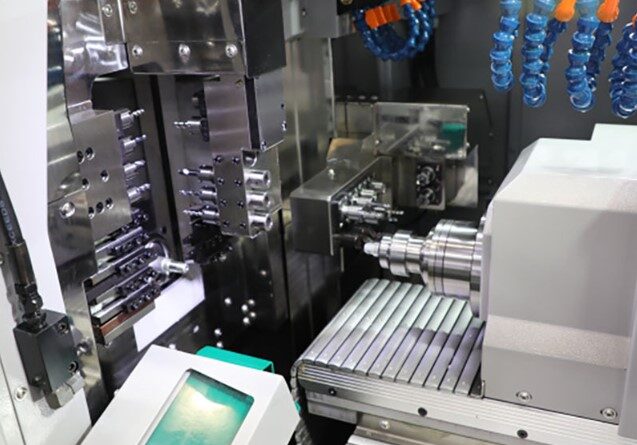
A swiss type automatic lathe machine combines automated machining with Swiss-type workpiece support, creating an efficient solution for small and precision components. Automation can improve output by streamlining material feeding, tool management, part handling, and repetitive machining operations.
Faster Production Cycles
Automation helps reduce interruptions between machining cycles. Once the machine receives the correct program and material, it can perform a sequence of operations with limited operator involvement.
This allows production to continue without stopping after every component for manual loading or repositioning.
When manufacturers produce large batches of identical parts, these time savings can accumulate quickly.
Automatic Material Feeding
Raw material handling often consumes valuable production time. An automatic bar feeder can continuously supply stock to the machine as each section reaches the end of its usable length.
This reduces the need for operators to stop the machine and manually reload material after every short production run.
Continuous material feeding also makes longer machining cycles more practical.
Better Machine Utilization
A CNC machine represents a significant investment, so manufacturers want to keep it performing productive work whenever practical.
Automation allows operators to oversee several production tasks while the machine continues its programmed machining cycle.
Higher machine utilization can help manufacturers increase output without necessarily adding the same number of additional machines.
Reduced Manual Handling
Manual handling creates interruptions throughout the manufacturing process. Loading material, collecting finished parts, and moving components between operations can all consume operator time.
Automation reduces some of these repetitive activities.
Operators can instead focus on tasks such as quality checks, tooling preparation, material planning, and machine maintenance.
Consistent Machining Cycles
Automation helps maintain a repeatable production sequence. Once operators establish a verified CNC program, the machine follows the programmed movements for each component.
Consistent cycles help manufacturers maintain predictable production times and reduce variation caused by repeated manual intervention.
Process stability becomes particularly valuable when producing large quantities of precision components.
Multi-Operation Machining
Modern Swiss-type CNC machines can perform several operations within one machining cycle. Depending on the configuration, these may include turning, drilling, threading, milling, grooving, and parting.
Performing multiple operations in one setup reduces the need to transfer components between separate machines.
This can shorten production routes and help manufacturers increase the number of completed parts within a given period.
Live Tooling Adds Flexibility
Driven or live tooling expands the range of operations that a Swiss-type machine can perform automatically.
Instead of removing a component for secondary milling or drilling, the machine may complete those features during the original cycle.
This reduces additional handling and helps create a more streamlined production process.
Automated Part Collection
Finished components need a controlled path away from the machining area. Automated part collection systems can receive completed parts after they separate from the bar stock.
This reduces the frequency of manual unloading and helps prevent finished components from accumulating around the machine.
Part collection methods depend on the machine configuration and the size and shape of the finished components.
Fewer Production Interruptions
Every unexpected stop reduces productive machining time. Automation can help prevent interruptions associated with routine material loading and part handling.
However, automation works best when manufacturers also control other potential causes of downtime.
Tool wear, chip accumulation, material inconsistencies, coolant issues, and incorrect programming can still affect production.
Tool Management Supports Higher Output
Cutting tools gradually wear during production. Excessive wear can affect dimensions, surface finish, and cycle stability.
Manufacturers can establish tool-life limits and replacement schedules based on production data.
Some advanced machine configurations may also support tool monitoring functions that provide additional information about tool condition.
Improved Labor Efficiency
Automation does not remove the need for skilled operators. Instead, it changes how operators spend their time.
One operator may oversee multiple machines or manage several stages of production rather than manually loading every component.
This approach can improve labor efficiency while allowing skilled personnel to concentrate on machine setup, process optimization, inspection, and troubleshooting.
Automation And Unattended Production
Automation creates the foundation for longer periods of production with limited operator intervention.
A stable process may continue through extended machining periods when material feeding, tooling, chip management, coolant, and part collection operate reliably.
Manufacturers should test and validate the process before relying on extended unattended operation.
How Automation Can Reduce Production Costs
Higher output does not always come from machining faster. Reducing idle time and unnecessary handling can also improve production economics.
Automation can contribute by:
- Reducing manual loading time
- Increasing machine utilization
- Limiting unnecessary material handling
- Reducing setup interruptions
- Supporting longer production cycles
- Improving workflow consistency
The actual savings depend on production volume, component complexity, labor costs, machine configuration, and process stability.
Choosing The Right Automation Features
Manufacturers should select automation according to their actual production requirements. Not every application needs the same combination of automated systems.
Consider material feeding, parts collection, tool monitoring, coolant management, chip removal, and CNC control capabilities when comparing machines.
A supplier should also explain which automation features come standard and which require additional equipment.
JSWAY And Automated CNC Production
JSWAY develops CNC machining solutions for manufacturers seeking precision and efficient production. Its Swiss-type CNC equipment can support applications where automation and multi-operation machining help improve manufacturing productivity.
JSWAY buyers can evaluate machine capabilities according to their component designs, materials, production volumes, and desired level of automation.
This application-focused approach helps manufacturers select useful automation features instead of investing in capabilities that may not contribute to their specific production goals.
What Manufacturers Should Measure
Automation delivers measurable benefits when manufacturers track the right production indicators. Instead of focusing only on the number of parts produced, evaluate the complete process.
Useful metrics include:
- Parts produced per hour
- Average cycle time
- Machine utilization
- Tool life
- Unplanned downtime
- Rejected components
- Operator intervention time
Tracking these figures can reveal where automation provides the greatest improvement.
Final Thoughts
Automation improves output with a Swiss-type automatic lathe by reducing repetitive manual tasks, increasing machine utilization, streamlining material handling, and supporting consistent machining cycles.
Multi-operation machining, live tooling, automatic bar feeding, tool management, and part collection can further improve production efficiency. The greatest results come from combining suitable automation with stable tooling, reliable programming, consistent materials, and effective quality control.
JSWAY provides Swiss-type CNC solutions that manufacturers can evaluate according to their production requirements. Choosing the right combination of machine capabilities and automation features can help businesses increase output while maintaining dependable component quality.