
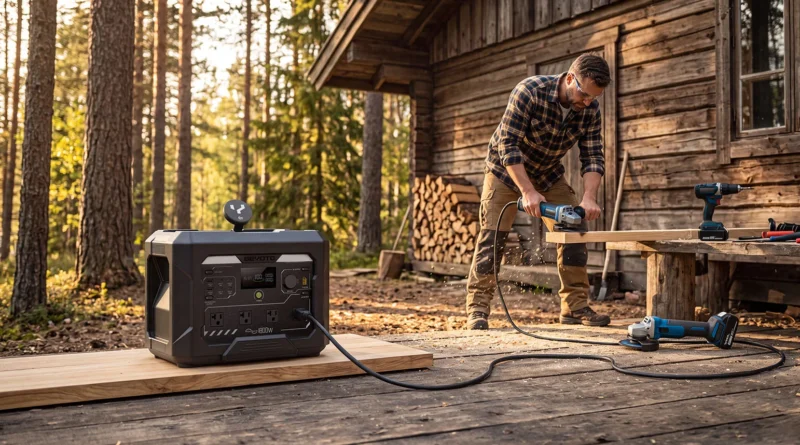
Emergency Power Generators for Home: Features, Benefits, and Uses
Power outages can affect essential household routines, especially when refrigerators, communication equipment, lighting, fans, and medical devices depend on electricity. A backup power system can provide an alternative source of electricity when the grid is unavailable.
An emergency power generator for home use can take different forms, from traditional fuel-powered generators to battery-based portable power stations. Understanding their features, benefits, and intended uses can help homeowners choose a solution that fits their needs.
What Is an Emergency Power Generator?
An emergency power generator is a backup electricity source designed to provide power when normal utility service is interrupted. Traditional generators generally use an engine and fuel to produce electricity, while portable power stations store electrical energy in a battery for later use.
Battery-based systems can be particularly useful when portability, low-noise operation, and convenient indoor-area use are important considerations. They can provide power through AC outlets, USB ports, DC connections, and other interfaces, depending on the model.
Important Features to Consider
Not every backup power system is designed for the same applications. Several specifications can help determine whether a particular model is suitable for your home.
Battery Capacity
Battery capacity is measured in watt-hours (Wh). It indicates the amount of energy stored in a battery and is an important factor in estimating how long connected devices can operate.
For example, the GEYOTO N300 has a 256Wh capacity, making it suited to smaller electronics, lighting, Wi-Fi routers, laptops, travel, camping, and short-term outage backup.
The GEYOTO N1000 has a 1,024Wh capacity and is positioned for higher-capacity applications such as home emergencies, refrigerators, CPAP machines, fans, Wi-Fi equipment, RV trips, camping, and vehicle-support scenarios.
Continuous and Peak Output
Power output is measured in watts. Continuous output indicates the power a system can provide during normal operation, while peak output represents a higher level that may be available temporarily for startup demands.
The N300 provides 300W of continuous pure sine wave output and 500W peak output. It also features a 550W Constant Power mode for compatible loads within its specified operating conditions.
The N1000 delivers 1,800W of continuous pure sine wave output and 3,000W peak output, with a 2,400W Constant Power mode.
LiFePO4 Battery Technology
Both the N300 and N1000 use LiFePO4 batteries and have a specified battery life of 4,000 cycles.
Cycle life can be useful when comparing systems intended for repeated use. Actual battery performance and service life can vary depending on operating conditions, temperature, charging habits, and storage.
Fast Charging
Recharge speed can make a significant difference when an outage lasts for an extended period or when utility service returns only temporarily.
The N300 can fully recharge in about 1.5 hours. The N1000 reaches 0–80% in 43 minutes and 100% in 68 minutes.
A shorter recharge period can help users restore the system to a useful charge level more quickly between outages.
Multiple Ports and Interfaces
A backup system becomes more flexible when it can accommodate different types of devices at the same time.
The N300 provides nine output outlets and 25W wireless charging. The N1000 provides 18 total ports and interfaces, including 13 output ports, as well as Qi2.2 25W wireless charging.
The available connections should be compared with the devices you expect to power during an emergency.
UPS Functionality
UPS functionality can help reduce interruptions when utility electricity fails. This can be particularly useful for devices such as Wi-Fi routers, computers, and other equipment that may restart after losing power.
Both the N300 and N1000 have a specified UPS switching time of less than 10 milliseconds. Compatibility can vary by device, so users should follow the manufacturer’s recommendations.
Benefits of Battery-Based Emergency Power
Battery-powered backup systems can offer several practical advantages for household emergency preparedness.
Convenient Backup for Essential Devices
Rather than attempting to power an entire house, a portable power station can be used to support selected essential loads. This can include communications equipment, lighting, refrigeration, fans, laptops, and compatible medical devices.
Prioritizing essential equipment can also help conserve stored energy during longer outages.
Portable and Flexible
Portable power stations can be moved between rooms or taken outside for activities such as camping and travel. This flexibility can be useful when a household has different power requirements in different locations.
A compact system such as the N300 is designed around a “Grab and Go” approach, while the larger N1000 provides higher capacity for broader emergency and outdoor applications.
Quick Recharging
Fast charging reduces the amount of time a backup system needs to remain connected to a power source before it is ready for another use.
The N1000’s specified 43-minute 0–80% charging time and 68-minute full recharge time can be useful when preparation time between outages is limited.
Common Uses for Emergency Power Generators
The best use of a backup power system depends on its capacity and output rating. Common applications include the following.
Refrigerators and Freezers
Keeping a refrigerator operating can be an important priority during a prolonged outage. A suitable generator needs enough continuous and peak output to handle the appliance’s operating and startup requirements.
Wi-Fi and Communication Equipment
A backup system can keep a modem and router operating, helping maintain internet connectivity when utility power is unavailable.
Phones, tablets, and laptops can also be recharged through compatible outputs.
Lighting and Fans
Lighting can be particularly important during nighttime outages. Fans may also be useful when air conditioning is unavailable, provided their power requirements fall within the generator’s supported output.
CPAP Machines and Essential Medical Equipment
Some households need backup electricity for medical equipment. Portable battery systems can provide an option when the equipment’s electrical requirements are compatible with the generator.
Users should always check the medical device manufacturer’s requirements and confirm compatibility before relying on a backup system.
Camping and RV Trips
Emergency power equipment does not have to remain at home. Portable systems can also provide electricity for compatible devices during camping and RV trips.
The N1000 also includes an XT60 vehicle-support output rated at 12.6V/30A, with up to 378W of output, for compatible vehicle-support applications.
Choosing the Appropriate Size
The right generator size depends on both power demand and expected runtime.
A smaller system may be appropriate when the main priorities are phones, lights, routers, laptops, and other low-power electronics. A larger system becomes more useful when multiple devices or higher-demand appliances need to operate.
Before purchasing, add up the running wattage of the appliances you expect to use and consider the startup requirements of equipment with motors or compressors.
Safety and Proper Use
Safety should always be part of emergency power planning. Fuel-powered generators produce exhaust gases and need to be operated outdoors in properly ventilated locations. They should never be used in enclosed spaces because of the danger of carbon monoxide.
Battery-based power stations do not use an internal combustion engine, but they still need to be charged, operated, and stored according to the manufacturer’s instructions. Avoid exceeding rated output limits and use compatible cables and equipment.
Final Considerations
An emergency power generator can provide valuable flexibility when the electrical grid is unavailable, but the most suitable system depends on the household’s specific requirements.
Consider capacity, continuous output, peak output, battery chemistry, cycle life, charging speed, ports, UPS functionality, portability, and intended applications before making a decision. By matching these features to essential household loads, homeowners can build a practical backup plan for unexpected power interruptions.