
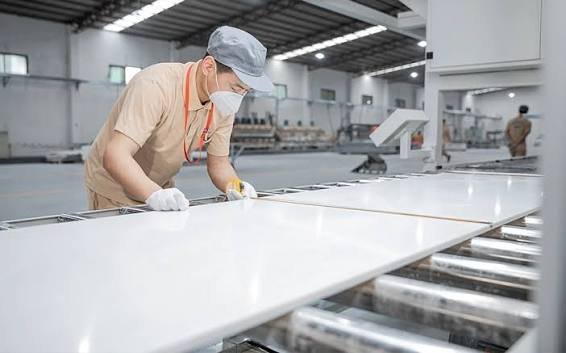
The Importance of Research and Development in Solid Surface Manufacturing
The solid surface industry continues to evolve as architects, interior designers, contractors, and property developers look for materials that combine attractive appearances with practical performance. New interior design preferences, changing customer expectations, and improvements in manufacturing technology encourage companies to explore better formulations, production methods, and product designs. Research and development (R&D) plays an important role in helping manufacturers respond to these changes while improving the quality and versatility of their products.
Research and development involves more than introducing new colors or decorative patterns. It includes studying raw materials, testing formulations, improving production efficiency, evaluating product performance, and developing solutions for specialized applications. For businesses comparing suppliers, understanding the R&D capabilities of a Solid Surface Manufacturer can provide valuable insight into its ability to innovate, adapt to market requirements, and maintain competitive manufacturing standards.
1. Understanding Research and Development in Solid Surface Manufacturing
Research and development refers to the systematic process of investigating materials, testing new ideas, and improving existing products or manufacturing procedures.
In solid surface production, R&D activities may focus on resin systems, mineral fillers, pigments, additives, molding techniques, surface finishes, and product applications.
These activities generally involve several stages:
- Identifying a product or manufacturing challenge.
- Reviewing available materials and technologies.
- Developing possible formulations or design concepts.
- Producing laboratory samples or prototypes.
- Testing material characteristics.
- Evaluating results and making adjustments.
- Approving suitable solutions for commercial production.
A structured development process helps manufacturers introduce improvements while maintaining control over product specifications and production consistency.
2. Improving Raw Material Formulations
Raw material formulation is one of the most important areas of research in solid surface manufacturing.
Many solid surface products combine mineral fillers, resin binders, pigments, and selected additives. The proportions and characteristics of these ingredients influence the finished material’s appearance, processing behavior, and physical properties.
R&D teams can investigate different ingredient combinations to achieve specific product requirements.
Research may examine:
- Acrylic and polyester resin systems
- Mineral filler grades
- Pigment compatibility
- Additive performance
- Ingredient proportions
- Mixing behavior
- Curing characteristics
For example, researchers may evaluate how changes in filler particle characteristics affect the uniformity of a formulation. They may also investigate how different resin systems influence fabrication requirements.
The objective is to develop formulations that meet defined performance and manufacturing requirements rather than simply changing ingredients without a clear technical purpose.
3. Developing New Colors and Decorative Patterns
Appearance is an important purchasing factor for solid surface materials, particularly in kitchens, bathrooms, hotels, retail environments, and commercial interiors.
R&D helps manufacturers expand their design options by experimenting with pigments, decorative particles, and production techniques.
Possible development areas include:
- Contemporary neutral colors
- Stone-inspired patterns
- Terrazzo-style appearances
- Multi-color decorative effects
- Translucent visual elements
- Customized colors for commercial projects
Developing a new design requires more than selecting pigments. Manufacturers must also evaluate how colors and particles behave during mixing, molding, curing, and finishing.
Testing helps determine whether the intended appearance can be reproduced consistently across multiple production batches.
4. Enhancing Product Durability and Performance
Research and development helps manufacturers understand how solid surface materials respond to different operating conditions.
Products used in kitchens, bathrooms, public facilities, and commercial buildings may encounter moisture, cleaning agents, physical contact, and repeated daily use.
R&D teams can investigate material performance through suitable laboratory and product testing.
Depending on the application, research may focus on:
Mechanical properties: Evaluating characteristics such as hardness, flexural behavior, and impact resistance.
Chemical resistance: Studying how materials respond to selected household or commercial substances.
Water absorption: Measuring moisture absorption under defined testing conditions.
Surface wear: Evaluating resistance to abrasion and other forms of surface damage.
Color stability: Examining whether appearance changes under specified environmental or exposure conditions.
These investigations help manufacturers understand product limitations and identify opportunities for improvement.
5. Improving Manufacturing Processes
R&D is not limited to the materials themselves. It also contributes to more efficient manufacturing procedures.
Solid surface production may involve material preparation, mixing, molding, curing, trimming, sanding, polishing, and inspection. Each stage presents opportunities for process improvement.
Manufacturers may research ways to:
- Improve ingredient measurement accuracy
- Reduce trapped air during mixing
- Optimize curing conditions
- Improve mold performance
- Minimize production defects
- Reduce material waste
- Improve surface finishing consistency
For example, evaluating different mixing conditions may help reduce inconsistencies in the material compound. Adjusting suitable production parameters may also improve the efficiency of curing operations.
Process improvements can support more predictable output and reduce unnecessary manufacturing expenses.
6. Creating Customized Solid Surface Solutions
Different projects require different material characteristics and product designs. A standard sheet may be suitable for a residential countertop, while a commercial project may require customized dimensions, integrated basins, curved components, or coordinated decorative surfaces.
R&D helps manufacturers evaluate whether these requirements can be achieved using existing materials and production methods.
Customization research may involve:
- Developing special color formulations
- Testing unusual material dimensions
- Designing customized molded components
- Evaluating curved product shapes
- Creating integrated sink concepts
- Improving edge and surface finishing
- Developing application-specific product specifications
Prototypes and sample products are particularly useful during this stage. They allow manufacturers and customers to evaluate the design before committing to larger production quantities.
7. Supporting Innovation in Acrylic Solid Surface Technology
Acrylic-based solid surface materials are commonly used in interior applications because of their design flexibility and fabrication characteristics.
Research in this area may focus on resin formulations, mineral filler compatibility, curing behavior, and surface performance.
Manufacturers can investigate ways to improve the consistency of acrylic-based materials while maintaining suitable fabrication characteristics.
Potential research areas include:
- Improved formulation stability
- Better color uniformity
- Surface finish development
- Processing efficiency
- Thermoforming characteristics
- Compatibility with different fabrication methods
Any proposed improvement should be validated through appropriate testing before being introduced into commercial production.
8. Exploring Advanced Manufacturing Technologies
Technology development can help manufacturers improve production accuracy, monitoring, and efficiency.
Modern manufacturing facilities may use automated mixing systems, digital measurement equipment, process monitoring software, and advanced cutting machinery.
R&D teams can investigate how these technologies can be integrated into existing production operations.
Examples include:
Automated material dosing: Helps improve the accuracy of ingredient measurements and reduce manual variation.
Digital process monitoring: Allows operators to observe production conditions and identify deviations.
Computer-aided design: Supports the development of customized product shapes and dimensions.
Precision cutting systems: Help improve dimensional accuracy and material utilization.
Digital quality records: Make it easier to track production batches and review inspection results.
Technology investments should be evaluated according to their practical benefits, compatibility with existing equipment, and ability to improve production outcomes.
9. Reducing Manufacturing Waste and Improving Resource Efficiency
Material waste can increase production expenses and place additional pressure on manufacturing resources.
R&D helps manufacturers investigate ways to use raw materials more efficiently and reduce avoidable defects.
Research may focus on optimizing formulations, improving mixing procedures, refining cutting layouts, and reducing the number of rejected products.
Potential improvement strategies include:
- Accurate material dosing
- Better production planning
- Improved cutting optimization
- More consistent curing processes
- Reduced rework
- Efficient packaging design
- Appropriate recovery of suitable production materials where technically feasible
These approaches can help reduce unnecessary resource consumption.
Manufacturers should also evaluate any recycled or alternative ingredients carefully to ensure that they remain compatible with the product’s required technical specifications.
10. Developing More Efficient Quality Testing Methods
Quality testing is essential for confirming whether new formulations and production improvements meet defined requirements.
R&D teams can help establish appropriate testing procedures and evaluate how different methods influence the reliability of inspection results.
Testing may cover:
- Hardness
- Flexural strength
- Impact behavior
- Chemical resistance
- Water absorption
- Surface appearance
- Dimensional stability
- Color consistency
The relevant tests depend on the product composition and intended application.
Research can also help manufacturers improve inspection equipment, standardize measurement procedures, and maintain more accurate production records.
This contributes to better decision-making when evaluating new materials and identifying manufacturing problems.
11. Responding to Changing Interior Design Trends
Interior design preferences change over time. Customers may move toward different color palettes, surface textures, patterns, and product configurations.
Research and development helps manufacturers understand these changes and evaluate which new designs are practical to produce.
Current areas of design exploration may include:
- Minimalist surfaces
- Natural stone-inspired patterns
- Warm neutral colors
- Integrated bathroom products
- Customized commercial counters
- Coordinated interior components
- Decorative surfaces for contemporary furniture
Market research, customer feedback, and collaboration with designers can help manufacturers identify useful development opportunities.
However, successful innovation requires more than following temporary trends. New products should also meet practical requirements for fabrication, maintenance, and long-term use.
12. Expanding Applications Across Different Industries
R&D can help solid surface manufacturers explore applications beyond conventional countertops and vanity tops.
Different industries may require specialized dimensions, designs, and performance characteristics.
Potential application areas include:
Residential interiors: Kitchen countertops, bathroom vanities, washbasins, and decorative furniture.
Hospitality: Hotel reception counters, restaurant service areas, bar tops, and public washroom components.
Healthcare: Selected nursing stations, reception surfaces, and work areas that require suitable cleaning characteristics.
Retail: Display counters, branded interior elements, and customized furniture.
Commercial offices: Reception desks, meeting areas, wall features, and shared work surfaces.
Research helps manufacturers assess whether their materials and production methods are appropriate for each application.
Specialized uses should always be supported by relevant testing and compliance documentation.
13. Collaboration Between Manufacturers, Designers, and Customers
Product development becomes more effective when manufacturers understand the practical requirements of the people who use their materials.
Architects, interior designers, contractors, fabricators, and property developers can provide useful feedback about product performance and design limitations.
Collaboration may involve:
- Reviewing architectural drawings
- Discussing material specifications
- Evaluating color samples
- Testing prototypes
- Reviewing fabrication requirements
- Collecting feedback after installation
For example, a designer may request a curved reception counter with a particular surface finish. The manufacturer can evaluate the proposed dimensions, material properties, and production method before recommending a practical solution.
Early communication helps reduce unnecessary revisions and improves the likelihood that the final product will meet project expectations.
14. Improving Long-Term Product Reliability
R&D also supports the development of products intended for repeated use over extended periods.
Manufacturers can study how materials behave under specified conditions and identify potential weaknesses before products reach the market.
This may involve accelerated exposure testing, mechanical evaluation, chemical testing, and analysis of customer feedback.
Research findings can help manufacturers:
- Identify formulation weaknesses
- Improve production controls
- Update technical specifications
- Develop better maintenance guidance
- Reduce recurring product defects
- Improve consistency between batches
It is important to distinguish laboratory results from actual service-life guarantees. Product longevity depends on material composition, fabrication quality, installation conditions, maintenance, and usage.
15. The Role of R&D in Maintaining Market Competitiveness
The solid surface market includes manufacturers with different product ranges, technical resources, and production capabilities.
Continuous research can help companies differentiate their products and respond to changing customer requirements.
Innovation may provide advantages through:
- New color and pattern collections
- Improved manufacturing efficiency
- Customized product development
- Better technical documentation
- More consistent production
- Expanded application options
- Reduced manufacturing waste
Companies that invest in R&D may also become better prepared to address new market requirements and develop specialized solutions.
However, research investment should produce measurable improvements rather than simply serve as a promotional claim.
16. Challenges in Solid Surface Research and Development
Although R&D provides important opportunities, manufacturers may face several challenges when developing new products and processes.
High development expenses: Testing materials, developing samples, and upgrading equipment require financial investment.
Technical complexity: Resin chemistry, mineral fillers, curing conditions, and additives must work together within suitable manufacturing parameters.
Consistency requirements: A formulation that performs well in a laboratory may require further adjustment before it can be produced reliably at scale.
Changing customer expectations: New design preferences can require frequent product development and sample preparation.
Regulatory requirements: Products intended for particular applications or markets may need additional testing and documentation.
Production integration: New materials or processes must be compatible with existing equipment and workforce capabilities.
Addressing these challenges requires structured testing, technical expertise, and careful evaluation before commercial implementation.
17. How Buyers Can Evaluate a Manufacturer’s R&D Capabilities
Businesses purchasing solid surface materials should consider whether a potential supplier has the technical resources to support product development and improvement.
Useful evaluation questions include:
- Does the manufacturer have a dedicated research or technical development team?
- Can it develop customized colors and patterns?
- Does it conduct material testing internally or through external laboratories?
- Can it provide prototypes or samples?
- How does it evaluate new formulations?
- Does it maintain technical records for product development?
- Can it support unusual dimensions or molded designs?
- How does it introduce new production technologies?
- Are product performance claims supported by documentation?
- Can it provide technical assistance during project planning?
Buyers should request relevant examples, samples, and test reports where available. These provide a more reliable indication of technical capability than general statements about innovation.
Conclusion
Research and development is an important part of modern solid surface manufacturing because it supports material improvement, product innovation, manufacturing efficiency, and the development of customized solutions. Through formulation research, performance testing, advanced production methods, and collaboration with customers, manufacturers can respond more effectively to changing interior design and application requirements.
For buyers, a manufacturer’s R&D capabilities can provide insight into its ability to develop new products, address technical challenges, and maintain consistent production standards. Evaluating research resources alongside manufacturing capacity, quality management, and technical support helps businesses identify suppliers that can meet both current project requirements and future market needs.