
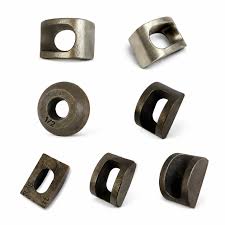
Why Material Selection Matters When Manufacturing High-Quality Iron Castings
Material selection is one of the most important decisions in iron casting manufacturing because it directly affects the strength, durability, performance, and service life of the finished component. Different iron grades have different mechanical properties, microstructures, and resistance to wear, impact, and temperature changes. Choosing an unsuitable material can lead to premature failure, machining difficulties, or unnecessary production costs.
For industrial applications, the selected iron must meet both technical specifications and actual operating conditions. A knowledgeable Iron Castings Manufacturer evaluates factors such as load requirements, working environment, component design, and manufacturing methods before recommending a suitable material. Understanding these considerations helps engineers and buyers make informed decisions and achieve more reliable casting results.
1. Understanding Different Types of Cast Iron
Cast iron is a group of iron-carbon alloys containing relatively high carbon content. Its properties vary according to chemical composition, graphite structure, and manufacturing conditions. The most commonly used types include gray iron, ductile iron, white iron, and malleable iron.
Gray Cast Iron
Gray iron contains graphite in the form of flakes. It offers good machinability, vibration damping, and compressive strength, making it suitable for machine bases, engine blocks, housings, and industrial equipment components.
Its graphite structure also helps reduce vibration transmission, which is valuable in machinery that requires operational stability.
Ductile Cast Iron
Ductile iron, also known as nodular iron, contains graphite in rounded nodules rather than flakes. This structure provides improved tensile strength, ductility, and impact resistance compared with conventional gray iron.
It is commonly used for pipes, automotive components, heavy machinery parts, and applications that experience repeated mechanical loading.
White Cast Iron
White cast iron has a hard structure containing iron carbides. It offers excellent abrasion resistance but is generally more difficult to machine and has lower toughness than many other cast iron grades.
It is often selected for wear-resistant components such as liners, grinding parts, and certain mining equipment applications.
Malleable Cast Iron
Malleable iron is produced through heat treatment of white iron castings. This process changes the structure and improves ductility and toughness.
It is used in fittings, brackets, hardware, and other components that require a combination of strength and the ability to withstand mechanical stress.
2. Material Selection Determines Mechanical Strength
Mechanical strength is a major consideration when selecting iron for industrial castings. Components used in heavy machinery, transportation systems, and construction equipment may experience substantial loads during operation.
The material must withstand these forces without excessive deformation or fracture. Different grades provide different levels of tensile strength, yield strength, and compressive strength.
Ductile iron is often suitable when higher tensile strength and toughness are required. Gray iron may be appropriate for components that primarily experience compressive loading and benefit from vibration damping.
Engineers should evaluate the expected loads and safety requirements before deciding which grade to use.
3. Wear Resistance and Long-Term Durability
Wear resistance is especially important for components exposed to friction, abrasion, or repeated contact with other surfaces. Parts used in mining, agricultural machinery, and material-handling equipment may experience continuous wear from abrasive particles and operating conditions.
Material selection can significantly influence how quickly these components deteriorate.
White cast iron is often considered for applications involving severe abrasion because of its hard carbide structure. Other cast iron grades may be more suitable when a balance of wear resistance, toughness, and machinability is needed.
The right choice depends on the type of wear involved, operating speed, contact pressure, and maintenance conditions.
4. Matching Materials to Operating Environments
Industrial components rarely operate under identical conditions. Some are exposed to moisture, chemicals, outdoor weather, elevated temperatures, or frequent temperature changes.
These environmental factors can influence material performance and service life. For example, components used in humid or corrosive environments may require additional protective measures, while parts exposed to high temperatures need materials that maintain suitable properties during thermal cycling.
Material selection should therefore consider the complete operating environment rather than focusing only on basic strength requirements.
Depending on the application, manufacturers may recommend suitable alloying elements, coatings, surface treatments, or alternative materials to improve performance.
5. The Importance of Chemical Composition
The chemical composition of cast iron plays a major role in determining its final properties. Carbon and silicon are particularly important because they influence graphite formation and the overall microstructure.
Other elements, including manganese, sulfur, and phosphorus, can also affect casting behavior and mechanical performance. Certain alloying elements may be introduced to improve specific characteristics such as hardness, wear resistance, or strength.
Maintaining the correct composition requires careful control of raw materials and melting conditions.
Manufacturers use chemical analysis equipment, such as optical emission spectrometers, to verify the composition of molten metal and ensure it meets the required material specifications.
6. Material Selection Influences Casting Quality
<AsyncImage query=”molten cast iron being poured into industrial sand casting mold foundry” aspectRatio=”16:9″ width=”100%”/>
Not every iron grade behaves the same way during melting, pouring, and solidification. Differences in fluidity, shrinkage behavior, and solidification characteristics can influence how easily a material fills a mold and forms a sound casting.
For example, complex components with thin sections may require careful consideration of metal fluidity and pouring temperature. Large castings may require additional attention to cooling behavior and feeding system design.
Selecting a material that suits the component geometry can help reduce defects such as misruns, shrinkage cavities, and inconsistent microstructures.
Manufacturers also consider the compatibility between material properties, mold design, and the selected casting process.
7. How Material Choice Affects Machinability
Many iron castings require machining after solidification to achieve accurate dimensions, surface finishes, and assembly features. Material hardness and microstructure influence how easily a component can be cut, drilled, milled, or finished.
Gray iron generally offers good machinability because its graphite flakes help improve cutting behavior. Some high-hardness materials, including certain white iron grades, can be considerably more difficult to machine.
If a component requires extensive machining, this factor should be considered during material selection. Choosing a grade with suitable machinability can reduce tool wear, processing time, and overall manufacturing costs.
However, machinability should always be balanced against the mechanical properties required during service.
8. Balancing Material Performance and Production Costs
Material selection affects more than the initial cost of raw materials. It can also influence melting requirements, production efficiency, defect rates, machining expenses, and maintenance needs.
A less expensive material may appear attractive initially, but it could result in shorter service life or higher replacement costs if it does not meet the application’s requirements.
On the other hand, selecting a material with unnecessarily high performance can increase manufacturing expenses without providing meaningful benefits.
A practical evaluation should consider the total cost over the component’s expected service life. This includes material price, processing requirements, inspection, maintenance, and potential downtime.
9. Considering Component Design and Wall Thickness
The geometry of a casting influences how molten metal flows and solidifies. Thin walls, thick sections, sharp corners, and complex internal features can create different manufacturing challenges.
Some materials are more suitable for specific casting geometries because of their fluidity and solidification behavior. Others may require modifications to the gating system, mold design, or production parameters.
Engineers should review the component drawing and expected material properties together. Adjusting wall thickness, improving transitions between sections, and reducing unnecessary complexity can help improve casting quality.
Early cooperation between product designers and casting engineers often prevents avoidable manufacturing problems.
10. The Role of Heat Treatment in Material Performance
<AsyncImage query=”industrial metal foundry heat treatment furnace iron castings” aspectRatio=”16:9″ width=”100%”/>
Heat treatment can modify the microstructure and mechanical properties of certain iron castings. Depending on the material and treatment process, it may improve hardness, strength, wear resistance, or dimensional stability.
Common approaches include annealing, normalizing, and stress relieving. The appropriate process depends on the iron grade, component geometry, and required performance.
For example, stress relieving may help reduce residual stresses created during casting and cooling. Annealing can improve machinability in some materials, while other heat treatment processes may be used to develop specific hardness characteristics.
Not every casting requires heat treatment. It should be selected according to technical requirements rather than applied automatically.
11. Quality Testing and Material Verification
Material selection must be supported by testing and verification. Even when the correct grade is specified, variations in production conditions can influence the final properties.
Manufacturers use several inspection methods to confirm that castings meet technical requirements.
Common verification methods include:
- Chemical composition analysis: Confirms the percentage of important alloying elements.
- Hardness testing: Measures resistance to localized indentation.
- Tensile testing: Evaluates strength and elongation under pulling forces.
- Metallographic examination: Studies graphite structure and the metal’s microstructure.
- Dimensional inspection: Checks whether the casting meets drawing specifications.
- Non-destructive testing: Helps identify internal or surface defects without damaging the component.
The testing method should match the material grade, product specification, and intended application.
12. Material Selection Across Different Industries
Different industries have distinct material requirements because their components operate under different mechanical and environmental conditions.
Automotive Industry
Automotive manufacturers use gray and ductile iron for components such as engine blocks, brake parts, and other structural or mechanical elements. Material selection depends on strength, vibration damping, thermal performance, and manufacturing requirements.
Construction and Heavy Machinery
Construction equipment often operates under heavy loads, repeated movement, and demanding outdoor conditions. Ductile iron and other suitable grades may be selected for components that require strength and resistance to mechanical stress.
Agriculture
Agricultural machinery operates in environments where dust, soil, moisture, and impact are common. Components must offer an appropriate balance of durability, strength, and cost efficiency.
Mining and Material Handling
Mining equipment frequently encounters abrasive materials and severe operating conditions. Wear-resistant iron grades may be used for liners, crushing components, and other parts exposed to continuous abrasion.
13. Working With a Manufacturer During Material Selection
Choosing the right iron grade requires communication between the buyer, design engineer, and casting supplier. Providing detailed application information helps manufacturers recommend materials that meet actual performance needs.
Useful information to share includes:
- Component drawings and dimensional specifications.
- Expected mechanical loads and operating conditions.
- Required material standards or grades.
- Wear, impact, and temperature requirements.
- Machining and surface finish expectations.
- Annual production quantities and inspection requirements.
A technical review before production helps identify potential problems and ensures that the selected material is compatible with the component’s design and manufacturing process.
Conclusion
Material selection is fundamental to manufacturing high-quality iron castings because it affects mechanical strength, wear resistance, machinability, casting performance, and long-term reliability. Gray, ductile, white, and malleable iron each offer different characteristics, making it important to match the material with the component’s intended function.
By considering operating conditions, chemical composition, design requirements, production costs, and quality testing, manufacturers can make more effective material decisions. Careful selection at the beginning of the manufacturing process helps reduce defects, improve component performance, and support dependable results across a wide range of industrial applications.