
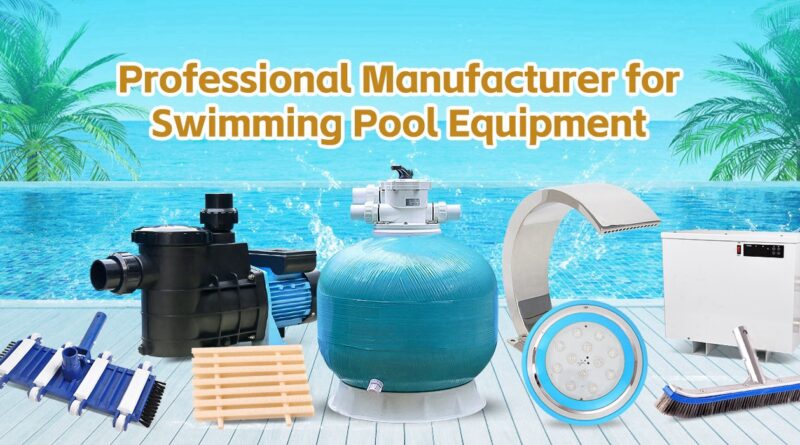
Common Challenges Faced by Swimming Pool Equipment Manufacturers
The swimming pool industry depends on a wide range of equipment to maintain water circulation, filtration, heating, sanitation, and overall system performance. Behind these products are manufacturers responsible for designing, sourcing, testing, and producing equipment that meets different customer requirements. However, manufacturing reliable swimming pool equipment involves more than assembling components. It requires careful planning, technical expertise, quality management, and the ability to respond to changing market conditions.
From rising material costs to evolving technology and strict product standards, manufacturers face several challenges throughout the production process. Understanding these difficulties helps explain the complexity of the industry and the importance of continuous improvement for every Pool Equipment Manufacturer.
1. Maintaining Consistent Product Quality
Product quality is one of the most important responsibilities in swimming pool equipment manufacturing. Pumps, filters, heaters, valves, and sanitation systems must perform reliably under different operating conditions.
Even small manufacturing defects can affect equipment performance. Poorly fitted seals may cause leaks, inconsistent component dimensions can affect assembly, and electrical faults may create safety concerns.
To maintain consistent quality, manufacturers need effective inspection procedures throughout production. These may include:
- Checking incoming raw materials and components.
- Monitoring production processes.
- Inspecting finished products.
- Conducting functional and performance tests.
- Reviewing customer complaints and product returns.
Quality management becomes particularly challenging when production volumes increase. Manufacturers must ensure that higher output does not lead to inconsistent standards or overlooked defects.
2. Managing Fluctuating Raw Material Costs
Swimming pool equipment production relies on materials such as plastics, stainless steel, copper, aluminum, rubber, and electronic components.
Prices for these materials can change because of market demand, supply limitations, transportation costs, energy prices, and international economic conditions.
Unexpected increases can affect manufacturing budgets and reduce profit margins. They may also make it difficult to maintain stable product pricing.
Manufacturers can address this challenge by developing relationships with multiple suppliers, negotiating longer-term purchasing agreements, and improving material forecasting.
They can also evaluate alternative materials when appropriate. However, cost savings should never compromise corrosion resistance, chemical compatibility, durability, or safety.
3. Dealing With Supply Chain Disruptions
A swimming pool product may contain components sourced from several suppliers. A pump, for example, may require a motor, impeller, housing, bearings, seals, electrical connections, and control components.
If even one essential component becomes unavailable, production may slow down or stop.
Supply chain disruptions can result from transportation delays, supplier capacity problems, geopolitical developments, natural disasters, or shortages of specialized materials.
These interruptions make production planning more difficult and can affect delivery commitments.
Manufacturers can improve supply chain resilience by:
- Identifying alternative suppliers for critical components.
- Monitoring inventory levels.
- Establishing realistic safety stock requirements.
- Maintaining clear communication with suppliers.
- Evaluating supplier reliability regularly.
- Improving demand forecasting.
A flexible supply chain helps manufacturers respond more effectively to unexpected changes.
4. Meeting Changing Customer Expectations
Pool owners, contractors, installers, and commercial facility operators have different expectations when purchasing equipment.
Residential customers may prioritize quiet operation, energy efficiency, compact designs, and simple controls. Commercial customers may require higher capacities, dependable operation, and equipment suitable for frequent use.
Customer expectations also change as new technologies become available.
Manufacturers must continuously evaluate feedback and market trends to determine which product improvements are most valuable. Developing equipment that satisfies every customer segment can be difficult, especially when performance requirements and budgets differ.
Market research, customer surveys, installer feedback, and product performance data can help manufacturers make informed development decisions.
5. Keeping Up With Technological Advancements
Technology is changing the way swimming pool equipment is designed and operated. Variable-speed pumps, automated chemical controls, connected monitoring systems, and smart heating solutions are becoming increasingly relevant.
Manufacturers must decide which technologies to adopt and how to integrate them into existing product ranges.
This can be challenging because new technology requires investment in engineering, testing, software development, and employee training.
For connected equipment, manufacturers must also consider compatibility, cybersecurity, software reliability, and long-term technical support.
A practical approach is to evaluate emerging technologies based on their performance benefits, customer demand, production costs, and maintenance requirements.
6. Designing Equipment for Harsh Operating Conditions
Swimming pool equipment operates in environments that can be demanding for mechanical and electrical components.
Moisture, pool chemicals, temperature fluctuations, UV exposure, and continuous operation can gradually affect materials and product performance.
For example, unsuitable metals may corrode, low-quality seals may deteriorate, and poorly protected electrical components may become vulnerable to moisture.
Manufacturers must select materials and design components according to their intended operating environments.
Testing should consider factors such as:
- Corrosion resistance.
- Chemical compatibility.
- Temperature tolerance.
- Pressure resistance.
- Mechanical wear.
- Moisture protection.
- UV exposure where relevant.
Designing for these conditions requires a balance between product durability, manufacturing complexity, and cost.
7. Managing Energy Efficiency Requirements
Energy consumption is an important consideration in modern pool equipment design.
Pumps, heaters, and other electrical systems can contribute significantly to operating costs. Customers increasingly look for equipment that delivers reliable performance while using energy efficiently.
Manufacturers must improve product efficiency without reducing the performance required for different pool applications.
This often involves engineering changes such as improved motor designs, optimized hydraulic components, better insulation, and more advanced control systems.
Testing is essential because efficiency improvements must be evaluated under realistic operating conditions.
Manufacturers also need to consider applicable energy-efficiency requirements in the markets where their products are sold.
8. Complying With Safety and Regulatory Standards
Swimming pool equipment may include electrical systems, pressurized components, heating elements, moving parts, and chemical treatment technologies.
These features create safety considerations that manufacturers must address during product design and production.
Different markets may have different requirements for electrical safety, pressure performance, material suitability, labeling, and energy consumption.
Keeping track of relevant standards can be challenging, particularly for manufacturers selling products internationally.
A strong compliance process should involve:
- Identifying applicable regulations before product development.
- Reviewing technical specifications.
- Conducting required product tests.
- Maintaining accurate documentation.
- Monitoring changes to relevant standards.
- Working with qualified testing and certification organizations where necessary.
Considering compliance early in the design process can reduce costly redesigns and delays.
9. Controlling Manufacturing Costs
Manufacturers must balance product quality with production costs. Expenses can include raw materials, labor, machinery, energy, facility maintenance, packaging, testing, and transportation.
Rising costs can make it difficult to remain competitive, especially in markets where customers compare products primarily by price.
However, reducing costs without careful planning may lead to lower-quality materials, weaker components, or insufficient testing.
Manufacturers can improve cost efficiency through better production scheduling, reduced material waste, automation, preventive maintenance, and streamlined assembly procedures.
The objective should be to eliminate unnecessary expenses while protecting product performance and reliability.
10. Managing Product Testing and Quality Assurance
Before swimming pool equipment reaches customers, it must be evaluated to confirm that it meets its intended performance requirements.
Testing can be complicated because products operate under different conditions and may contain multiple interacting components.
A pump, for example, must be evaluated for appropriate flow, pressure, motor operation, noise, and durability. A filtration system may require testing for flow characteristics, sealing performance, and filtration effectiveness.
Manufacturers must establish testing procedures that are relevant to each product category.
Testing also requires suitable facilities, calibrated equipment, trained personnel, and accurate records. These requirements can increase development costs, but they help reduce the risk of product failures and customer dissatisfaction.
11. Responding to Environmental and Sustainability Pressures
Environmental responsibility is becoming a more important consideration in manufacturing.
Companies are under increasing pressure to reduce waste, use energy efficiently, manage chemicals responsibly, and select materials with lower environmental impacts where practical.
For swimming pool equipment manufacturers, sustainability must be considered at both the factory and product levels.
Production improvements may include reducing material waste, upgrading machinery, improving packaging, and monitoring energy consumption.
Product development can focus on durable components, efficient motors, repairable designs, and improved water management.
The challenge is to introduce meaningful environmental improvements without compromising product safety, reliability, or affordability.
12. Recruiting and Retaining Skilled Employees
Swimming pool equipment manufacturing requires employees with a range of technical skills.
Mechanical engineers, electrical specialists, production technicians, quality inspectors, software developers, and maintenance personnel may all contribute to the manufacturing process.
Finding and retaining workers with the right experience can be difficult, particularly as products become more technologically advanced.
Manufacturers can address this challenge through structured training, professional development, clear safety procedures, and opportunities for employees to develop specialized skills.
Cross-training can also help production teams respond to staffing changes and maintain continuity.
A skilled workforce supports better product development, fewer production errors, and more effective quality control.
13. Balancing Product Innovation With Market Demand
Innovation is important for maintaining competitiveness, but developing new products requires time and investment.
Manufacturers must determine which ideas are likely to solve genuine customer problems and justify the resources needed for development.
A product with advanced features may be technically impressive but commercially unsuccessful if customers do not need those features or cannot justify the additional cost.
Research, prototyping, customer feedback, and market analysis can help reduce this uncertainty.
A structured development process allows manufacturers to evaluate concepts before committing to large-scale production.
It also helps businesses improve existing products instead of introducing new designs without a clear purpose.
14. Providing Reliable After-Sales Support
Manufacturing responsibilities do not end when equipment is delivered. Customers may need installation guidance, replacement parts, troubleshooting assistance, and technical information throughout the product’s service life.
Insufficient after-sales support can damage customer confidence, even when the equipment itself is well designed.
Manufacturers can strengthen customer support by providing:
- Clear installation and operating manuals.
- Accessible technical documentation.
- Replacement parts for supported products.
- Warranty procedures.
- Troubleshooting resources.
- Training materials for installers and service professionals.
Maintaining effective support systems requires coordination between manufacturing, distribution, technical teams, and customer service departments.
15. Adapting to International Markets and Competition
Swimming pool equipment manufacturers may serve customers in multiple countries, each with different market conditions, product preferences, regulations, and distribution requirements.
International expansion can create opportunities, but it also introduces challenges involving logistics, certification, currency fluctuations, local competition, and customer support.
Manufacturers must understand the requirements of each target market before introducing products.
This may involve adapting product specifications, packaging, documentation, electrical configurations, and available accessories.
A well-planned international strategy helps manufacturers avoid unnecessary costs and build stronger relationships with distributors and customers.
Strategies for Overcoming Manufacturing Challenges
Although the challenges facing swimming pool equipment manufacturers can be complex, several practical strategies can improve business resilience and production performance.
| Challenge | Practical response |
|---|---|
| Inconsistent product quality | Strengthen inspection and testing procedures |
| Rising material costs | Improve sourcing and purchasing strategies |
| Supply chain disruptions | Develop alternative suppliers and inventory plans |
| Changing customer expectations | Use market research and customer feedback |
| Technology changes | Invest in research and product development |
| Harsh operating environments | Improve material selection and durability testing |
| High production expenses | Optimize workflows and reduce waste |
| Regulatory requirements | Maintain structured compliance processes |
| Skills shortages | Provide ongoing employee training |
| After-sales difficulties | Improve technical support and parts availability |
These strategies are most effective when manufacturers treat improvement as an ongoing process rather than a one-time project.
Conclusion
Swimming pool equipment manufacturers face a wide range of challenges, from maintaining product quality and controlling production costs to managing supply chains, adopting new technologies, and meeting environmental expectations.
Each challenge can influence manufacturing efficiency, product reliability, customer satisfaction, and long-term business performance.
Addressing these issues requires a combination of technical expertise, careful planning, reliable supplier relationships, effective testing, and continuous innovation.
As the swimming pool industry continues to evolve, manufacturers that invest in quality management, sustainable practices, and customer-focused product development will be better prepared to adapt to changing market requirements and maintain dependable manufacturing operations.