
Swimming Pool Accessories That Improve Comfort, Safety, and Convenience
A swimming pool can provide a relaxing place to exercise, cool off, and spend quality time with family. However, the overall experience depends on more than the pool itself. The right accessories can make swimming more comfortable, simplify routine maintenance, improve safety, and help homeowners get more value from their pool throughout the year.
From pool covers and lighting to cleaning tools and temperature controls, different accessories serve different purposes. Choosing suitable swimming pool equipment and supplies helps homeowners create a practical setup that matches their pool design, lifestyle, and maintenance needs. Understanding which accessories offer genuine benefits makes it easier to prioritize useful additions without unnecessary spending.
1. Pool Covers for Protection and Convenience
A pool cover is one of the most useful accessories for homeowners who want to reduce debris and simplify maintenance. When the pool is not in use, a suitable cover helps keep out leaves, insects, dust, and other contaminants.
Depending on the design, a cover may also reduce water evaporation and help retain heat. These benefits can lower water replacement needs and heating costs, particularly when the pool is used regularly.
Common options include solar covers, debris covers, and purpose-designed safety covers. Solar covers focus on heat retention and evaporation reduction, while debris covers help keep the water cleaner between swimming sessions.
Choose a cover that fits the pool properly and suits its intended purpose. Ordinary solar and debris covers should not be treated as safety barriers unless they are specifically designed and rated for that use.
2. Comfortable Poolside Seating and Loungers
Comfortable seating can transform the area around a swimming pool into a more inviting outdoor living space. Loungers, adjustable chairs, and weather-resistant benches provide places to relax between swimming sessions.
When selecting poolside furniture, prioritize materials that can withstand moisture, sunlight, and regular outdoor use. Corrosion-resistant metal, suitable synthetic materials, and weather-resistant fabrics can be practical choices depending on the climate.
Consider the available space before purchasing large furniture pieces. Leave clear walking paths around the pool and avoid placing chairs where they obstruct access to ladders, gates, or rescue equipment.
Furniture with adjustable backs or easy-to-clean surfaces can be particularly useful for households that use the pool frequently.
3. Pool Lighting for Visibility and Ambience
Pool lighting can improve the appearance of a swimming area and make the surrounding space more attractive after sunset. Properly designed lighting also supports visibility around pool entrances, steps, pathways, and other areas where people may move.
Underwater lights, perimeter lighting, and pathway fixtures serve different purposes. Underwater lighting highlights the pool itself, while suitable outdoor fixtures illuminate the surrounding deck and access points.
Safety should guide every lighting decision. Use products specifically designed for pool or outdoor environments, and ensure installation complies with applicable electrical codes and manufacturer instructions.
Electrical work near water should be performed by a qualified professional. Lighting should supplement, not replace, appropriate supervision and clear visibility of the pool.
4. Pool Heaters and Temperature Controls
Water temperature has a significant impact on swimming comfort. A pool heater can help extend the swimming season, particularly in regions where temperatures drop during certain months.
Several heating options are available, including electric heat pumps, gas heaters, and solar heating systems. Each option has different installation requirements, operating costs, and performance characteristics.
Heat pumps can be energy-efficient in suitable climates, while gas heaters may provide faster heating. Solar systems use available sunlight and depend more heavily on local weather conditions and system design.
Before choosing a heater, consider the pool’s size, desired water temperature, local climate, and energy costs. A properly fitted pool cover can also help reduce heat loss and improve the effectiveness of the heating system.
5. Poolside Storage and Organization Accessories
A tidy pool area is easier to maintain and more convenient to use. Storage accessories help keep towels, cleaning tools, toys, and other essentials organized instead of scattered around the deck.
Useful options include towel racks, weather-resistant storage benches, wall-mounted tool holders, and dedicated containers for pool accessories.
Cleaning equipment should be stored where it can dry properly and remain protected from unnecessary weather exposure. Pool chemicals require separate storage that follows their specific safety requirements, including appropriate ventilation and separation of incompatible products.
Keep storage units away from areas where they could obstruct emergency access or create tripping hazards. A well-organized setup helps maintain a neat appearance while making everyday pool care more efficient.
6. Pool Steps, Ladders, and Entry Accessories
Easy and secure access is an important part of pool comfort and safety. Suitable ladders, steps, and handrails can make entering and leaving the water more manageable for swimmers with different mobility needs.
The correct accessory depends on the pool’s construction, depth, edge design, and intended users. Above-ground pools may require specific ladders, while in-ground pools may use built-in steps or compatible handrails.
Look for secure attachment points, slip-resistant surfaces, and materials designed for prolonged exposure to pool water. Inspect these accessories regularly for loose fittings, corrosion, cracks, or surface damage.
For households with older adults or people with limited mobility, carefully selected entry accessories may improve accessibility. However, they should be installed according to the manufacturer’s instructions and should not obstruct other safety features.
7. Automatic Pool Cleaners for Easier Maintenance
Automatic pool cleaners can reduce the time and effort needed to keep pool surfaces free from debris. Depending on the model, they may clean the floor, walls, and selected waterline areas.
Robotic cleaners typically use onboard filtration to collect debris, while suction-side and pressure-side cleaners operate through different parts of the pool’s circulation system.
The best option depends on pool size, shape, surface material, debris levels, and equipment compatibility. Some models are designed for small pools, while others offer advanced navigation and broader surface coverage.
Although automatic cleaners can simplify routine care, they do not eliminate the need for water testing, chemical balancing, basket cleaning, or periodic brushing. Consider them a convenience accessory that supports an overall maintenance routine.
8. Water Testing and Maintenance Accessories
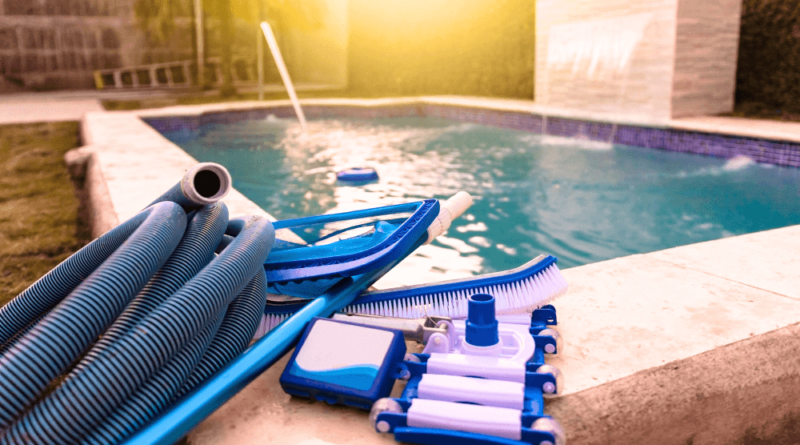
Maintaining good water quality is essential for a comfortable swimming experience. Water testing kits, thermometers, skimmers, brushes, and vacuum attachments help homeowners monitor conditions and address common maintenance needs.
A water testing kit measures important parameters such as sanitizer concentration and pH. Additional tests may be necessary depending on the pool’s sanitation system and water chemistry.
A pool thermometer helps monitor temperature, while skimmers and brushes remove debris that can affect water appearance. Keeping these accessories readily available makes routine care easier to manage.
Choose testing products appropriate for your pool system and follow the instructions carefully. Clear water alone does not guarantee that chemical conditions are suitable for swimming.
9. Safety Accessories Every Pool Owner Should Consider
Comfort and convenience should never come at the expense of safety. Appropriate safety accessories help homeowners prepare for emergencies and reduce hazards around the pool.
Important items include:
- A suitable rescue ring and reaching pole.
- A readily accessible first-aid kit.
- Secure fencing and self-closing, self-latching gates where required.
- Non-slip surfaces in appropriate walking areas.
- Clearly visible emergency contact information.
- Suitable alarms or other protective devices where appropriate.
Store rescue equipment where it can be reached quickly. Check it periodically to ensure that it remains in usable condition.
Children should always be actively supervised around water. Safety accessories are useful additions, but they do not replace supervision, appropriate barriers, or swimming and water-safety education.
10. Pool Alarms and Monitoring Systems
Pool alarms and monitoring devices can provide an additional layer of awareness around a swimming area. Depending on their design, these products may detect movement in the water, opening of an access gate, or other specified activity.
Different alarm types serve different purposes, and their effectiveness depends on correct installation, maintenance, and the conditions they are designed to monitor.
Before purchasing an alarm, review its detection method, operating requirements, environmental limitations, and compatibility with your pool setup. Test the device according to the manufacturer’s instructions and replace batteries when needed.
An alarm should be treated as a supplementary protective measure rather than a substitute for secure barriers or active supervision.
11. Outdoor Showers and Rinse Stations
An outdoor shower can make pool use more convenient by allowing swimmers to rinse before entering the water and wash off chlorine or other pool residue afterward.
Rinsing before swimming can help remove sweat, body oils, and personal care products that would otherwise enter the pool. After swimming, a shower provides an easy way to clean the skin and hair.
Available options range from simple cold-water rinse stations to more elaborate systems with temperature controls and privacy enclosures.
Choose materials suitable for outdoor exposure and ensure the installation provides appropriate drainage. Water should not accumulate on nearby walking surfaces, where it could create slipping hazards.
12. Shade Structures for Hot Weather
Shade can improve comfort around the pool, particularly during periods of intense sunlight. Umbrellas, pergolas, retractable awnings, and other suitable structures provide places to rest between swims.
When selecting a shade accessory, consider its stability, weather resistance, and ability to withstand local wind conditions. Secure freestanding structures properly and position them so they do not obstruct pool access or rescue equipment.
Shade reduces direct sun exposure in the covered area, but it does not eliminate the need for sunscreen, hydration, or other sun-protection measures.
For a more practical layout, position seating and shaded areas close enough to the pool for convenience while maintaining clear walking routes around the water.
13. How to Choose the Right Pool Accessories
The best accessories are those that address your actual needs rather than simply adding more features. Before making a purchase, consider how often the pool is used, who uses it, and which maintenance or comfort issues occur most frequently.
Use these factors to guide your choices:
Pool size and layout: Select covers, cleaners, ladders, and lighting that fit the pool’s dimensions and design.
Safety requirements: Prioritize secure access, appropriate barriers, rescue equipment, and clear emergency access.
Weather conditions: Choose materials and accessories suited to local temperatures, sunlight, humidity, and wind.
Maintenance needs: Look for products that are easy to clean, inspect, and store.
Long-term costs: Consider installation, energy use, replacement parts, and servicing rather than focusing only on the purchase price.
Compatibility: Check that accessories work with existing pool equipment and meet applicable safety requirements.
Start with essential safety and maintenance items, then add comfort features that improve how you use the space.
Conclusion
Swimming pool accessories can make a meaningful difference in comfort, safety, convenience, and ongoing maintenance. Pool covers, seating, lighting, heaters, storage solutions, cleaning equipment, and safety devices each offer benefits when selected for the right purpose.
The most effective approach is to match accessories to your pool’s design, household needs, and local conditions. By prioritizing safety, maintaining equipment regularly, and investing in practical improvements, homeowners can create a more enjoyable and manageable swimming environment for years to come.