
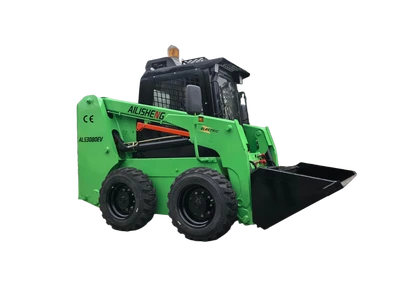
Key Features to Evaluate Before Purchasing an Electric Skid Steer
Choosing the right electric skid steer requires careful consideration of performance, battery capacity, operating costs, and job-site requirements. As construction companies, warehouse operators, and agricultural businesses look for more efficient equipment, electric machinery is becoming an attractive option for tasks that require maneuverability, reliable power, and reduced local emissions. Understanding the key features before purchasing can help buyers select a machine that meets their operational needs and budget.
An Electric Skid Steer uses an electric powertrain and rechargeable batteries to perform material handling, lifting, grading, and other demanding tasks. Compared with traditional diesel-powered equipment, electric models can offer quieter operation and fewer routine engine-related maintenance requirements. However, the right choice depends on factors such as battery technology, rated operating capacity, hydraulic performance, charging infrastructure, and compatibility with the attachments required for daily work.
1. Battery Capacity and Expected Runtime
Battery capacity is one of the most important features to evaluate when purchasing an electric skid steer. Measured in kilowatt-hours (kWh), battery capacity indicates how much energy the system can store. A larger battery may provide longer operating time, although actual runtime depends on workload, terrain, operator behavior, and hydraulic demand.
Before selecting a model, consider how many hours the machine needs to work between charging sessions. A unit used for light material handling may have different energy requirements from one performing continuous heavy-duty loading.
Ask the supplier for realistic runtime estimates under comparable working conditions. It is also helpful to understand the battery’s usable capacity, expected service life, warranty coverage, and replacement costs.
2. Charging Time and Infrastructure
Charging requirements directly affect productivity. Even a machine with strong performance can cause operational delays if its battery cannot be replenished within the available work schedule.
Evaluate the following charging features:
- Charger compatibility: Confirm that the supplied or recommended charger matches the machine’s battery system.
- Charging duration: Check the expected time required for a full charge and for partial charging, if supported.
- Electrical requirements: Verify voltage, power supply, connector type, and any installation requirements.
- Charging flexibility: Determine whether the machine supports overnight charging or charging during work breaks.
- Charging access: Consider the number of machines sharing charging equipment and the available charging locations.
Businesses operating multiple shifts should pay particular attention to charging infrastructure. A well-planned charging schedule can reduce downtime and help keep equipment available when it is needed.
3. Rated Operating Capacity and Lifting Performance
Rated operating capacity indicates how much weight a skid steer can safely handle under specified conditions. Buyers should evaluate this specification alongside the machine’s operating weight, lift height, and rated tipping load.
Select a machine based on the heaviest materials it will regularly handle rather than occasional light-duty tasks. Pallets, construction materials, soil, aggregate, and agricultural products can place different demands on lifting performance.
It is also important to distinguish between rated operating capacity and maximum tipping load. These specifications are not interchangeable. Always follow the manufacturer’s stated capacity limits and account for attachment weight and load position.
4. Hydraulic Performance
Hydraulic power affects how effectively a skid steer operates its lift arms, bucket, and compatible attachments. Buyers should examine hydraulic flow rate, system pressure, and auxiliary hydraulic capabilities.
Standard-flow hydraulics may be suitable for general-purpose tasks, while some demanding attachments require higher flow rates. Examples include specialized sweepers, augers, trenchers, and other powered tools.
Before purchasing, make a list of the attachments the machine will use most often. Confirm that the hydraulic system can support their flow and pressure requirements without compromising safety or performance.
5. Motor Power and Overall Performance
Electric skid steers use electric motors to power travel and working functions. Their performance depends on motor output, control systems, battery delivery, traction, and hydraulic design.
Instead of comparing motor power alone, consider how the machine performs during actual work. Important questions include whether it can move loaded materials on the site’s typical slopes, maintain stable travel, and complete repeated lifting cycles efficiently.
Buyers should also review travel speed, acceleration characteristics, gradeability, and the machine’s performance under continuous workloads. Demonstrations or verified performance data can help determine whether a particular model meets the job’s demands.
6. Machine Size and Maneuverability
Skid steers are valued for their compact dimensions and ability to work in restricted spaces. However, overall size varies by model, so buyers should check the machine’s width, height, length, turning characteristics, and clearance requirements.
Compact models may be better suited to indoor facilities, narrow access routes, and smaller construction sites. Larger units may offer greater capacity but require more working space and transport planning.
Measure entrances, doorways, aisles, loading areas, and storage spaces before purchasing. If the machine will operate inside buildings, also consider floor load limits, ventilation requirements, and restrictions on noise.
7. Attachment Compatibility
Attachment compatibility determines how many different tasks the machine can perform. Common attachments include buckets, pallet forks, grapples, sweepers, augers, and grading tools.
Check whether the skid steer uses a compatible attachment mounting system and whether the auxiliary hydraulic connections meet the requirements of the tools you intend to use.
Also consider visibility, attachment weight, electrical or hydraulic demands, and any special operating restrictions. A machine that supports the right attachments can improve equipment utilization and reduce the need to purchase separate machines for different jobs.
8. Operator Comfort and Safety Features
Operator comfort and safety have a direct influence on daily productivity. A well-designed cab or operator station can make long shifts more manageable and help operators maintain better control.
Evaluate features such as:
- Clear visibility around the machine and attachment.
- Ergonomic controls and an adjustable operator position, where available.
- Seat comfort and vibration management.
- Protective structures and restraint systems appropriate to the model.
- Parking brakes, interlocks, alarms, and other safety systems.
- Accessible emergency stops or isolation procedures, where equipped.
- Clear displays for battery status, warnings, and machine diagnostics.
The machine should also provide suitable access for routine inspections and cleaning. Buyers should review the operator’s manual and ensure that training is available before the equipment enters service.
9. Noise Levels and Indoor Suitability
One potential advantage of electric skid steers is reduced operating noise compared with many diesel-powered alternatives. This can be beneficial in warehouses, enclosed facilities, residential construction areas, and other noise-sensitive environments.
However, an electric powertrain does not make a machine silent. Hydraulic pumps, tires, attachments, warning alarms, and contact with materials can still generate noise.
If low-noise operation is important, request measured noise specifications and assess the machine under realistic working conditions. For indoor applications, confirm that the equipment is suitable for the facility and that the workplace’s ventilation, charging, and safety requirements are met.
10. Maintenance Requirements and Service Support
Electric skid steers generally avoid some maintenance tasks associated with diesel engines, such as engine oil and filter changes. Nevertheless, they still require regular inspection and servicing.
Buyers should understand the maintenance schedule for the battery, electric motors, hydraulic system, tires, cooling components, brakes, and electrical connections. The availability of qualified technicians and replacement parts is equally important.
Before committing to a purchase, ask the supplier about service locations, technical assistance, diagnostic capabilities, spare-parts availability, and expected response times. Reliable support can reduce downtime and help protect the equipment’s long-term value.
11. Total Cost of Ownership
The initial purchase price is only one part of the cost of owning an electric skid steer. A more useful comparison considers expenses over the machine’s expected service life.
Important cost factors include:
- Purchase price and financing expenses.
- Electricity consumption and charging efficiency.
- Charger purchase and installation.
- Routine maintenance and repairs.
- Battery warranty and potential replacement costs.
- Operator training and service support.
- Equipment availability and downtime.
- Resale value at the end of ownership.
Electric models may offer lower energy and routine maintenance costs in certain applications, but the actual savings depend on electricity prices, utilization, workload, and battery replacement requirements.
Compare electric and diesel models using the same expected working hours and operating conditions. This approach provides a more meaningful assessment than comparing purchase prices alone.
12. Warranty and Battery Protection
Warranty terms can significantly affect the financial risk of purchasing electric equipment. Buyers should review the coverage provided for the machine, battery pack, electric motors, charger, and major electrical components.
Pay close attention to warranty duration, operating-hour limits, capacity-retention conditions, exclusions, and the process for making a claim. Some battery warranties may include specific performance thresholds or operating restrictions.
Ask the supplier to explain which maintenance records are required to preserve coverage. Clear documentation can help prevent misunderstandings and make it easier to manage the machine throughout its service life.
13. Environmental and Site Requirements
Electric skid steers can reduce direct exhaust emissions at the point of operation, making them useful for certain indoor and enclosed applications. Their overall environmental impact also depends on electricity generation, battery production, and equipment lifespan.
Before purchasing, evaluate the work environment and any relevant site rules. Consider charging access, floor conditions, weather exposure, storage requirements, and the availability of trained personnel.
For indoor use, confirm that the specific machine is approved for the intended environment. Reduced local emissions do not remove the need to follow electrical safety requirements or the manufacturer’s operating restrictions.
Questions to Ask Before Buying an Electric Skid Steer
Before finalizing a purchase, ask the supplier these practical questions:
- What battery capacity and typical runtime can the machine provide under my expected workload?
- What charging equipment is included, and what electrical supply does it require?
- What are the rated operating capacity, lift height, and tipping-load specifications?
- Which attachments are compatible with the machine?
- Can the hydraulic system support my existing tools?
- What maintenance is required, and how often should inspections be performed?
- What warranty coverage applies to the battery and major electrical components?
- Where can I obtain spare parts and qualified technical support?
- What are the estimated operating costs under my local electricity tariffs?
- Can I arrange a demonstration under conditions similar to my actual work?
Getting clear answers to these questions helps buyers compare models on practical value rather than marketing claims alone.
Conclusion
Purchasing an electric skid steer requires a balanced evaluation of battery capacity, charging time, lifting performance, hydraulic capabilities, maneuverability, attachment compatibility, safety, and long-term ownership costs. The best machine is not necessarily the one with the largest battery or highest rated capacity, but the one that fits the workload, operating environment, and available charging infrastructure.
By reviewing technical specifications, checking warranty terms, and assessing after-sales support, businesses can make a more informed investment. Careful planning helps ensure that the selected electric skid steer delivers dependable performance, supports daily productivity, and meets the site’s operational requirements over the long term.